News & Insights
Psychology, neuroscience and mental health.
 Neuroenergetics
New Framework Deciphers the Mechanisms Behind Neural Energy Efficiency
Researchers propose a novel conceptual model to explain how the human brain maintains high-performance computation with minimal power consumption.
 Neurotechnology
Closed-Loop Brain-Computer Interfaces: A New Frontier for Mental Health Treatment
Recent advancements in BCI technology shift the focus from motor recovery to the dynamic regulation of neural circuits underlying depression, anxiety, and PTSD.
 evolutionary neuroscience
Neonatal Digital Ratios Suggest Prenatal Estrogen Influence on Brain Evolution
Researchers identify a correlation between finger-length patterns and head circumference in male newborns, hinting at hormonal drivers of human cortical expansion.
 Neurodegeneration
Protein SORLA Identified as Potential Defense Against Alzheimer's Disease
Researchers discover that high levels of the SORLA protein may mitigate neurodegeneration by reducing toxic tau accumulation and preserving neural connections.
 Long COVID
Fluvoxamine Shows Promise in Mitigating Fatigue Associated with Long COVID
A randomized clinical trial indicates that the antidepressant fluvoxamine may significantly reduce fatigue and improve quality of life for patients with long-standing post-viral symptoms.
 Neuroinflammation
Microglia identified as key drivers of sleep disruption in Alzheimer’s models
Researchers discover that targeting brain immune cells, rather than amyloid plaques, can restore restorative sleep in Alzheimer’s models.
 auditory neuroscience
Unraveling 'The Hum': New Research Challenges Conventional Theories on Sonic Phenomena
Researchers explore the origins of the global 'Hum' phenomenon, suggesting internal auditory mechanisms rather than external environmental sources.
 Narcolepsy
Oxytocin Identified as Key Catalyst in Socially Induced Cataplexy
Researchers have discovered that the 'social hormone' oxytocin plays a critical role in triggering sudden muscle weakness during positive social interactions in narcoleptic models.
 Narcolepsy
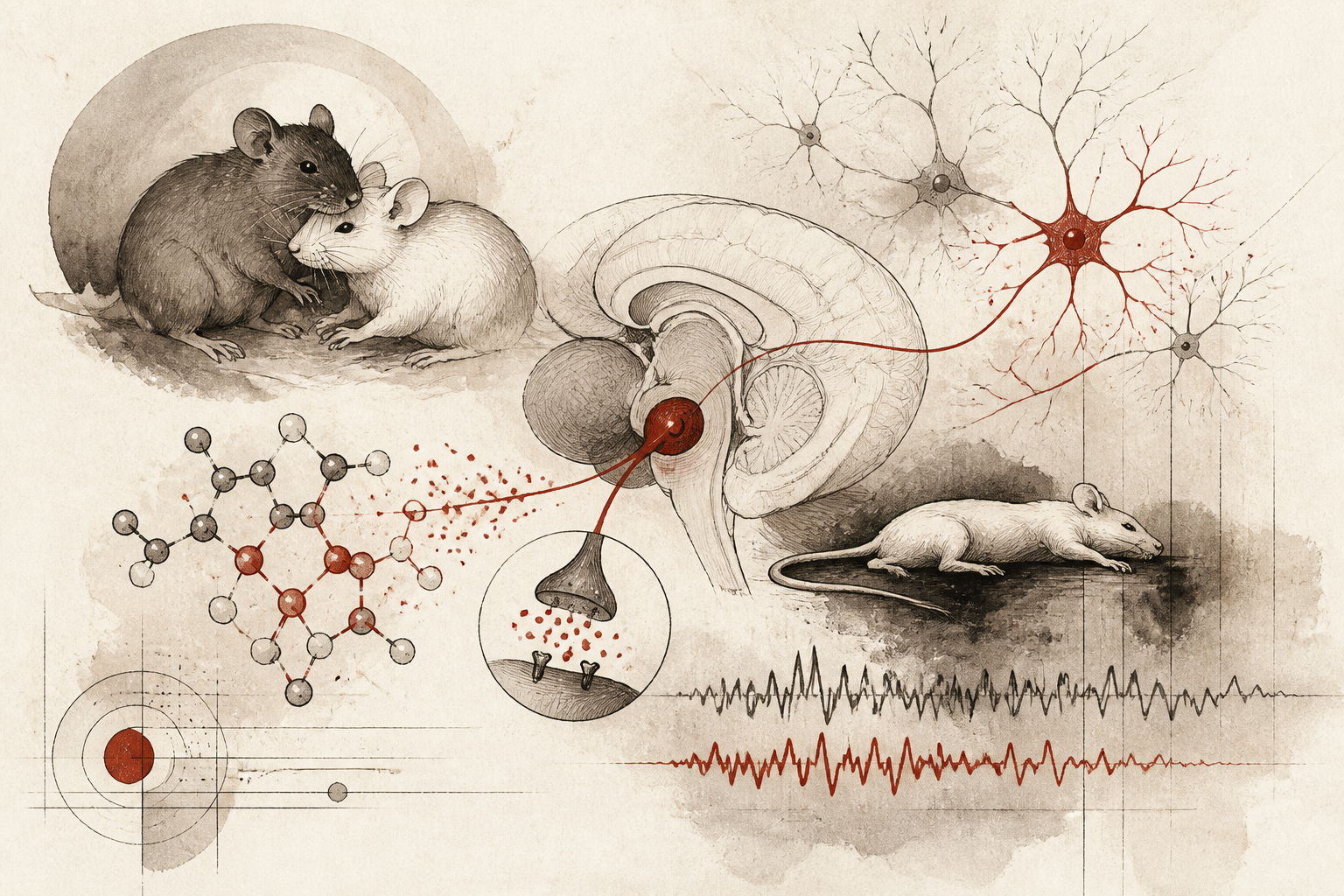
Oxytocin Links Social Rewards to Cataplexy in Narcolepsy Models
Researchers identify a neural pathway in the amygdala where oxytocin modulates muscle weakness triggered by positive social interactions.