Neonatal Digital Ratios Suggest Prenatal Estrogen Influence on Brain Evolution
Researchers identify a correlation between finger-length patterns and head circumference in male newborns, hinting at hormonal drivers of human cortical expansion.
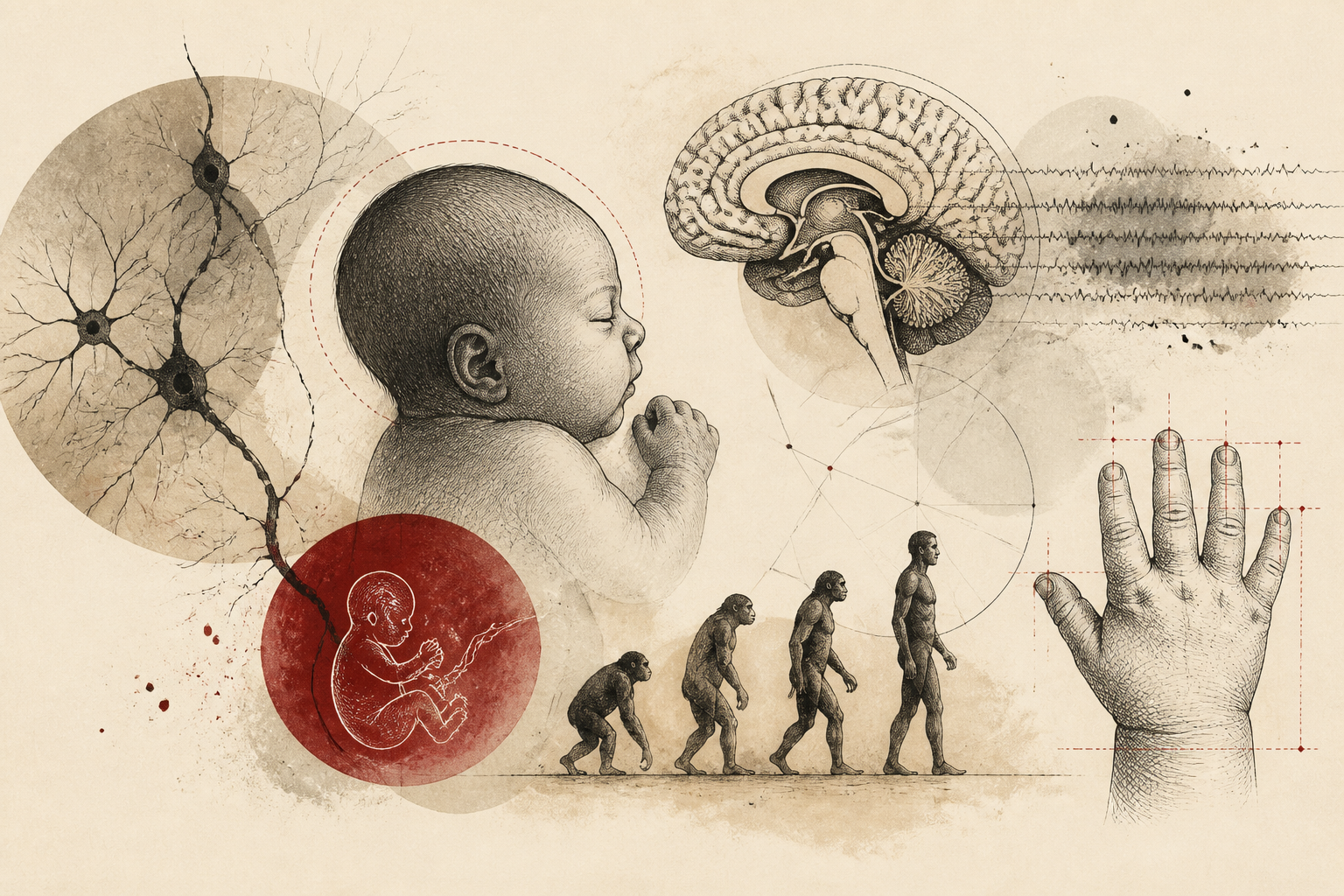
Recent research published in *ScienceDaily* suggests that the physiological indicators found in our hands may provide evidence for the evolutionary development of the human brain. The study, which observed 225 newborn infants, investigated the relationship between prenatal hormone exposure and head circumference—a reliable proxy for overall brain volume.
The findings center on the 2D:4D digit ratio, a biological marker commonly associated with the balance of estrogen and testosterone during fetal development. According to the data, male infants with finger-length patterns indicative of higher prenatal estrogen exposure demonstrated significantly larger head circumferences. Interestingly, this specific correlation was not observed among the female subjects in the cohort, suggesting a sex-dependent mechanism in how hormones influence cranial growth.
From an evolutionary perspective, these results contribute to a growing body of work regarding the 'Encephalization Quotient' in humans. While the expansion of the human brain is often attributed to dietary shifts or social complexity, this study highlights the potential role of reproductive hormones in facilitating the structural scaling of the neonatal cranium. If estrogen exposure directly relates to larger brain sizes in males, it may represent a historical biological pathway that supported the rapid cognitive expansion seen in the hominid lineage.
While head circumference is a strong predictor of brain size, the researchers emphasize that it does not serve as a direct measure of cognitive ability or intelligence. Instead, the study offers a window into the complex endocrine environment of the womb and its lasting impact on physical development. These insights provide ZU researchers and the broader neuroscience community with a refined understanding of how prenatal conditions may have steered the evolutionary trajectory of the human mind.
Quick answers
- What is the 2D:4D ratio and why does it matter?
- The 2D:4D ratio is the relative length of the index finger to the ring finger, used by scientists as a marker for prenatal hormone exposure.
- Did the study find a link between finger length and intelligence?
- No, the study focused on head circumference as a measure of brain size and evolutionary growth, not functional cognitive performance.
- Why were the results different for boys and girls?
- The study suggests that prenatal estrogen may influence cranial development through sex-specific biological pathways that do not manifest identically in females.
Rewritten by Zeit editorial AI. Based on original reporting at ScienceDaily — Mind & Brain.