Oxytocin Links Social Rewards to Cataplexy in Narcolepsy Models
Researchers identify a neural pathway in the amygdala where oxytocin modulates muscle weakness triggered by positive social interactions.
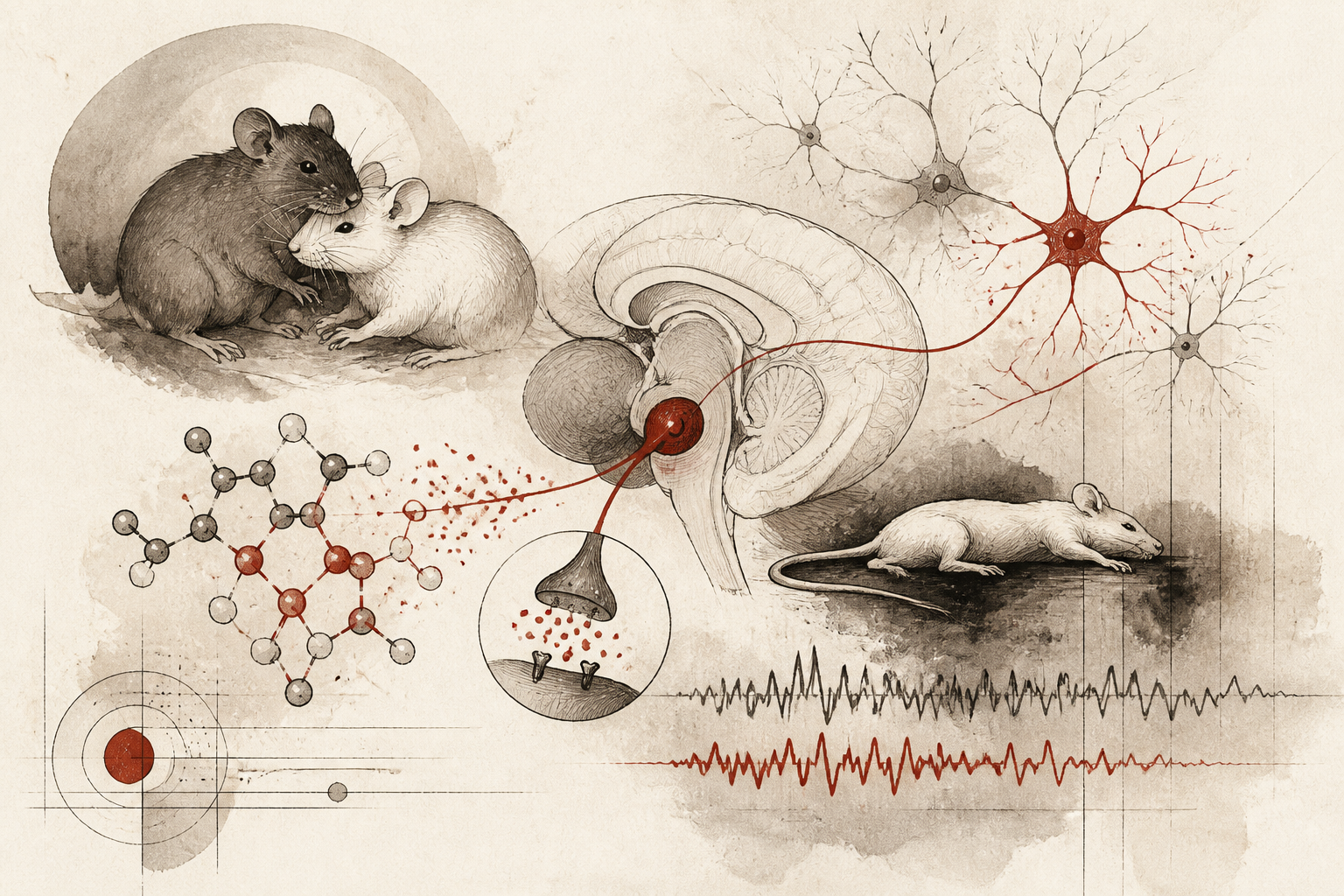
Recent research published in *Nature Neuroscience* describes a specific neural mechanism that explains why positive social interactions can trigger cataplexy, a sudden loss of muscle tone often associated with narcolepsy. While it is well-established that strong emotions—such as laughter or excitement—can induce these episodes in individuals lacking the neurotransmitter orexin, the precise circuitry linking social processing to motor inhibition has remained largely elusive.
Using a mouse model of narcolepsy, a research team investigated the role of oxytocin, a neuropeptide central to social bonding and reward. The study identifies a critical pathway originating in the paraventricular nucleus of the hypothalamus and projecting to the basolateral amygdala (BLA). The researchers observed that during social encounters, oxytocin-producing neurons become active, subsequently releasing the peptide into the BLA. This activity was directly correlated with the frequency and severity of cataplectic attacks in the orexin-deficient mice.
Experimental results demonstrated that pharmacological or optogenetic inhibition of oxytocin receptors within the amygdala significantly reduced the occurrence of cataplexy following social stimuli. Conversely, the activation of these receptors exacerbated the symptoms. These findings suggest that the amygdala serves as a hub where social-reward signals provided by oxytocin are integrated with motor control systems.
This discovery provides a more nuanced understanding of the pathophysiology of narcolepsy. By pinpointing the oxytocin system's influence on the amygdala, the study opens potential avenues for targeted therapies. Future clinical interventions might focus on modulating oxytocin signaling to manage cataplexy without dampening the patient's emotional or social experiences.
Source: *Nature Neuroscience* (2024). DOI: 10.1038/s41593-026-02349-2.
Quick answers
- What is the primary cause of cataplexy according to this study?
- The study suggests that oxytocin signaling in the basolateral amygdala mediates the link between positive social rewards and the onset of cataplectic muscle weakness.
- How does oxytocin affect narcolepsy symptoms?
- Oxytocin increases the frequency of cataplexy episodes by transmitting social-reward signals to the brain's emotional centers, which then trigger motor inhibition.
- Could these findings lead to new medical treatments?
- Yes, targeting oxytocin receptors in the amygdala could potentially offer a way to treat cataplexy by blocking the specific pathway that triggers attacks during social interactions.
Rewritten by Zeit editorial AI. Based on original reporting at Nature Neuroscience.