Closed-Loop Brain-Computer Interfaces: A New Frontier for Mental Health Treatment
Recent advancements in BCI technology shift the focus from motor recovery to the dynamic regulation of neural circuits underlying depression, anxiety, and PTSD.
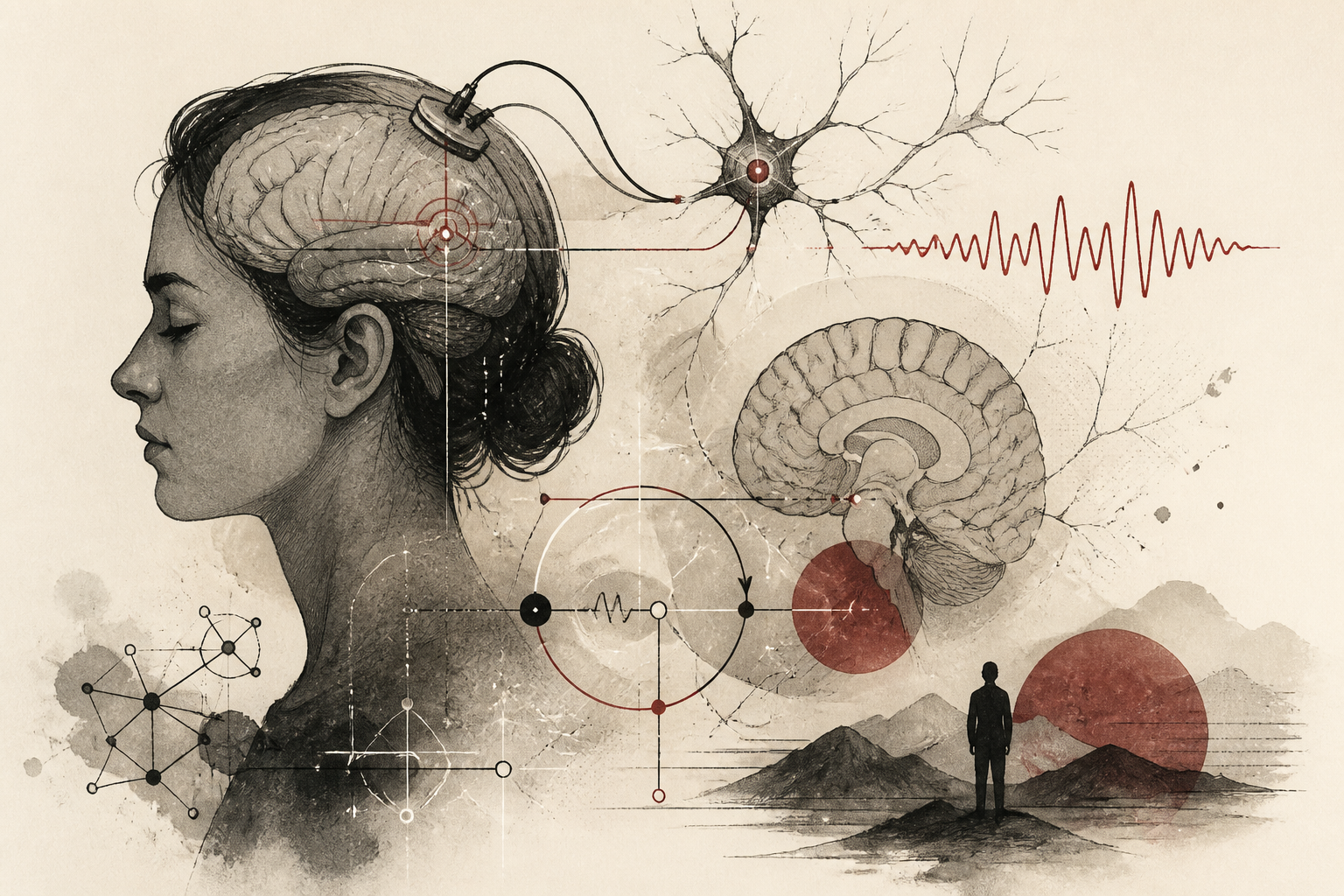
Current developments in brain-computer interface (BCI) technology are expanding beyond the restoration of motor function to address complex psychiatric conditions. According to a recent report by *Neuroscience News*, researchers are exploring how closed-loop BCI systems could potentially treat disorders such as depression, anxiety, post-traumatic stress disorder (PTSD), and obsessive-compulsive disorder (OCD).
Traditionally, BCIs have focused on motor cortical decoding to assist patients with paralysis. However, treating psychiatric conditions necessitates a more sophisticated approach. Unlike motor functions, which are often localized, mental health disorders are rooted in dynamic, multi-region neural networks. Closed-loop systems represent a significant shift toward monitoring these distributed circuits in real-time. These systems function by detecting specific patterns of neural activity associated with symptomatic distress and delivering targeted electrical stimulation to recalibrate the network.
This "state-dependent" intervention allows for a personalized approach to neuromodulation. By tracking emotional and cognitive states, a closed-loop BCI can provide therapeutic stimulation only when the patient’s brain activity deviates from a healthy baseline. This precision minimizes the risk of over-stimulation and addresses the fluctuating nature of psychiatric symptoms, which can vary throughout the day.
While the technology remains in the experimental and clinical trial phases, the move from static decoding to dynamic network tracking marks a pivotal transition in neuroprosthetics. Researchers emphasize that the success of these interventions depends on identifying the precise neural biomarkers for each condition. As our understanding of brain connectivity improves, closed-loop BCIs may offer a viable alternative for patients who have not responded to traditional pharmacological or psychological therapies.
Source: NeuroscienceNews.com
Quick answers
- What is the difference between traditional BCIs and psychiatric BCIs?
- Traditional BCIs focus on translating motor signals into movement, while psychiatric BCIs track and regulate emotional and cognitive states within multi-region neural networks.
- How does a closed-loop BCI work for mental health?
- It monitors real-time brain activity for specific biomarkers of distress and provides targeted electrical stimulation to normalize the neural circuit when symptoms are detected.
- Which psychiatric conditions could be treated with this technology?
- Current research focuses on depression, anxiety, PTSD, and obsessive-compulsive disorder (OCD).
Rewritten by Zeit editorial AI. Based on original reporting at NeuroscienceNews.com.