Viral Remnants Within the Genome Identified as Drivers of Microglial Senescence
New research published in Nature Neuroscience reveals how the reactivation of ancient endogenous retroviruses triggers chronic inflammation and cellular aging in the brain.
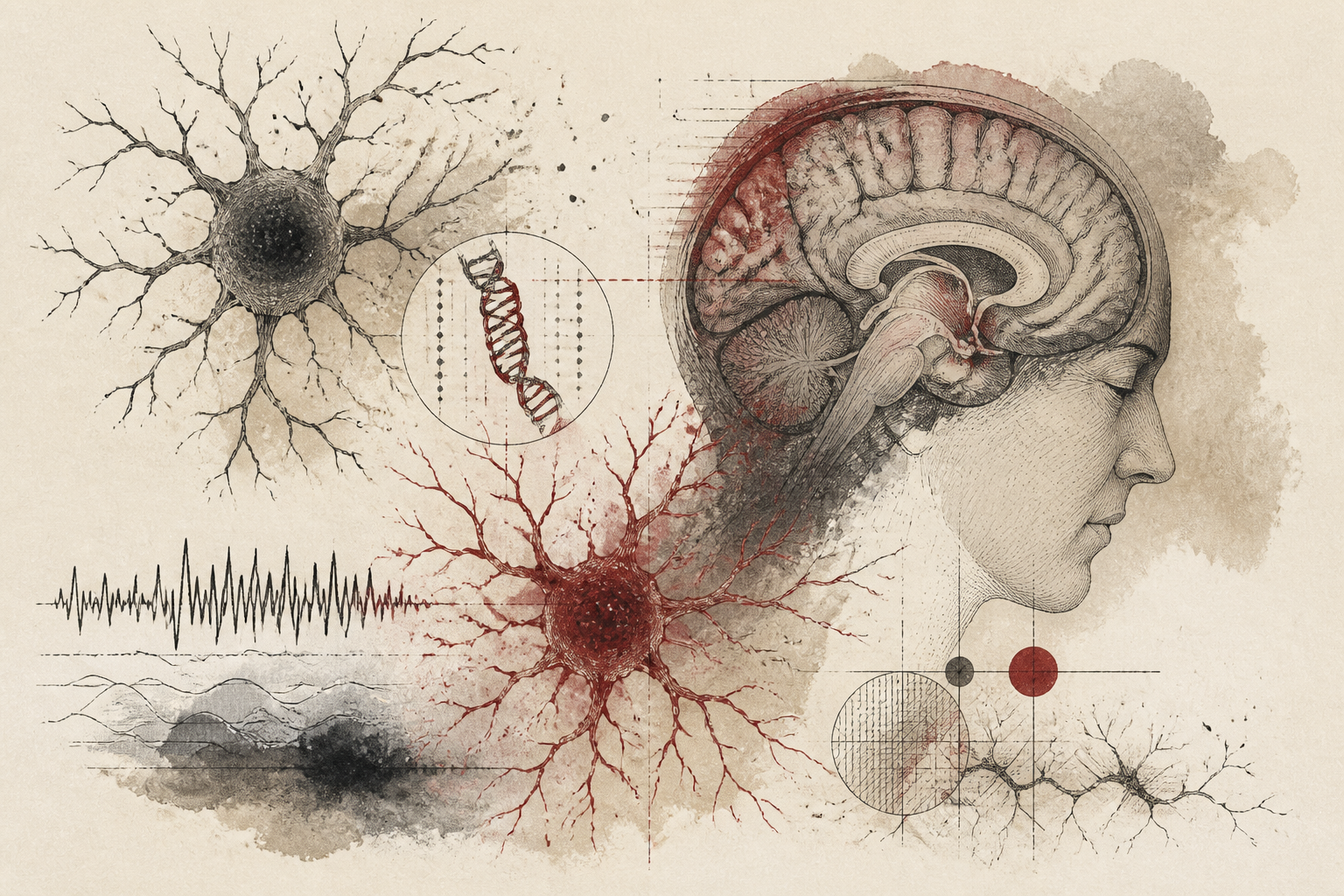
The human genome is often characterized as a blueprint for biological life, yet significant portions of our DNA are composed of ancient remnants from viral infections that occurred millions of years ago. These sequences, known as endogenous retroviruses (ERVs), have historically been dismissed as evolutionary 'junk'—silenced and dormant artifacts of a distant past. However, recent findings published in the journal *Nature Neuroscience* suggest that these sleeping giants may play a central role in the aging process of the brain. Specifically, the research highlights how the derepression of these retroviral elements activates microglia, the brain’s resident immune cells, leading to a state of chronic inflammation and cellular senescence. This discovery shifts our understanding of neurodegeneration, suggesting that the enemy within our own genetic code may be responsible for the cognitive decline associated with aging.
The Genetic Legacy of Ancient Viral Integration
To understand the implications of this study, one must first consider the nature of endogenous retroviruses. Throughout evolutionary history, retroviruses have integrated their genetic material into the germlines of ancestral species. When these integrations become fixed in the population, they are passed down through generations. In healthy individuals, these sequences are typically kept in a state of transcriptional silence through epigenetic mechanisms such as DNA methylation and histone modification. The body treats these sequences as potential threats, ensuring they remain inactive to prevent the production of viral proteins or the mobilization of genetic elements that could disrupt cellular function.
However, the study in *Nature Neuroscience* indicates that this silencing mechanism is not infallible. As organisms age, the epigenetic landscape undergoes significant changes, often referred to as 'epigenetic drift.' The research demonstrates that in aging microglia, the regulatory grip on these endogenous retroviruses begins to loosen. This process of derepression allows the previously silenced viral sequences to be transcribed into RNA and, in some cases, translated into proteins. The presence of these viral products within the cell acts as a biological alarm, signaling to the immune system that an active infection is underway, even in the absence of an external pathogen.
Mechanisms of Microglial Activation and Inflammation
Microglia serve as the primary defense mechanism of the central nervous system, constantly surveying the environment for signs of injury or infection. When the derepression of ERVs occurs, the resulting viral RNA and proteins are recognized by innate immune sensors within the microglia. This recognition triggers a robust inflammatory response. The research team found that this internal activation leads to the secretion of pro-inflammatory cytokines and chemokines, creating a state of chronic low-grade inflammation often termed 'inflammaging.'
Crucially, the study identifies that this activation is not a transient event. The continuous production of ERV-derived products ensures that the microglia remain in a persistently activated state. This prolonged immune response is destructive; it leads to the collateral damage of surrounding neurons and disrupts the delicate homeostatic balance of the brain. The researchers utilized advanced sequencing techniques and mouse models to observe that when specific ERV sequences were artificially silenced, the inflammatory markers decreased, suggesting a direct causal link between retroviral expression and immune hyperactivity. Conversely, when the silencing mechanisms were intentionally disrupted in young subjects, their microglia exhibited the molecular signatures of aged cells, effectively accelerating the biological clock.
Cellular Senescence and the Loss of Homeostatic Function
Beyond inflammation, the study explores the transition of microglia into a senescent state. Cellular senescence is a biological phenomenon where cells cease to divide and undergo significant functional alterations. Senescent cells are often described as 'zombie cells' because they refuse to die but no longer perform their original duties effectively. The *Nature Neuroscience* report details how ERV-driven inflammation pushes microglia toward this senescent phenotype. Once senescent, these cells lose their ability to perform critical tasks such as synaptic pruning and the clearance of protein aggregates like amyloid-beta.
This loss of function creates a feedback loop that exacerbates neurodegeneration. As microglia stop cleaning the brain’s 'trash,' the accumulation of metabolic waste further stresses the remaining healthy cells. The researchers noted that the senescent microglia also began to express genes associated with neurodegenerative diseases, bridging the gap between normal aging and pathological conditions. The study’s findings suggest that the derepression of ERVs is not just a symptom of aging, but a primary driver that dictates the pace at which the brain’s immune system fails.
Methodological Approaches and Identified Constraints
The research utilized a multi-disciplinary approach, combining transcriptomic analysis, epigenetic profiling, and in vivo experiments. By examining the gene expression patterns of microglia across different age groups, the team was able to pinpoint the specific timing of ERV reactivation. They also employed CRISPR-based tools to modulate the expression of these retroviral elements, providing a high degree of precision in their observations. However, as with all pioneering research, there are recognized limitations. The majority of the mechanistic work was conducted in murine models, and while mice share many genetic similarities with humans, the specific families of endogenous retroviruses differ between species.
Furthermore, the study raises questions regarding the environmental and lifestyle factors that might accelerate the derepression of ERVs. While the biological mechanism of aging is central, it remains unclear how factors such as chronic stress, diet, or exposure to external toxins might interact with the epigenetic silencing of these viral remnants. The researchers also acknowledge that while ERV reactivation is a significant driver of inflammation, it is likely one of several contributing factors in the complex landscape of neurobiology. Identifying the relative weight of ERV derepression compared to other stressors like oxidative damage or mitochondrial dysfunction remains an objective for future inquiry.
Implications for Future Therapeutic Intervention
The significance of these findings lies in the identification of a novel therapeutic target. If the reactivation of ancient viruses is a primary cause of brain aging and inflammation, then strategies to reinforce the silencing of these sequences could potentially slow or even reverse aspects of cognitive decline. The research opens the door for the development of 'epigenetic therapies'—drugs designed to restore the youthful methylation patterns that keep ERVs dormant. There is also interest in whether existing antiretroviral medications, currently used to treat modern viruses like HIV, could be repurposed to inhibit the replication of these ancient genetic elements.
In conclusion, the work published in *Nature Neuroscience* provides a compelling case for the role of endogenous retroviruses in the degradation of the aging brain. By transforming our understanding of microglia from simple defenders to victims of their own genetic baggage, the study reframes neurodegeneration as a battle against internal genomic instability. As the global population ages, understanding these deep-seated biological mechanisms becomes essential. The quest to silence the ancient echoes within our DNA may hold the key to preserving human cognition into the twilight years, ensuring that the legacy of our evolutionary past does not dictate the limits of our future.
Quick answers
- What are endogenous retroviruses (ERVs)?
- ERVs are ancient viral sequences that integrated into the human genome millions of years ago and are passed down through generations, normally remaining dormant.
- How do ancient viruses affect brain aging?
- As we age, these viral sequences can lose their genetic 'silencing,' leading to the production of viral proteins that trigger inflammation in microglia, the brain's immune cells.
- Can the inflammation caused by ERVs be stopped?
- Research suggests that reinforcing the silencing mechanisms of these genetic elements or using antiretroviral strategies could potentially reduce age-related brain inflammation.
Rewritten by Zeit editorial AI. Based on original reporting at Nature Neuroscience.