Vascular Intervention and Cognitive Preservation: Assessing the Role of NOACs in Alzheimer’s
New research suggests that Non-vitamin K Antagonist Oral Coagulants (NOACs) may significantly slow the rate of cognitive decline in patients diagnosed with both Alzheimer’s and atrial fibrillation.
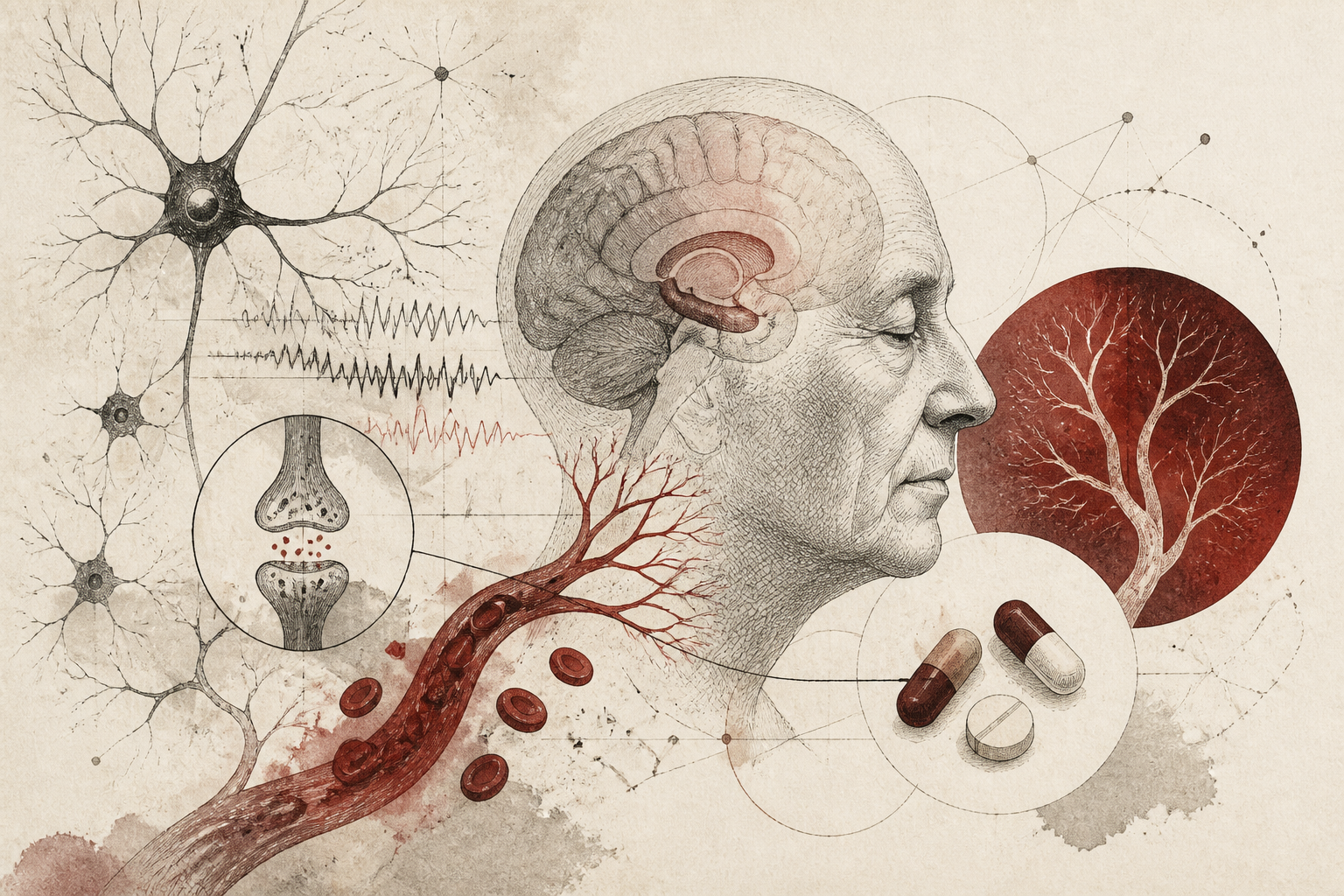
In the intersection of cardiovascular health and neurodegenerative management, a significant pharmacological observation has emerged regarding the trajectory of cognitive decline in patients with Alzheimer’s disease. Recent clinical investigations reported by ScienceDaily indicate that a specific class of medications, commonly referred to as newer blood thinners or Non-vitamin K Antagonist Oral Coagulants (NOACs), may provide neuroprotective benefits that extend beyond their primary function of stroke prevention. For individuals navigating the dual challenges of Alzheimer’s disease and atrial fibrillation, the choice of anticoagulant therapy appears to be a factor in the velocity of their cognitive deterioration. This finding adds a crucial layer to the management of geriatric patients, where comorbid conditions often require a delicate balance of pharmacological interventions that can either exacerbate or alleviate the symptoms of dementia.
Atrial fibrillation, a common heart rhythm disorder characterized by irregular and often rapid heart rates, is a known risk factor for ischemic stroke. To mitigate this risk, clinicians traditionally prescribe anticoagulants to prevent the formation of blood clots. However, the relationship between vascular health and the progression of Alzheimer’s disease is becoming increasingly evident to researchers. While Alzheimer’s is primarily characterized by the accumulation of amyloid-beta plaques and tau tangles in the brain, the role of micro-vascular health cannot be overlooked. The recent study suggests that by optimizing blood flow and preventing minor, often subclinical embolic events, NOACs may serve a secondary, albeit vital, purpose in preserving cognitive function over the long term.
Comparative Efficacy of Modern Coagulants
The core of the research focused on a comparative analysis between different classes of blood thinners and their respective impacts on the cognitive status of patients. Historically, warfarin has been the standard of care for anticoagulation. While effective, warfarin requires frequent monitoring and carries a significant risk of dietary and drug interactions. In contrast, NOACs, which include medications such as apixaban, rivaroxaban, and dabigatran, offer a more predictable pharmacological profile. The study observed that patients treated with NOACs demonstrated a demonstrably slower decline in cognitive performance when compared to those utilizing warfarin or those receiving no anticoagulant therapy at all. This distinction is particularly relevant for the Alzheimer’s population, where even marginal gains in the preservation of daily functioning can result in a higher quality of life for both patients and caregivers.
Statistical data reported in the study indicate that the neuroprotective effect observed was modest on an annual basis. However, the researchers emphasize the cumulative nature of this benefit. In the context of a progressive disease like Alzheimer’s, a slight reduction in the rate of decline each year can translate into months or even years of additional cognitive stability over the course of a decade. The data suggests that the transition from traditional vitamin K antagonists to modern NOACs represents more than a logistical convenience for stroke prevention; it may be a proactive strategy for brain health maintenance in vulnerable populations.
Mechanisms of Vascular Neuroprotection
To understand why NOACs might outperform warfarin in this specific context, one must examine the potential physiological mechanisms at play. Warfarin works by inhibiting the synthesis of vitamin K-dependent clotting factors, which can occasionally lead to micro-hemorrhages or fluctuations in blood consistency if not managed with extreme precision. These fluctuations, while perhaps not resulting in a major stroke, could contribute to small-scale vascular damage in the brain—often referred to as micro-infarcts. These tiny areas of tissue death are a hallmark of vascular dementia and are known to accelerate the cognitive symptoms associated with Alzheimer’s disease.
NOACs, however, target specific clotting factors such as thrombin or Factor Xa directly. This targeted approach is believed to provide a more stable anticoagulant effect, reducing the incidence of silent micro-bleeds and ensuring more consistent cerebral perfusion. The methodology of the study involved tracking cognitive scores over several years, allowing researchers to plot a trajectory of decline. By isolating the variable of medication type, they were able to discern that the stability provided by NOACs correlated with a more resilient cognitive profile. This suggests that the brain’s ability to withstand the pathological progression of Alzheimer’s is significantly bolstered when the vascular system is maintained in a state of equilibrium.
Clinical Interpretations and Limitations
While the findings are promising, the academic community urges a nuanced interpretation of the results. The study acknowledges that the observed benefits are incremental rather than transformative. It is essential to clarify that NOACs do not represent a cure for Alzheimer’s disease, nor do they halt the underlying neurobiological processes of plaque and tangle formation. Instead, they appear to modify the environment in which the disease operates, potentially slowing the manifestation of symptoms by minimizing additional vascular insults. This distinction is vital for setting realistic expectations for patients and healthcare providers.
Furthermore, the study highlights several open questions and limitations that warrant further investigation. One such area is the timing of intervention. It remains unclear whether the benefits of NOACs are more pronounced when started in the early stages of Alzheimer’s or if they can still offer significant protection in the later stages of the disease. Additionally, the study primarily focused on patients with documented atrial fibrillation. Whether similar vascular neuroprotection could be achieved in patients without a heart rhythm disorder, through other means of vascular management, remains a subject for future research. There is also the matter of cost and accessibility, as NOACs are generally more expensive than warfarin, presenting a hurdle for some healthcare systems and patient demographics.
Implications for Geriatric Care and Policy
The significance of this research lies in its potential to influence clinical guidelines for the treatment of elderly patients with complex comorbidities. As the global population ages, the prevalence of both Alzheimer’s and atrial fibrillation is expected to rise. The ability to choose a medication that addresses one condition while serendipitously aiding another is a cornerstone of efficient geriatric medicine. This study provides a compelling argument for prioritizing NOACs in the treatment plan for Alzheimer’s patients who require anticoagulation, provided there are no contraindications.
According to the original findings reported via ScienceDaily, the implications extend to healthcare policy and the economic evaluation of drug therapies. If a medication can reduce the speed of cognitive decline, it may delay the need for high-cost institutional care, such as nursing homes or specialized memory care units. Thus, the slightly higher cost of NOACs compared to traditional blood thinners might be offset by the long-term savings associated with prolonged patient independence. For the university community and the broader field of psychology, this research reinforces the necessity of an interdisciplinary approach, where cardiovascular health is viewed as an inseparable component of neuro-psychological well-being. The preservation of the aging mind may well depend as much on the health of the vessels that feed it as it does on the neurons themselves.
Quick answers
- What are NOACs and how do they differ from warfarin?
- NOACs (Non-vitamin K Antagonist Oral Coagulants) are modern blood thinners that target specific clotting factors like thrombin or Factor Xa. Unlike warfarin, they do not require constant blood monitoring and have fewer interactions with food and other drugs.
- Do blood thinners cure Alzheimer's disease?
- No, blood thinners like NOACs do not cure Alzheimer's or stop its progression. They appear to slow down the rate of cognitive decline, likely by protecting the brain's vascular system from small-scale damage.
- Is the cognitive benefit of NOACs immediate?
- The study indicates the benefit is modest on an annual basis but becomes significant over several years as the cumulative effect of slower decline adds up.
Rewritten by Zeit editorial AI. Based on original reporting at ScienceDaily — Mind & Brain.