Unpacking the Surge: How Intolerance of Uncertainty Redefined Youth Anxiety Post-2012
A decades-long analysis reveals that the psychological inability to handle the unknown has accelerated three times faster among college students since the early 2010s.
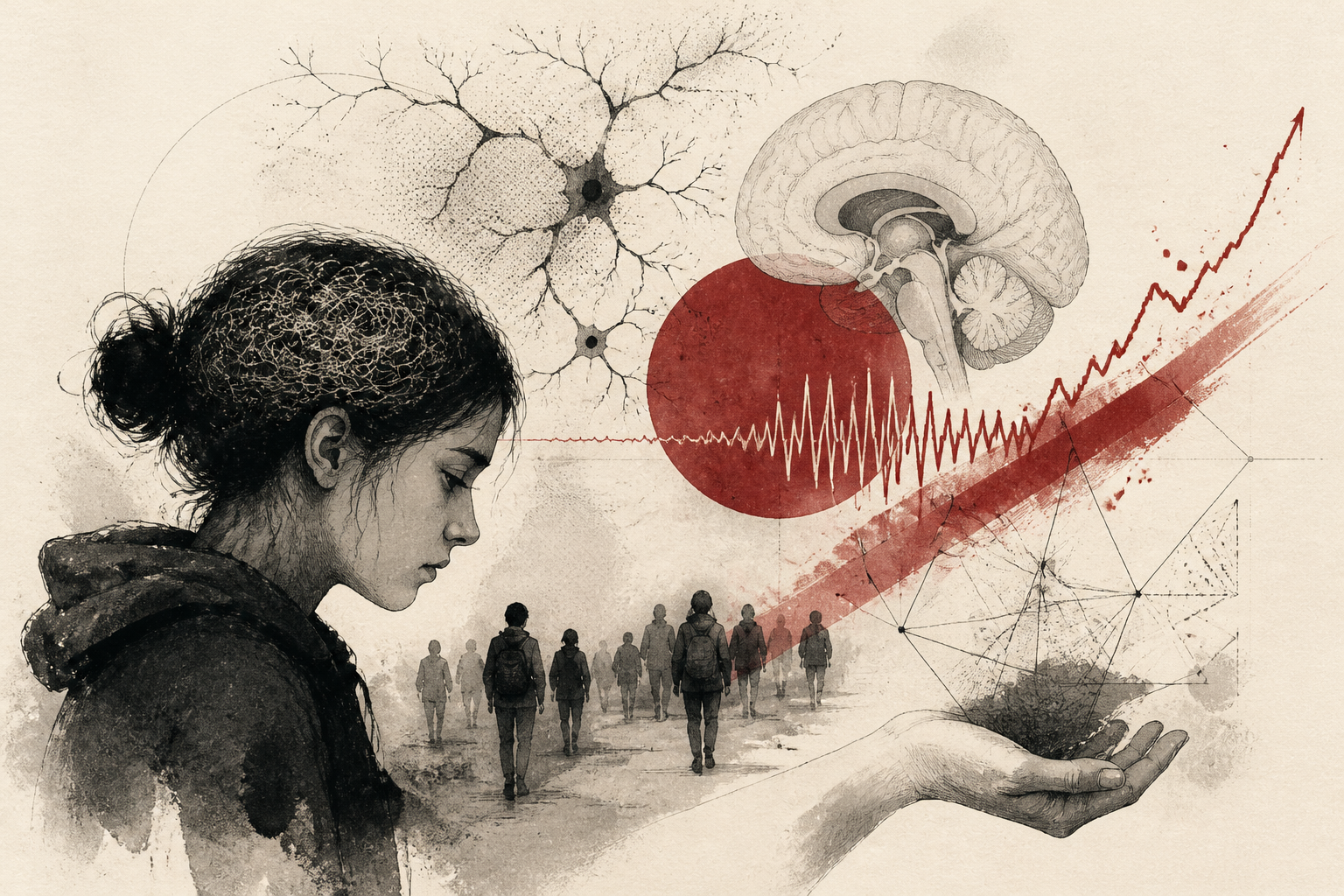
In the ongoing discourse surrounding the mental health crisis among adolescents and young adults, a central debate has emerged: is the observed rise in anxiety a byproduct of increased clinical awareness and reduced stigma, or does it reflect a fundamental shift in the modern psychological landscape? Recent research published via NeuroscienceNews.com offers a compelling and data-driven perspective on this question. By examining longitudinal trends in how students perceive and react to ambiguity, investigators have identified a sharp inflection point occurring just over a decade ago. The findings suggest that we are witnessing a genuine escalation in psychological vulnerability, specifically regarding the capacity to tolerate unknown outcomes.
The Shift in Cognitive Appraisals of Ambiguity
The study, which synthesized data from more than 35,000 college students between 1992 and 2023, focused on a specific psychological construct known as Intolerance of Uncertainty (IU). In clinical psychology, IU is defined as the tendency to perceive the absence of information or an unpredictable future as inherently threatening or stressful. It is not merely a preference for order, but rather a dispositional characteristic that makes the experience of 'not knowing' emotionally taxing. While levels of IU have been tracked for decades, the analysis revealed a startling trend: the rate at which this trait has increased among the student population accelerated by a factor of three starting in 2012.
Before 2012, the growth of uncertainty intolerance was relatively steady, albeit present. However, the subsequent decade saw a rapid escalation that coincides with broader shifts in technology, social interaction, and global stability. This acceleration indicates that the modern student is significantly less equipped to manage the inherent ambiguities of life than their counterparts from the 1990s or early 2000s. The research moves beyond simple self-reporting of anxiety symptoms, which can be influenced by cultural trends in therapy-speak, and looks instead at the underlying cognitive mechanisms that drive anxious states. The result is a robust indicator that the psychological baseline for young adults has fundamentally shifted toward higher reactivity.
Methodological Foundations and Historical Context
To reach these conclusions, the research team utilized a cross-temporal meta-analysis, a method that allows scientists to track changes in mean scores on standardized psychological assessments over time. The primary tool utilized was the Intolerance of Uncertainty Scale, a validated instrument that measures both prospective anxiety—worrying about future events—and inhibitory anxiety, which is the paralysis or lack of action caused by uncertainty. By aggregating data across more than three decades, the study provides one of the most comprehensive views of the generational shifts in cognitive coping mechanisms ever recorded.
Historical context is vital for interpreting the 2012 pivot point. The researchers noted that while previous generations faced significant stressors, such as the Cold War or the 2008 financial crisis, the specific rise in IU appears uniquely linked to the post-2010 era. The methodology accounted for geographic and demographic variables to ensure that the trend was not localized to a single institution but represented a broader cohort of emerging adults. By isolating IU as the primary metric, the study avoids the confounding variables often found in general anxiety screenings, which may capture temporary situational stress rather than stable personality traits. This distinction is critical for understanding whether we are seeing a 'snowflake' effect of lower resilience or a systemic change in how the human brain processes environmental signals in the digital age.
Mechanisms of Acceleration and the Role of Digital Ubiquity
The most pressing question arising from the data is why 2012 served as such a significant catalyst. While the study primarily establishes the statistical trend, the researchers and contributing commentators point toward the intersection of social media saturation and the ubiquity of high-speed information access. By 2012, the smartphone had moved from a luxury item to a standard component of adolescent life, fundamentally altering how young people interact with information. In a world where every question can be answered with a search engine and every social interaction is mediated by instant feedback, the 'muscle' for sitting with unanswered questions may be atrophying.
Furthermore, the mechanism of IU is closely linked to the brain’s predictive processing models. When the environment provides constant, albeit often superficial, certainty through notifications and algorithmic feeds, the sudden absence of these cues—such as waiting for a grade, a job offer, or a social response—becomes exponentially more distressing. The research suggests that the rapid increase in IU since 2012 is not an isolated phenomenon but is likely tethered to a feedback loop where technology promises certainty while simultaneously exposing the user to a globalized stream of unpredictable and often catastrophic news. This creates a psychological environment where the unknown is no longer seen as a space for potential, but as a source of imminent danger.
Limitations and Future Directions in Clinical Pedagogy
Despite the rigor of the meta-analysis, the researchers acknowledge certain limitations. First, the data is primarily drawn from college-enrolled populations, which may not fully represent the experiences of young adults in the workforce or those from different socioeconomic backgrounds. Additionally, while the correlation with the year 2012 is statistically significant, the study does not definitively prove causation regarding specific technological or social changes. There is also the question of whether this shift is reversible or if it represents a permanent adaptation to a high-information society. The findings highlight a need for longitudinal studies that track these individuals into middle age to see if IU persists or diminishes as life experience accumulates.
From a pedagogical and clinical perspective, these findings suggest that traditional approaches to treating anxiety may need to be recalibrated. If the root of the issue is a three-fold increase in the inability to handle uncertainty, then interventions must focus on 'uncertainty exposure'—helping students build the cognitive stamina to remain functional despite not knowing the outcome of a situation. For universities, this may involve designing curricula that challenge the need for constant feedback and encourage navigating through ambiguous problem sets, thereby fostering the resilience that the data suggests is currently in decline.
The Broader Implications for Social Stability
The significance of this research extends beyond the walls of the counseling center. A society where the rising generation is increasingly intolerant of uncertainty is a society that may struggle with innovation, risk-taking, and democratic discourse. Innovation inherently requires a comfort with failure and the unknown; if emerging adults are psychologically predisposed to avoid these states, the long-term impact on scientific and economic progress could be substantial. Moreover, the psychological distress identified in this study is a known precursor to more severe mental health conditions, including clinical depression and obsessive-compulsive disorder.
In conclusion, the findings presented by NeuroscienceNews.com provide a sobering look at the psychological health of the modern student. The tripling of the growth rate of uncertainty intolerance since 2012 serves as a clarion call for educators, parents, and policymakers. It confirms that the current anxiety epidemic is not merely a matter of increased reporting, but a profound transformation in how the human mind engages with the future. Addressing this trend will require more than just awareness; it will require a concerted effort to reintegrate the value of ambiguity into our digital and educational lives, ensuring that the next generation can stand firm in a world that will always remain, to some degree, unknowable.
Quick answers
- What is Intolerance of Uncertainty (IU)?
- IU is a psychological trait where an individual perceives the lack of information or an unpredictable future as inherently threatening or stressful, often leading to anxiety.
- How much has uncertainty intolerance increased since 2012?
- According to the study of 35,000 students, the rate of increase in intolerance of uncertainty has been three times faster after 2012 compared to previous years.
- Why did youth anxiety trends change specifically in 2012?
- Researchers suggest the 2012 pivot correlates with the widespread adoption of smartphones and social media, which may have reduced the ability to cope with ambiguity.
Editorial Team