Unlocking Complexity: The Primate-Specific Genetic Switch Driving Cortical Expansion
Researchers identify a unique DNA regulatory element in primates that modifies the DACH1 gene to significantly increase the production of specialized neural stem cells.
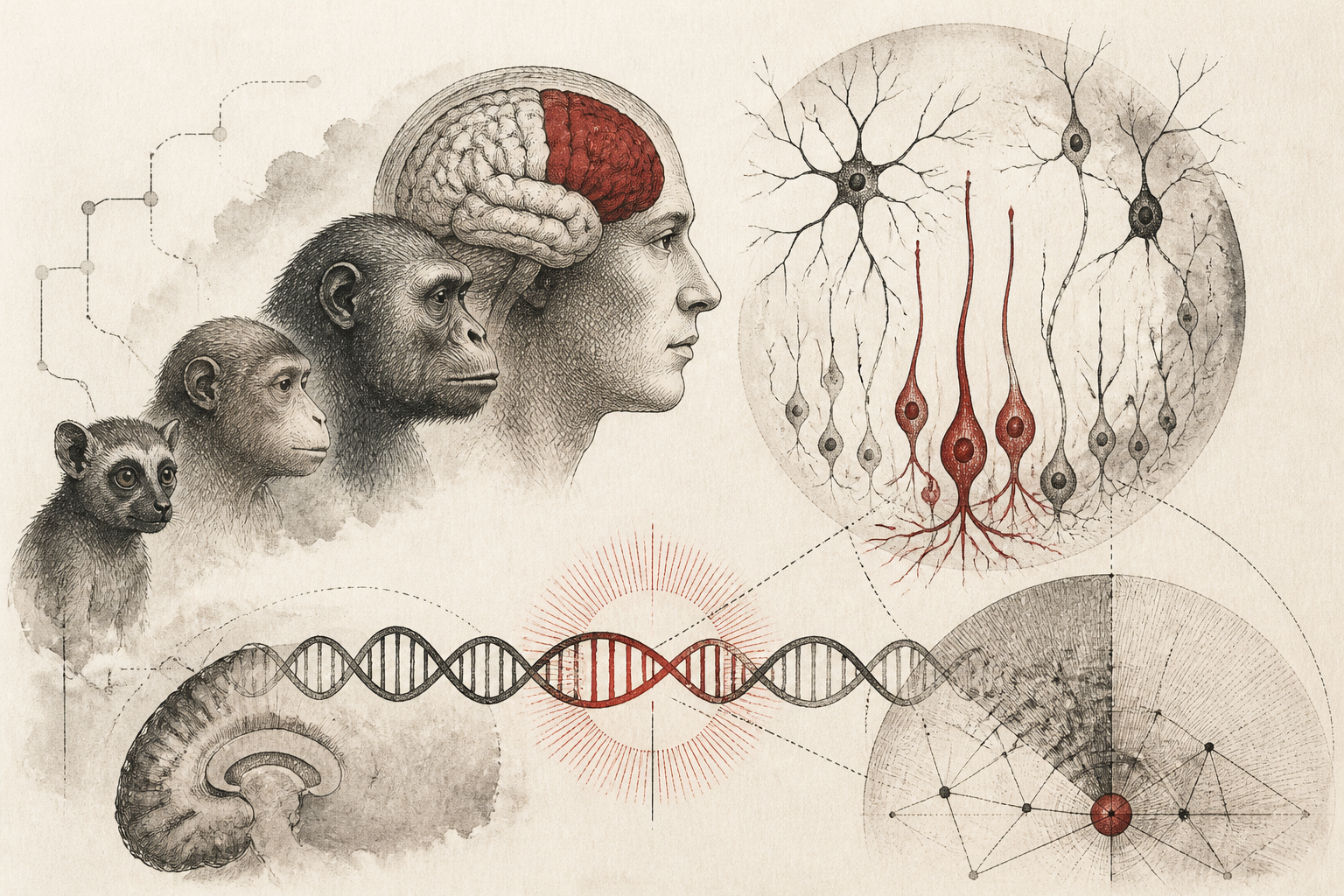
The evolutionary trajectory that led to the development of the large, complex human brain has long been one of the most profound mysteries in biological science. While humans share a vast majority of their genetic code with other mammals, the anatomical differences in the cerebral cortex—the seat of higher cognition, language, and abstract thought—are stark. For decades, the central question has been whether these differences arose from the emergence of entirely new genes or from subtle changes in how existing genes are utilized. New research, as reported by NeuroscienceNews.com, suggests that the answer lies not in new genetic blueprints, but in a sophisticated "genetic switch" that is unique to the primate lineage. This regulatory mechanism influences a shared gene known as DACH1, specifically boosting the production of specialized stem cells responsible for building the architecture of the cerebral cortex.
The Evolutionary Mechanics of Cortical Expansion
The cerebral cortex is the outermost layer of the brain, characterized in primates and especially humans by its dense folding and immense population of neurons. To understand how this structure expanded so dramatically, researchers turned their attention to the prenatal stages of brain development. During embryonic growth, the brain is constructed by neural progenitor cells, which divide and differentiate into the billions of neurons that form the adult organ. In most mammals, such as rodents, this process is relatively straightforward and results in a smooth, smaller cortex. However, primates possess a unique abundance of a specific type of stem cell known as basal radial glia. These cells are essentially the architects of the expanded cortex; they act as a proliferative engine, allowing for a much higher output of neurons over a longer developmental period. The discovery of a primate-specific DNA regulatory switch controlling the DACH1 gene provides the first clear explanation for why primates, and not other mammals, evolved this specialized cellular machinery.
A Regulatory Shift in the DACH1 Gene
The study highlights that the DACH1 gene itself is not unique to primates; it is a highly conserved gene found across a wide range of species, including birds and various mammals. In these other species, DACH1 plays a role in fundamental developmental processes, but it does not lead to the massive brain expansion seen in humans. The breakthrough in recent research reveals that primates developed a specific regulatory element—a non-coding segment of DNA—that functions as an enhancer. This enhancer acts as a switch that precisely controls when and where the DACH1 gene is expressed during fetal development. In primates, this switch activates DACH1 within the ventricular zone of the developing brain, specifically targeting the population of basal radial glia. By increasing the expression of DACH1 in these specific cells, the genetic switch effectively "reprograms" the developmental pace, allowing for the massive proliferation of neural precursors required to build a primate-sized brain.
Methodology and the Role of Basal Radial Glia
To arrive at these findings, the research team utilized advanced genomic sequencing and comparative molecular biology. By comparing the regulatory landscapes of humans, non-human primates, and non-primate mammals, they were able to isolate the specific DNA sequences that differed significantly. The focus was on identifying "accelerated regions"—parts of the genome that remained stable for millions of years but changed rapidly within the primate lineage. Once the DACH1 regulatory switch was identified, the researchers observed its activity in neural stem cell models. They found that the presence of this primate-specific switch directly correlated with the increased prevalence of basal radial glia. Unlike the primary radial glia found in all mammals, these basal variants have a unique capacity for self-renewal and expansion. By maintaining a larger pool of these stem cells for a longer duration, the primate brain can generate a vastly higher number of neurons, which eventually migrate to form the complex layers of the cerebral cortex. This method shows that evolution often takes the path of "regulatory innovation" rather than creating new functional proteins from scratch.
Limitations and Theoretical Implications
While this discovery marks a significant milestone in evolutionary neuroscience, the researchers acknowledge several limitations that require further investigation. First, while the DACH1 switch explains a significant portion of the expansion of the basal radial glia population, it is unlikely to be the sole factor involved in human brain evolution. The human brain is not just a larger version of a chimpanzee brain; it involves specific wiring patterns and synaptic densities that may be governed by other, yet-to-be-discovered regulatory elements. Furthermore, the study primarily focuses on the early stages of neurogenesis. The later stages of brain development, including the pruning of synapses and the myelination of white matter tracts, are also critical to adult cognitive function and were not the focus of this specific genetic analysis. There is also the question of environmental interaction; how these genetic switches respond to external stimuli during development remains a secondary area of necessary research to fully understand the plasticity of the primate brain.
Future Directions in Evolutionary Genetics
The implications of identifying the DACH1 switch extend far beyond the history of human evolution. Understanding the precise genetic triggers that cause neural stem cells to proliferate could have profound applications in regenerative medicine and the treatment of neurodevelopmental disorders. For instance, conditions like microcephaly, where the brain fails to grow to a normal size, could potentially be understood through the lens of these regulatory switches. If science can map the full suite of enhancers that control brain size and complexity, it may eventually be possible to develop therapies that encourage neural repair or compensate for genetic deficiencies. Moreover, this research reinforces the importance of the non-coding "dark matter" of the genome. For years, scientists focused on the genes that code for proteins, but this study proves that the instructions for how to use those genes—the regulatory switches—are where the most significant evolutionary leaps occur. As genomic technology continues to advance, the academic community is poised to uncover more of these hidden mechanisms that define the unique characteristics of the human mind.
Quick answers
- What is the DACH1 gene's role in brain evolution?
- The DACH1 gene is a shared gene among many species, but in primates, a specific DNA switch causes it to boost the production of basal radial glia, which are stem cells that build the large cerebral cortex.
- Did humans evolve new genes to get larger brains?
- No, this research suggests that rather than new genes, primates evolved new regulatory switches for existing genes, changing how and when those genes are expressed during development.
- What are basal radial glia?
- They are specialized neural stem cells found in high numbers in primates that allow for a massive increase in the production of neurons, leading to a larger and more complex brain.
Editorial Team