Uncoupling Inflammation and Pain: The Residual Symptom Paradox in Rheumatoid Arthritis
Researchers identify non-inflammatory drivers such as sleep quality and mental health that sustain pain in rheumatoid arthritis patients despite clinical remission.
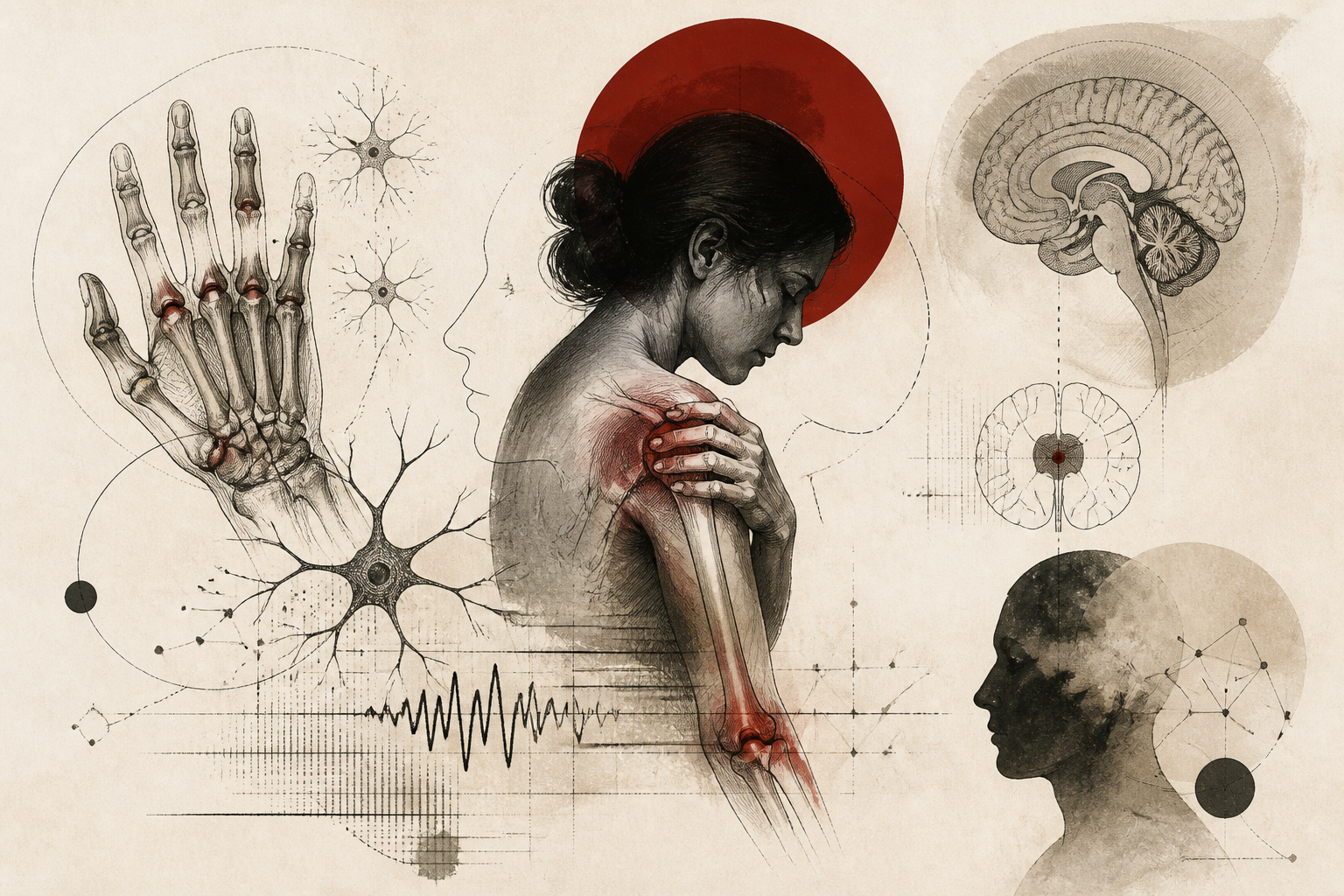
The clinical management of rheumatoid arthritis has traditionally focused on the suppression of systemic inflammation as the primary route to patient recovery. By targeting the underlying autoimmune response, biological therapies and disease-modifying antirheumatic drugs have revolutionized the prognosis for millions. However, a persistent clinical paradox remains: a significant cohort of patients continues to report debilitating pain and fatigue even after laboratory markers and physical examinations indicate that their inflammation is well-controlled. This misalignment between biological remission and patient-reported wellbeing suggests that the mechanical drivers of the disease are only one facet of a more complex symptom profile. A recent analysis featured in ScienceDaily highlights a growing body of evidence suggesting that factors such as depression, sleep disturbances, and lifestyle variables play a central role in sustaining symptoms when the immune system is no longer in an active state of aggression against the joints.
Historically, the persistence of pain in a patient with low inflammatory markers was often interpreted as a failure of primary treatment, frequently leading clinicians to escalate immunosuppressive therapies. This approach, while logical under a traditional biomedical model, often yields diminishing returns and exposes patients to unnecessary side effects. The current research shifts the focus toward 'extra-articular' drivers of pain, suggesting that the nervous system may remain in a sensitized state long after the initial inflammatory trigger has been mitigated. By recognizing that pain and inflammation can become uncoupled, the medical community is moving toward a more nuanced, biopsychosocial understanding of chronic autoimmune conditions, where the brain’s processing of pain signals is treated with the same clinical rigor as the joints themselves.
The Multifactorial Landscape of Residual Symptoms
The findings indicate that the persistence of pain and fatigue is rarely the result of a single overlooked biological mechanism. Instead, it emerges from a constellation of comorbid factors that interact to lower the pain threshold. Among the most prominent drivers identified are psychological distress and sleep fragmentation. Depression and anxiety are not merely secondary reactions to living with a chronic illness; they appear to function as active modifiers of how the central nervous system interprets nociceptive input. When a patient suffers from clinical depression, the descending inhibitory pathways—the body's natural mechanism for dampening pain signals—often function less efficiently, causing minor physical sensations to be perceived as significant pain.
Furthermore, the role of sleep cannot be overstated. Sleep deprivation has a well-documented reciprocal relationship with pain sensitivity. The research suggests that poor sleep quality interferes with the body’s ability to recover from daily physical stressors, creating a feedback loop where pain prevents sleep, and the resulting exhaustion increases the subjective experience of pain the following day. Beyond these psychological and physiological factors, lifestyle variables such as obesity and smoking were also highlighted as critical sustainers of symptoms. Obesity contributes to a low-grade state of systemic metabolic inflammation that may not be captured by standard rheumatoid arthritis markers but still affects joint health and general energy levels. Similarly, smoking has been linked to increased pain sensitivity and reduced efficacy of certain medications, complicating the recovery process even when the primary disease activity is low.
Mechanism of Central Sensitization
To understand why these factors sustain pain, it is necessary to examine the mechanism of central sensitization. In many patients with long-standing rheumatoid arthritis, the repeated experience of inflammatory pain leads to neuroplastic changes in the spinal cord and brain. Over time, the nervous system becomes hyper-responsive, a phenomenon often described as the 'volume control' being turned up too high. Even when the original source of the pain—the joint inflammation—is resolved, the neural pathways that transmit pain remain active. This state of hypersensitivity explains why patients might feel intense discomfort during routine activities or even at rest, despite having 'clean' blood tests and joint scans.
Identifying these hidden drivers requires a shift in diagnostic methodology. Rather than relying solely on C-reactive protein levels or swollen joint counts, the research advocates for a more comprehensive assessment of the patient’s lifestyle and mental health. The study suggests that if a patient reports high levels of pain while their inflammatory markers are low, the clinician should look toward sleep hygiene, psychological screening, and metabolic health rather than automatically assuming a flare-up of the underlying autoimmune condition. This differentiation is vital for preventing the 'medication treadmill,' where patients are switched from one powerful biologic to another in a futile attempt to treat non-inflammatory pain with anti-inflammatory drugs.
Interpretations and Clinical Limitations
The interpretation of these findings suggests a necessary evolution in personalized medicine. If the drivers of pain are heterogeneous, then the treatment must be equally varied. For a patient whose pain is driven by sleep apnea or insomnia, the most effective 'arthritis treatment' may actually be a referral to a sleep specialist. For another whose symptoms are tied to depression, cognitive behavioral therapy or pharmacological intervention for mood may provide more relief than an increased dose of methotrexate. This holistic approach does not diminish the importance of controlling inflammation; rather, it acknowledges that inflammatory control is the baseline upon which other therapeutic interventions must be built.
However, there are limitations to this paradigm shift. One of the primary challenges is the subjective nature of reporting pain and fatigue. Unlike a blood test, there is no objective 'meter' for these symptoms, making it difficult for some clinicians to move away from the security of lab-based metrics. Additionally, the integration of mental health and lifestyle coaching into standard rheumatology practice requires resources and interdisciplinary cooperation that are not always available in overburdened healthcare systems. There is also the risk of patients feeling that their pain is being 'dismissed' as psychological if the transition from biological to lifestyle-based treatment is not handled with high levels of clinical empathy and clear communication.
Future Directions and the Path to Personalized Care
The questions that remain open for future inquiry involve the long-term outcomes of addressing these non-inflammatory drivers. While the correlation between sleep, mood, and pain is clear, more longitudinal data is needed to determine if targeted interventions—such as weight loss programs or specialized sleep therapy—can lead to permanent reductions in the need for immunosuppressive drugs. There is also a need for better biomarkers that can distinguish between inflammatory pain and sensitized pain, allowing for more precise triage at the point of care.
Why this matters for the broader field of psychology and medicine is the recognition that the body and mind are not separate silos of health. For the millions living with rheumatoid arthritis, these findings offer a message of validation: the pain they feel is real, even if the tests are normal. By expanding the clinical lens to include the 'hidden drivers' of symptoms, providers can offer more effective, personalized care plans that address the patient as a whole person. This research underscores the importance of a multidisciplinary approach, where the rheumatologist, psychologist, and primary care physician work in tandem to silence the echoes of pain that persist long after the fires of inflammation have been extinguished.
Quick answers
- Can rheumatoid arthritis cause pain even if blood tests are normal?
- Yes, research indicates that pain and fatigue can persist due to factors like central sensitization, poor sleep, and depression, even when inflammatory markers like CRP are under control.
- What are the non-inflammatory drivers of pain in RA?
- Key drivers include depression, anxiety, sleep disturbances, obesity, and smoking, which can sensitize the nervous system to pain signals.
- How does sleep affect arthritis pain?
- Poor sleep quality can lower the pain threshold and interfere with the body's recovery, creating a cycle where exhaustion makes physical discomfort feel more intense.
Rewritten by Zeit editorial AI. Based on original reporting at ScienceDaily — Mind & Brain.