Ultra-Processed Foods Alter Reward Circuitry in the Developing Brain
A longitudinal study identifies how high intake of ultra-processed foods sensitizes the dorsal striatum in children, predicting weight gain and increased body fat over time.
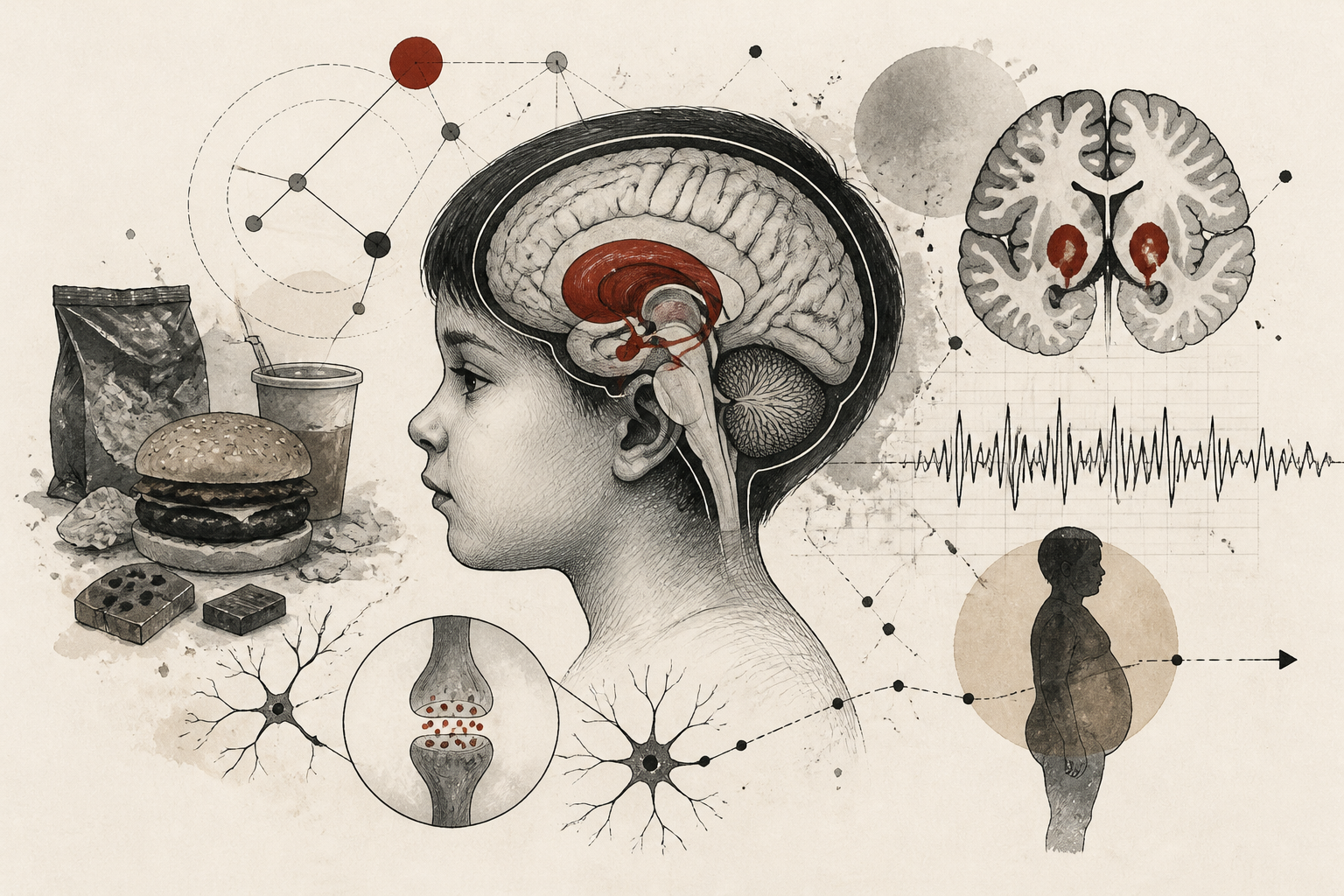
The relationship between dietary habits and neurological development has long been a focal point of pediatric research, yet recent findings published in JAMA Network Open provide a more granular look at how modern food processing affects the adolescent brain. According to a report by Neuroscience News, researchers have identified a specific neural pathway through which ultra-processed foods (UPFs) may condition the developing brain to overeat. By utilizing longitudinal functional magnetic resonance imaging (fMRI), the study demonstrates that children who consume higher quantities of these industrially manufactured foods show heightened sensitivity in brain regions associated with reward and habit formation. This neurological shift is not merely an incidental finding; it appears to serve as a biological precursor to measurable increases in body fat and body mass index (BMI) one year later, suggesting that the architecture of the adolescent brain is being fundamentally reshaped by current dietary environments.
The Neurobiological Foundations of Food Processing
Ultra-processed foods are characterized by formulations of substances derived from foods, such as starches, sugars, and hydrogenated fats, often combined with additives like colorants, flavorings, and emulsifiers to enhance palatability and shelf life. While previous nutritional science focused primarily on the caloric density of these items, the new research shifts the focus toward the neurological impact of these highly engineered products. The study highlights that the adolescent period represents a critical window of neurodevelopment, particularly concerning the maturation of the reward system. During this phase, the brain is highly plastic and susceptible to environmental influences, making it particularly vulnerable to the hyper-palatable nature of UPFs, which are designed to trigger intense dopamine responses.
The research team sought to move beyond simple correlations between diet and weight by examining the underlying brain mechanisms. They focused on the dorsal striatum, a region of the brain involved in habit formation and the execution of motivated behaviors. By monitoring children over a one-year period, the researchers were able to establish a temporal link: the consumption of UPFs preceded the sensitization of the reward circuitry, which in turn preceded the physiological changes in body composition. This longitudinal approach provides a robust framework for understanding how early dietary choices can set a trajectory for long-term health outcomes by altering the way the brain perceives and responds to food cues.
Mapping the Dorsal Striatum and Reward Sensitivity
The methodology employed in this study involved exposing children to images of appetizing foods while monitoring their brain activity via fMRI. The findings revealed that those with a high baseline intake of ultra-processed foods exhibited significantly greater activation in the dorsal striatum when viewing these images compared to their peers who consumed fewer processed items. This heightened activation suggests a state of sensitization, where the brain becomes hyper-responsive to the cues associated with processed snacks and meals. Unlike the ventral striatum, which is often linked to the immediate pleasure of consumption, the dorsal striatum is more closely associated with the transition from goal-directed behavior to habitual action.
The implications of this sensitization are profound. When the dorsal striatum becomes primed to respond to food cues, the individual may find it increasingly difficult to regulate their intake based on internal signals of hunger or satiety. Instead, the behavior becomes driven by external triggers—such as the sight or smell of packaged foods. The study observed that this specific neural signature was a reliable predictor of future weight gain. Specifically, the researchers found that the intensity of the striatal response directly correlated with increases in both BMI and total body fat percentage measured twelve months after the initial scans. This suggests that the brain’s reward system acts as a mediator between a child’s environment and their metabolic health.
Mechanisms of Conditioning and Habit Formation
The mechanism at play here is often described as a form of Pavlovian conditioning. Ultra-processed foods are engineered to provide a rapid delivery of glucose and fats to the bloodstream, which the brain interprets as a high-value survival signal. Over time, the repeated consumption of these items strengthens the neural pathways that associate the sensory characteristics of these foods with the subsequent reward. In the context of the developing brain, these pathways can become deeply entrenched. The researchers argue that UPFs may effectively 'hijack' the natural reward systems that evolved to ensure humans sought out calorie-dense foods in environments of scarcity. In the modern era of food abundance, this evolutionary mechanism becomes maladaptive.
Furthermore, the study suggests that the sensory additives in UPFs play a critical role in this conditioning process. By enhancing the flavor and texture of food beyond what is found in nature, manufacturers create a 'supra-normal stimulus.' This stimulus triggers a level of neural activation that whole foods, such as fruits or vegetables, cannot match. As the dorsal striatum becomes accustomed to these high levels of stimulation, the child’s threshold for reward may shift, leading to a diminished interest in less processed foods and a compulsive drive toward items that provide the strongest neural 'hit.' This creates a feedback loop where dietary choices reinforce brain patterns that further encourage those same choices.
Limitations and Future Directions in Pediatric Nutrition
While the study provides compelling evidence for the role of the dorsal striatum in pediatric overeating, there are several limitations that warrant consideration. The researchers acknowledge that while the fMRI data shows a clear link between UPF intake and reward sensitivity, the study does not account for all potential confounding factors, such as genetic predispositions to obesity or the influence of socioeconomic status on food access. Additionally, the longitudinal period of one year, while significant, is relatively short in the context of a human lifespan. Long-term follow-up studies will be necessary to determine whether these neurological changes persist into adulthood or if they can be reversed through dietary intervention and environmental changes.
Open questions also remain regarding the specific components of ultra-processed foods that are most responsible for this neural sensitization. It is currently unclear whether it is the specific ratio of fats to carbohydrates, the presence of certain chemical additives, or the lack of fiber and micronutrients that drives the effect in the dorsal striatum. Future research must dissect these variables to provide clearer guidance for public health policy and clinical practice. Furthermore, understanding whether cognitive behavioral strategies can 'retrain' the sensitized brain is a high-priority area for pediatric psychology, as it could lead to new treatments for childhood obesity that go beyond simple calorie counting.
The Societal and Clinical Imperative
The findings reported by Neuroscience News and published in JAMA Network Open carry significant weight for public health advocates and clinicians alike. If ultra-processed foods are indeed conditioning children’s brains to overeat, the responsibility for managing childhood obesity cannot rest solely on the individual or the family. The data points toward a need for systemic changes in how food is marketed and sold to young populations. By demonstrating that the brain's reward circuitry is physically altered by these products, the study provides a biological rationale for stricter regulations on the composition and advertising of UPFs aimed at children.
Ultimately, this research underscores the importance of the early years in shaping a lifetime of health. The sensitization of the dorsal striatum serves as an early warning system, indicating that the path toward obesity may begin in the brain long before it is visible on a scale. For healthcare providers, these findings suggest that intervention should focus not only on metabolic health but also on the neurological and behavioral habits formed in childhood. Protecting the developing brain from the hyper-stimulating effects of modern food processing may be one of the most effective strategies for curbing the global rise in diet-related illnesses.
Quick answers
- How do ultra-processed foods affect a child's brain development?
- Ultra-processed foods can sensitize the dorsal striatum, a brain region involved in reward and habit formation. This makes children more responsive to food cues and increases the likelihood of overeating.
- What was the specific finding of the JAMA Network Open study on UPFs?
- The study used fMRI to show that high UPF intake in children leads to heightened brain activity when viewing food, which directly predicted increases in BMI and body fat one year later.
- Can the brain changes caused by processed foods be reversed?
- The study suggests these changes are longitudinal, but further research is needed to determine if dietary interventions can 'retrain' the sensitized reward circuits in children.
Rewritten by Zeit editorial AI. Based on original reporting at NeuroscienceNews.com.