Tyrosine Supplementation and Longevity: A Sex-Specific Correlation Study
Recent research involving 270,000 participants suggests high levels of the amino acid tyrosine may reduce male life expectancy by nearly one year, with no similar effect observed in women.
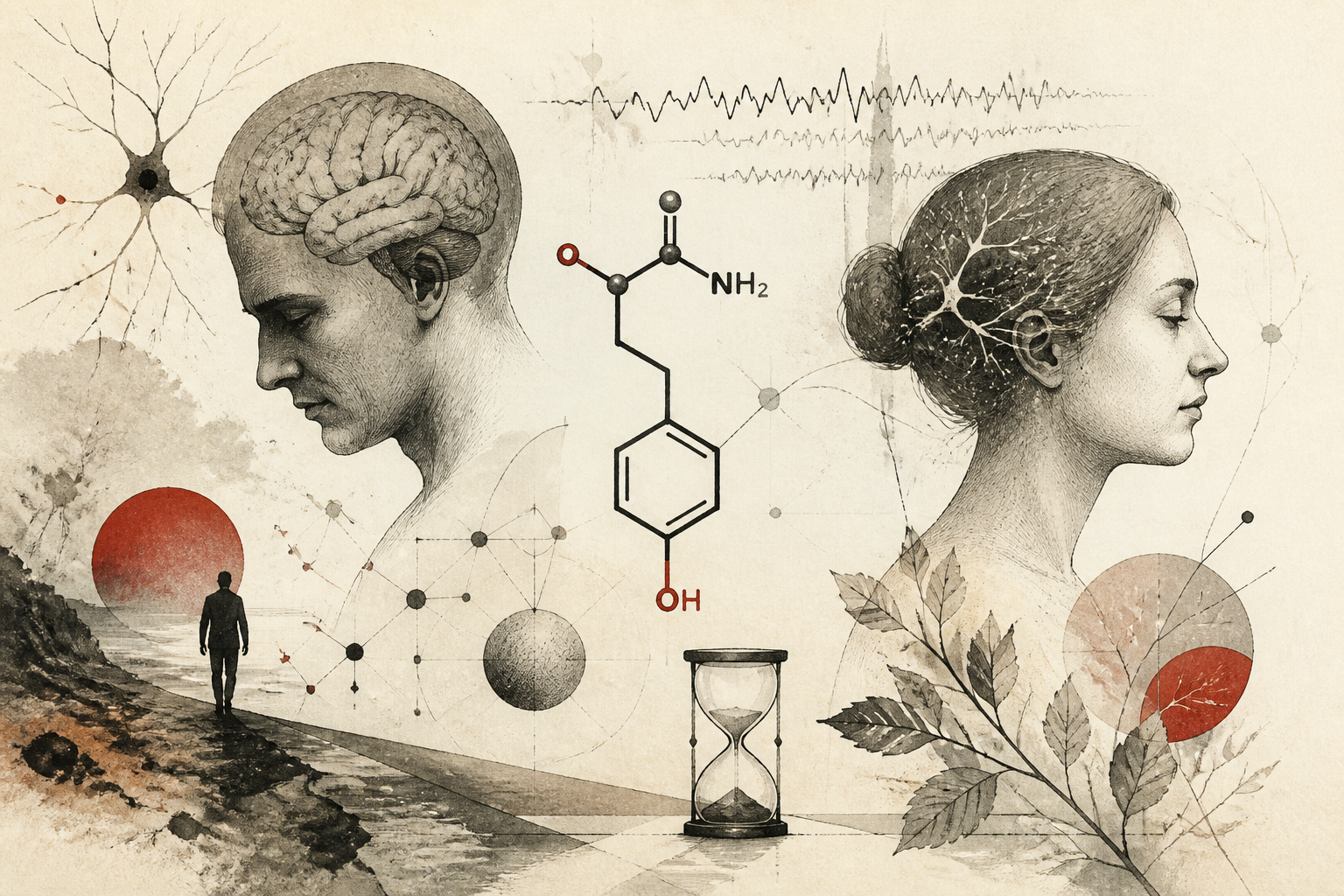
In the contemporary landscape of cognitive enhancement, the use of amino acid supplements to bolster focus and executive function has become a widespread practice among students and professionals alike. However, new evidence suggests that the pursuit of short-term mental clarity may carry unforeseen long-term physiological costs. A comprehensive study encompassing more than 270,000 individuals, recently reported via ScienceDaily, has identified a significant statistical link between elevated blood levels of the amino acid tyrosine and a decrease in total lifespan specifically among men. The findings indicate that while tyrosine is a fundamental building block for essential neurotransmitters, its systemic surplus may be detrimental to male longevity, potentially shortening life expectancy by nearly a full year. This discovery challenges the perceived safety of unregulated cognitive enhancers and highlights a critical divergence in how metabolic precursors affect the sexes over the life course.
The Role of Tyrosine in Metabolic and Neural Systems
Tyrosine is a non-essential amino acid, meaning the human body possesses the capability to synthesize it from another amino acid, phenylalanine. Beyond its role in protein synthesis, tyrosine serves as the primary precursor for the catecholamine family of neurotransmitters, which includes dopamine, norepinephrine, and epinephrine. These chemicals are integral to the body’s stress response, mood regulation, and cognitive processing. Because of its relationship to dopamine, tyrosine has gained significant popularity as a dietary supplement. It is frequently marketed to individuals seeking to maintain mental performance under conditions of sleep deprivation or acute environmental stress. Naturally, the amino acid is abundant in protein-rich dietary sources such as dairy products, meats, fish, and certain legumes. Under normal physiological conditions, the body tightly regulates tyrosine levels to ensure a steady supply for neurotransmitter production without reaching toxic concentrations. However, the modern introduction of concentrated supplemental doses and high-protein dietary trends has shifted the baseline levels of this amino acid in a significant portion of the population, prompting researchers to investigate the long-term consequences of such metabolic shifts.
Methodological Approaches and Gender-Specific Discoveries
The researchers employed a robust dual-methodology to ensure the validity of their findings, combining traditional observational data with advanced genetic analysis. By leveraging a massive dataset of 270,000 participants, the study was able to achieve a high degree of statistical power. The observational phase involved monitoring blood tyrosine levels and correlating those metrics with mortality rates over a multi-year period. To account for potential confounding variables and to address the question of causality, the team utilized Mendelian randomization. This genetic technique uses naturally occurring genetic variants that influence tyrosine levels as a proxy for the amino acid itself, allowing researchers to mimic a randomized controlled trial. The results were striking in their specificity. The data revealed that elevated tyrosine levels were associated with a lifespan reduction of approximately 0.9 years in men. Remarkably, the same association was not found in female participants. The researchers noted that this sex-specific divergence suggests that the metabolic pathways or hormonal interactions governing tyrosine utilization differ fundamentally between men and women.
Potential Biological Mechanisms and Interpretations
While the study establishes a strong correlation, the exact biological mechanism driving the reduction in male longevity remains a subject of ongoing inquiry. One hypothesis centers on the overstimulation of the catecholamine system. Since tyrosine facilitates the production of stress hormones like norepinephrine, chronically high levels might lead to cardiovascular strain or heightened systemic inflammation in males, who are already statistically more prone to early-onset heart disease. Another possibility involves the way tyrosine interacts with the insulin-signaling pathway or the mammalian target of rapamycin (mTOR) pathway, both of which are central regulators of aging and cellular growth. If tyrosine surplus triggers these pathways differently in men due to androgenic influences, it could accelerate cellular senescence or the progression of metabolic disorders. The fact that women appear protected from these effects might be attributed to the neuroprotective and metabolic influences of estrogen, which often buffers the body against the stressors that impact male physiology more severely. These findings serve as a reminder that even naturally occurring substances can have adverse effects when they disrupt the delicate homeostatic balance of the body.
Limitations and Directions for Future Inquiry
As with any large-scale epidemiological and genetic study, there are inherent limitations that necessitate cautious interpretation. Although Mendelian randomization provides stronger evidence for causality than simple observation, it cannot account for all environmental factors or the possibility of pleiotropy, where the genes affecting tyrosine levels might also affect longevity through entirely different mechanisms. Furthermore, the study focused on blood levels of tyrosine rather than specific supplemental intake logs for every participant. This means that while high tyrosine is linked to shorter life, more work is needed to determine the exact threshold at which supplementation becomes risky. Future research should prioritize clinical trials that track the metabolic fallout of tyrosine supplementation over extended periods. Scientists also need to explore the specific causes of death associated with high tyrosine levels—whether they be cardiovascular, oncological, or neurological—to better understand the specific risks posed to the male population. Investigating why women do not experience this lifespan reduction could also unlock new insights into the biology of aging and sex-specific resilience.
Clinical Implications for Cognitive Enhancement
The findings reported by ScienceDaily carry significant weight for the health and wellness industry, particularly the segment focused on nootropics and brain health. For years, tyrosine has been regarded as a "safe" supplement due to its status as a common amino acid found in food. However, this study suggests that "natural" does not synonymous with "risk-free," especially when consumed in isolated, concentrated forms. For men, the potential loss of nearly a year of life is a non-trivial trade-off for modest gains in focus or alertness. Healthcare providers may need to exercise greater caution when recommending amino acid supplements to male patients, particularly those with existing risk factors for shortened longevity. As we move toward an era of personalized medicine, this research underscores the necessity of considering sex as a primary variable in nutritional and pharmacological recommendations. The pursuit of a sharper mind must be balanced against the preservation of a longer life, suggesting that a more moderate approach to dietary protein and targeted supplementation may be the most prudent path forward.
Quick answers
- What is tyrosine and why is it used as a supplement?
- Tyrosine is an amino acid that serves as a precursor to dopamine and norepinephrine. It is used in supplement form to enhance mental focus, alertness, and cognitive performance under stress.
- How does tyrosine affect life expectancy in men versus women?
- Research involving 270,000 people found that elevated tyrosine levels are associated with a lifespan reduction of nearly one year in men, while no significant impact on longevity was observed in women.
- Should men stop taking tyrosine supplements based on this study?
- The study suggests a significant correlation between high tyrosine levels and shorter male lifespan. While not a definitive ban, it indicates that men should exercise caution and consult healthcare providers regarding the long-term risks of high-dose amino acid supplementation.
Rewritten by Zeit editorial AI. Based on original reporting at ScienceDaily — Mind & Brain.