Transcranial Brain Stimulation Promotes Cerebrospinal Fluid Flow to Clear Neural Waste
New research in Nature Neuroscience demonstrates that non-invasive electrical stimulation can enhance the brain’s waste-clearance system, potentially offering new paths for dementia therapy.
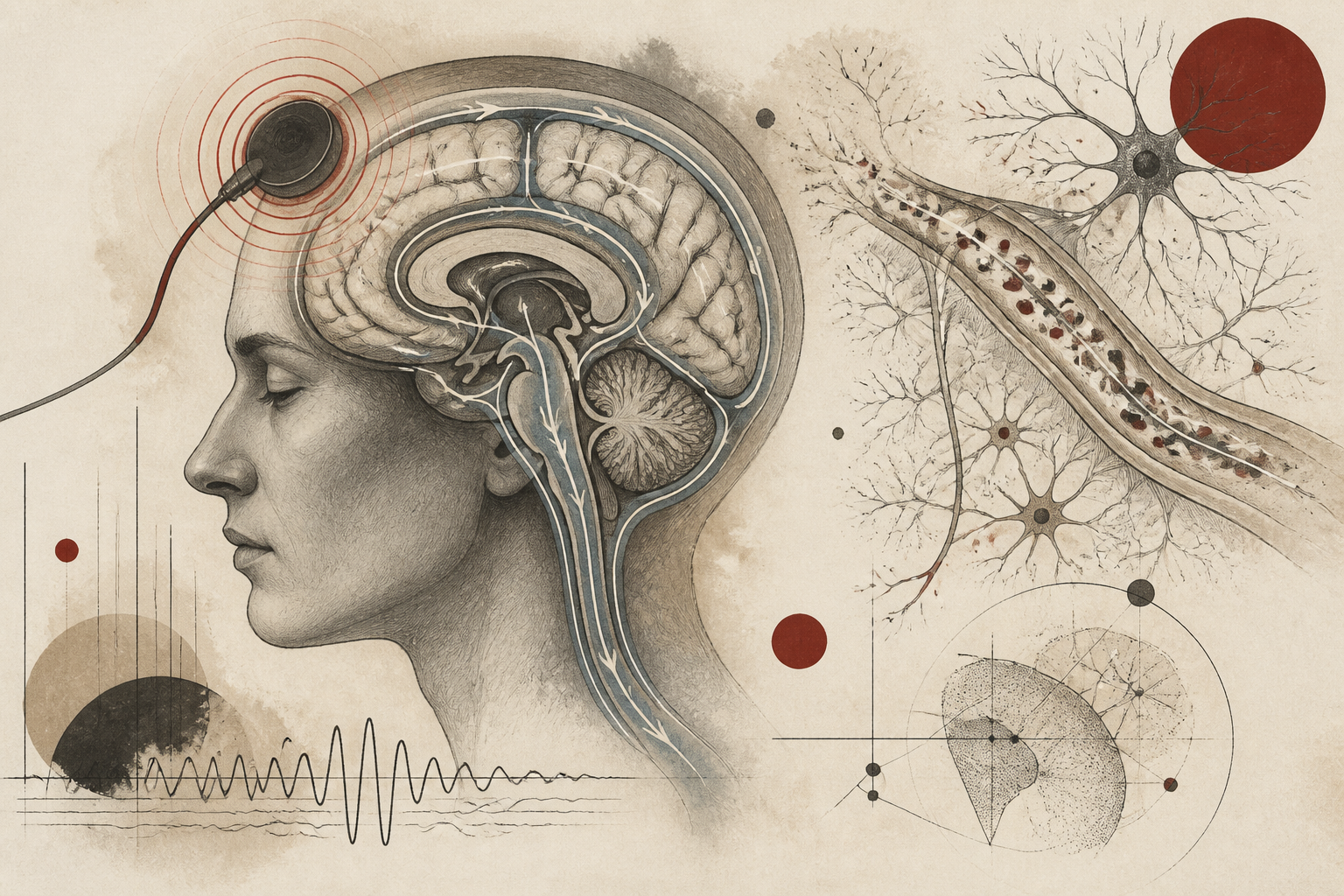
In the complex architecture of the mammalian brain, the maintenance of cognitive health is as much about the removal of metabolic byproducts as it is about the firing of neurons. For decades, the mechanisms by which the brain flushes out cellular debris have remained a subject of intense scrutiny within the neuroscientific community. A recent study published in Nature Neuroscience has provided significant empirical evidence for a potential breakthrough in this field, demonstrating that non-invasive brain stimulation can actively facilitate the flow of cerebrospinal fluid. This discovery offers a compelling look at how external electrical modulation might be harnessed to bolster the brain’s internal plumbing, specifically the glymphatic system, which is responsible for clearing toxic proteins such as amyloid-beta and tau that are associated with neurodegenerative decline.
The research addresses a fundamental challenge in geriatric and clinical psychology: the gradual failure of the brain’s waste-clearance mechanisms as a function of age or pathology. When these systems become sluggish, the accumulation of metabolic waste leads to neuroinflammation and neuronal death. By utilizing transcranial stimulation, the investigators have identified a method to potentially “jump-start” this flow, providing a non-pharmacological intervention strategy that could, in theory, preserve cognitive function in populations at risk for Alzheimer’s disease and other forms of dementia. The study, titled "Brain stimulation boosts CSF flow," serves as a critical bridge between theoretical physics, neurobiology, and clinical application.
The Dynamics of Fluid Transport and Electrical Modulation
To understand the significance of these findings, one must first consider the nature of cerebrospinal fluid (CSF) and its role in cerebral homeostasis. The glymphatic system operates through the perivascular spaces, where CSF is exchanged with interstitial fluid to carry away waste products from the brain parenchyma. Historically, this process was thought to be primarily driven by natural biological cycles, such as arterial pulsation during sleep. However, the study published in Nature Neuroscience indicates that this process is not merely a passive byproduct of circadian rhythms but can be actively influenced by external electrical fields. The researchers utilized transcranial electrical stimulation (tES) to observe its effects on fluid movement within the brain’s microenvironment.
Findings from the experimental models suggest that specific frequencies and intensities of electrical stimulation create a physiological environment conducive to enhanced fluid transport. Specifically, the application of low-intensity electrical currents was shown to increase the velocity and volume of CSF flow through the brain’s tissue. This suggests that the electrical fields may be influencing the mechanical or osmotic gradients that govern fluid movement. By demonstrating that fluid dynamics can be modulated through the scalp without invasive surgery, the study shifts the paradigm of how we view the intersection of neurotechnology and neuroanatomy. The data indicates a measurable increase in the clearance of tracers, which serve as proxies for metabolic waste, following the administration of the stimulation.
Investigative Methodology and Biological Mechanisms
The methodology employed in this research was rigorous, involving high-resolution imaging techniques to track the movement of fluorescent markers within the brains of animal models. By applying transcranial stimulation and simultaneously monitoring the perivascular spaces, the team was able to quantify changes in fluid velocity with a high degree of precision. They focused on the interaction between the electrical fields and the vascular system, noting that the stimulation appeared to synchronize or enhance the rhythmic contractions that drive fluid exchange. This mechanistic insight is crucial, as it suggests that the stimulation is not just moving fluid randomly but is instead amplifying the brain's existing physiological pumps.
Furthermore, the study investigated the role of astrocytes—specialized glial cells that facilitate fluid transport through water channels known as aquaporin-4. The researchers hypothesized that the electrical stimulation might influence the polarity or efficiency of these channels. While the exact molecular signaling pathway remains a subject for further study, the immediate physiological outcome was undeniable: a significant boost in the flushing action of the glymphatic system. The use of advanced computational modeling also allowed the researchers to predict how these electrical fields penetrate the skull and distribute themselves across the cortical surface, ensuring that the observed effects were directly attributable to the intervention rather than extraneous variables.
Clinical Interpretations and Future Obstacles
The interpretation of these results carries profound implications for the future of neuropsychology and gerontology. If the glymphatic system can be externally regulated, it opens the door to “preventative maintenance” for the aging brain. In patients where the natural clearance of amyloid-beta is compromised, periodic sessions of transcranial stimulation could theoretically reduce the total protein load, thereby delaying the onset of symptomatic cognitive impairment. This represents a shift from reactive medicine—treating the symptoms of dementia—to proactive biophysical intervention. However, the transition from animal models to human clinical trials requires careful consideration of scaling and safety.
Despite the promising data, several limitations and open questions persist. One primary concern is the longevity of the effect; it remains unclear how long the enhanced CSF flow persists after the stimulation ceases. Additionally, the heterogeneity of the human skull and brain anatomy means that a “one size fits all” approach to stimulation parameters may not be effective. The researchers acknowledge that while the boost in fluid flow is statistically significant, the long-term impact on actual cognitive performance and disease progression has yet to be fully mapped. There is also the question of whether over-stimulating these pathways could have unintended consequences, such as altering the delicate pressure balance within the cranium.
The Path Toward Neuroprotective Innovation
Why this research matters to the academic community and the public alike lies in the urgent need for new modalities in brain health. Current pharmacological treatments for neurodegeneration have faced significant hurdles in efficacy and delivery. A physical method that leverages the brain’s own fluid dynamics avoids many of the systemic side effects associated with drugs. As Zeit Psychology Online University continues to monitor developments in neurotechnology, this study stands out as a testament to the power of interdisciplinary research—combining physics, fluid dynamics, and neuroscience to solve biological problems.
In conclusion, the study published in Nature Neuroscience provides a foundational proof-of-concept for the use of brain stimulation as a tool for waste clearance. It confirms that the brain’s plumbing is not a closed, static system but a dynamic one that responds to external electromagnetic signals. As researchers refine the parameters of this technology, the goal will be to develop wearable or clinical devices that can integrate seamlessly into the lives of those at risk for neurodegenerative diseases. For now, the focus remains on deepening our understanding of the biophysical dialogue between electrical fields and fluid flow, ensuring that the next generation of brain health interventions is both safe and scientifically grounded.
Quick answers
- How does brain stimulation affect cerebrospinal fluid?
- According to the study in Nature Neuroscience, transcranial electrical stimulation increases the velocity and volume of cerebrospinal fluid (CSF) flow, helping the brain flush out metabolic waste.
- What is the glymphatic system's role in the brain?
- The glymphatic system acts as the brain's waste-clearance mechanism, utilizing CSF to transport toxic proteins like amyloid-beta away from neural tissue.
- Can electrical stimulation prevent Alzheimer's disease?
- While the research shows a boost in the clearance of metabolic waste associated with Alzheimer's, further human clinical trials are needed to determine if this can effectively prevent or delay the disease.
Rewritten by Zeit editorial AI. Based on original reporting at Nature Neuroscience.