The Stability of Chaos: Why Perfectly Uniform Systems Risk Catastrophic Failure
Physicists at Northwestern University reveal that structural diversity is essential for network resilience, challenging long-held assumptions about symmetry in complex systems.
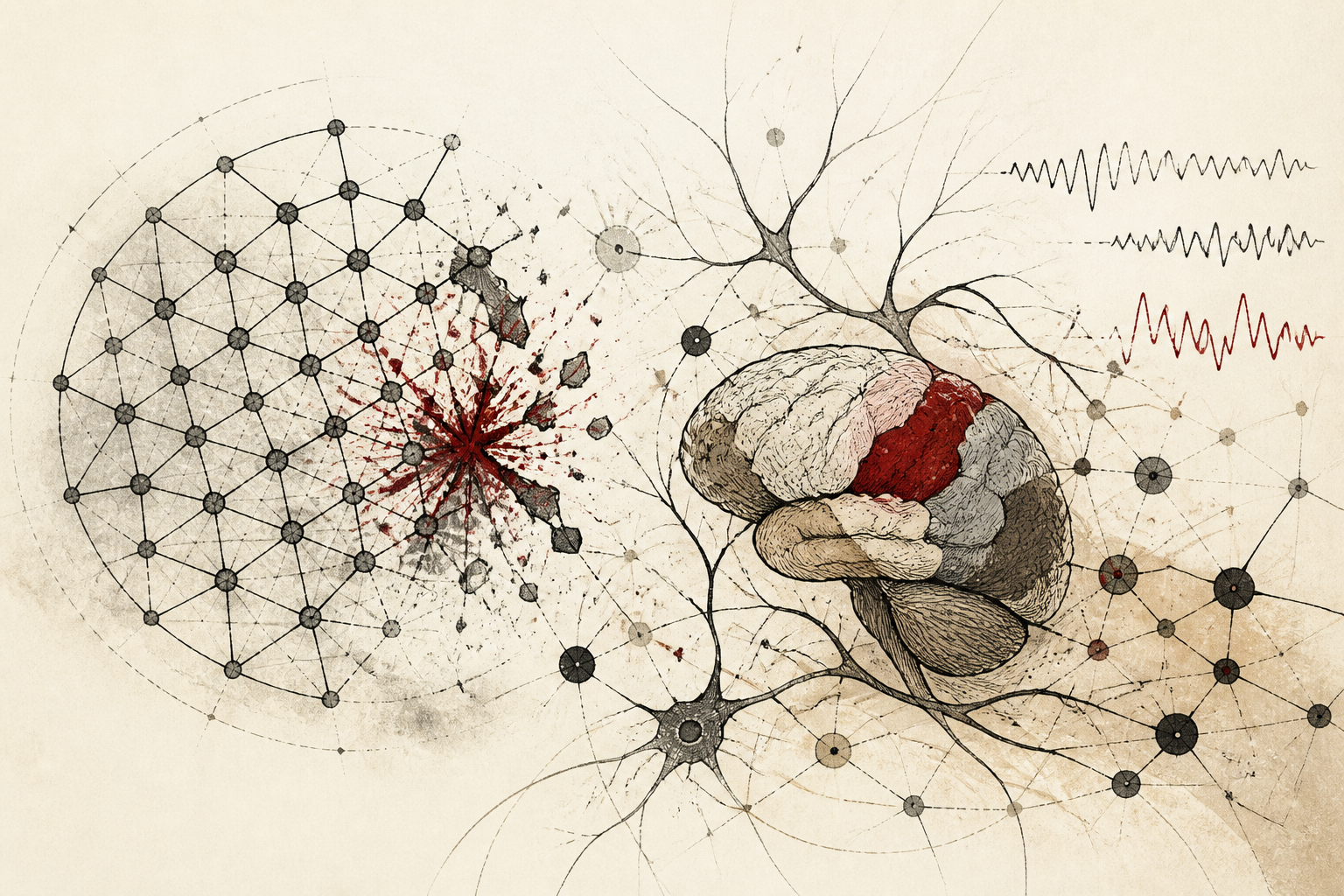
In the pursuit of engineering efficiency and scientific understanding, the concept of symmetry has long been regarded as an ideal state. From the synchronized firing of neurons in the human brain to the meticulously balanced distribution of load across a national power grid, the prevailing logic suggested that uniformity leads to stability. However, groundbreaking research conducted by physicists at Northwestern University suggests that this paradigm may be fundamentally flawed. According to a new study published in a leading physics journal, complex systems are often at their most fragile when their constituent parts are identical. Instead, the researchers found that a carefully balanced degree of variation, or internal disorder, is what allows these networks to withstand external shocks and maintain functional equilibrium. This discovery offers a profound explanation for why natural systems, from biological ecosystems to cellular structures, rarely exhibit the perfect uniformity that human designers often strive to replicate.
The Paradox of Structural Uniformity
For decades, the theoretical framework for analyzing complex networks relied on the assumption that homogeneity simplifies dynamics and enhances predictability. When every node in a network—whether it is a transistor, a cell, or a generator—functions identically, the system as a whole was believed to be more manageable. The Northwestern team, however, identified a recurring vulnerability in these so-called perfect systems. In a perfectly uniform network, a single disturbance can ripple through the entire structure without encountering any resistance from internal differences. Because every component responds to stress in the exact same manner, the system lacks the defensive barriers that inherent diversity provides. This phenomenon, known as synchronization-induced instability, can lead to total system failure when a small perturbation causes the entire network to oscillate out of control. The physicists observed that by introducing specific types of heterogeneity, these catastrophic ripples could be dampened, effectively localizing the impact of a disturbance and preventing a systemic collapse.
Quantifying the Role of Functional Disorder
To investigate the mechanism behind this counterintuitive stability, the research team utilized advanced mathematical modeling to simulate various network types. They examined power grids, neural circuits, and ecological food webs, testing how these structures responded to fluctuations when their internal components were either identical or varied. The findings were consistent across all domains: systems with balanced variation were significantly more resilient. This variation, which the scientists term "disorder," does not refer to total chaos, but rather to the subtle differences in the physical or functional properties of a network's parts. For instance, in a power grid, having generators with slightly different response times or capacities prevents a surge from synchronizing across the entire infrastructure. The study found that even random differences, which might otherwise be viewed as manufacturing defects or biological mutations, served as a vital buffer against failure. By breaking the symmetry of the system, these differences ensure that the network does not become locked into a singular, vulnerable state of operation.
Biological and Technological Implications
The implications of this study extend far beyond theoretical physics, offering new insights into the evolution of natural life and the future of industrial design. In the context of neuroscience, the human brain is a masterclass in functional disorder. No two neurons are perfectly alike, and their firing patterns exhibit a high degree of variability. This research suggests that such diversity is not an evolutionary accident but a necessary feature that prevents the brain from entering states of pathological synchronization, such as those seen during epileptic seizures. Similarly, in ecology, a diverse range of species with different environmental tolerances ensures that a single climate event does not wipe out an entire ecosystem. On the technological front, these findings challenge engineers to reconsider the pursuit of absolute precision. If "perfect" systems are inherently fragile, then the next generation of resilient technologies—ranging from microchips to global supply chains—may need to be designed with intentional, calculated variations to ensure long-term survivability.
Limitations and Open Questions
While the Northwestern study provides a robust mathematical foundation for the benefits of disorder, it also opens several new avenues for inquiry. One primary limitation is the difficulty in determining the optimal "sweet spot" for variation. While some disorder improves stability, excessive randomness could lead to a loss of coordination, rendering a system inefficient or non-functional. The researchers acknowledge that the relationship between diversity and stability is likely non-linear, and finding the precise threshold where variation becomes detrimental remains a challenge for future studies. Additionally, the current models primarily address closed or semi-closed systems. Further research is required to understand how external, unpredictable environmental factors interact with internal disorder over long periods. As scientists attempt to bridge the gap between theoretical models and real-world applications, they must also consider the costs associated with implementing intentional diversity in engineered systems, where standardization has historically been the primary driver of cost reduction.
Redefining Resilience in a Complex World
The discovery that perfection leads to fragility forces a significant shift in how we perceive the world around us. In both natural and man-made environments, we have often viewed variation as a problem to be solved or a flaw to be corrected. This research, however, invites us to see diversity as a fundamental pillar of strength. By embracing a certain level of disorder, we can build systems that are not just efficient under ideal conditions, but durable under duress. As society becomes increasingly reliant on hyper-connected networks, from the internet to global energy markets, the lessons from the Northwestern physicists are more relevant than ever. Understanding that the secret to stability lies in our differences, rather than our similarities, could provide the blueprint for a more resilient future. The study serves as a reminder that in the grand design of the universe, there is a profound utility in the imperfect, the varied, and the unique.
Quick answers
- Why is structural uniformity considered dangerous in complex networks?
- Uniformity allows disturbances to synchronize and spread across the entire system without resistance, potentially leading to total catastrophic failure.
- How does 'disorder' help stabilize power grids or ecosystems?
- Variations in component properties break the symmetry of the network, dampening oscillations and preventing a single shock from overwhelming all parts at once.
- What is the practical application of this research in technology?
- It suggests that engineers should design systems with intentional, calculated variations rather than perfect replicas to increase resilience against external shocks.
Rewritten by Zeit editorial AI. Based on original reporting at ScienceDaily — Mind & Brain.