The REM Energy Paradox: Metabolic Demand Outpaces Supply During Dreaming
Recent research reveals that REM sleep triggers a metabolic deficit where neuronal energy consumption exceeds blood-borne supply, challenging our understanding of nocturnal recovery.
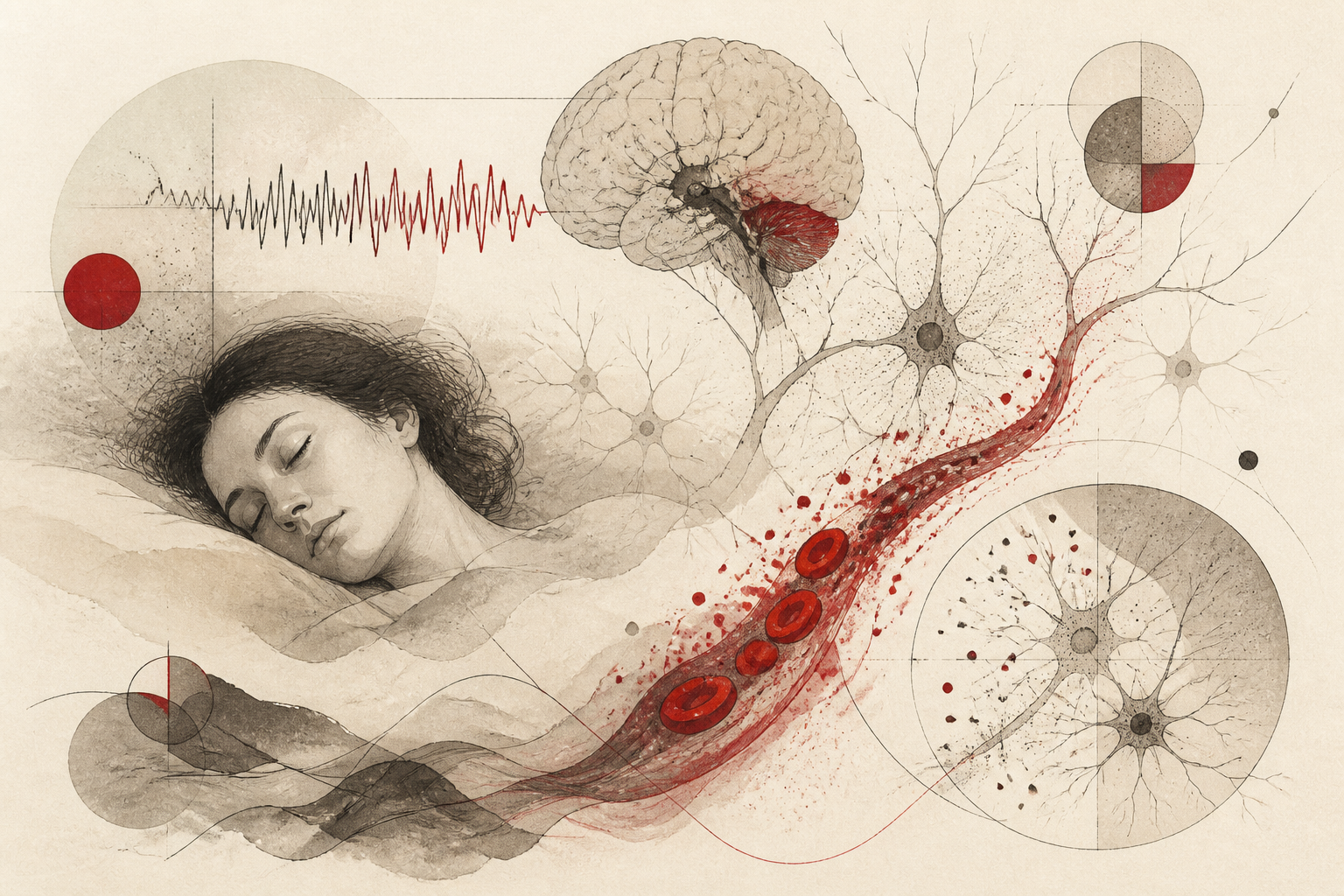
For decades, the standard neurological model of sleep has prioritized the concept of restorative rest, imagining the brain as a system entering a state of maintenance where energy stores are replenished for the following day. However, new research published and reported via ScienceDaily indicates that the Rapid Eye Movement (REM) phase—the period most intrinsically linked to vivid dreaming—operates under a surprising physiological contradiction. Researchers have identified what is now being termed the REM energy paradox: a state where the brain’s blood supply increases significantly, yet the immediately available energy within neurons actually plummets. This suggests that the act of dreaming is so computationally and metabolically taxing that it drains the brain’s primary fuel source faster than the circulatory system can deliver it.
Historically, sleep researchers categorized the brain's activity during REM as 'paradoxical' because the EEG patterns closely resemble those of an awake and alert brain, despite the body being in a state of muscle paralysis. This latest study adds a metabolic layer to that paradox. While the brain prepares for REM by increasing localized blood flow—ostensibly to provide more oxygen and glucose—the internal cellular energy levels, measured as adenosine triphosphate (ATP), undergo a sharp decline. This indicates that the neural processing required for dreaming is not a passive byproduct of sleep but an intense, high-energy cognitive event that may temporarily leave the brain in a state of metabolic deficit.
Physiological Divergence in the Sleeping Brain
The mechanisms governing the transition into REM sleep have long been a focal point for sleep scientists seeking to understand the purpose of dreaming. In this study, the research team utilized advanced monitoring techniques to observe the interplay between hemodynamic responses and cellular biochemistry. They observed that the increase in blood supply actually precedes the official onset of the REM stage. As the brain prepares to enter this dream state, the vascular system dilates, flooding the neural tissues with nutrient-rich blood. Under most physiological conditions, such an increase in supply would lead to a stable or rising level of ATP within the cells.
Contrary to these expectations, the findings revealed that as soon as the REM-specific neural firing began, ATP levels dropped. ATP serves as the primary energy currency for all cellular functions, powering the ion pumps and chemical signaling necessary for neurons to communicate. The drop in ATP during a period of high blood flow suggests that the neurons are working at a near-maximum capacity, consuming fuel at a rate that outpaces the enhanced delivery system. This discovery reframes dreaming not just as a psychological phenomenon, but as a period of extreme metabolic exertion that rivals, and perhaps exceeds, the energy demands of complex waking tasks.
Methodological Approaches to Tracking ATP Flux
To capture this fleeting metabolic shift, the researchers employed high-sensitivity imaging and biosensors capable of real-time monitoring within the brain’s microenvironment. By tracking the concentration of ATP alongside changes in blood flow, the team could correlate specific sleep stages with energy fluctuations. The study’s methodology was designed to isolate the transition periods between Non-REM and REM sleep, allowing for a precise timeline of when the blood supply begins to surge and when the cellular energy begins to fail.
This dual-tracking approach was critical in identifying the lag between supply and demand. If the researchers had only measured blood flow, they might have concluded that the brain was well-fueled during REM. Conversely, if they had only measured ATP, they might have assumed the brain was starved of nutrients. By measuring both, they demonstrated that the 'starvation' of the neurons occurs despite a surplus of external delivery, pointing directly to the internal processing intensity of the dreaming brain as the culprit. This intense internal processing is believed to facilitate the complex visual and emotional simulations characteristic of REM sleep, requiring vast amounts of energy to maintain the neural synchronized firing patterns.
Implications for Sleep Quality and Cognitive Health
The interpretation of these findings suggests that the brain may be performing tasks during REM that are essential enough to justify such a high metabolic cost. If the brain is willing to deplete its immediate energy stores despite a surge in blood supply, the biological function of dreaming likely carries significant survival value. One hypothesis is that this energy expenditure is necessary for memory consolidation, emotional regulation, or the simulation of environmental threats. The paradox lies in the fact that while the body rests, the brain is engaged in a form of 'sprinting' that consumes its energy currency.
However, this metabolic strain also raises questions about the long-term impact of sleep fragmentation. If REM sleep is characterized by this energy-draining paradox, disruptions to this cycle could prevent the brain from completing high-energy maintenance or processing tasks. Chronic inability to meet the metabolic demands of REM might lead to a cumulative deficit in neural efficiency. Furthermore, this research provides a new lens through which to view metabolic brain disorders and age-related cognitive decline, where the vascular system’s ability to increase blood supply may be compromised, further exacerbating the ATP drop during dreaming.
Limitations and Future Directions in Metabolic Research
While the findings are groundbreaking, the study acknowledges certain limitations that necessitate further exploration. First, the current measurement of ATP provides a snapshot of immediate availability but does not fully account for the long-term replenishment cycles that occur during the deeper stages of Non-REM sleep. It is possible that the brain uses Non-REM stages to 'bank' energy, which it then spends lavishly during the REM stage. The precise threshold at which this energy drop becomes detrimental to neural health remains unknown.
Additionally, the study focuses on the global correlation between blood flow and ATP, but the brain is not a monolithic organ. Future research must determine if certain regions, such as the prefrontal cortex or the amygdala, experience a more profound energy paradox than others. Understanding the regional specificity of this metabolic drain could explain why certain types of dreams are more taxing or why specific cognitive functions are more affected by a lack of REM sleep. Open questions also remain regarding how external factors like diet, caffeine, or medication might influence this delicate balance of fuel supply and demand during the night.
Why the Energy Paradox Matters
The significance of this research, as sourced from ScienceDaily, lies in its challenge to the traditional 'restorative' definition of sleep. By highlighting a phase where the brain is metabolically hyperactive and energy-depleted, the study forces a reevaluation of how we treat sleep disorders. We can no longer view sleep simply as a period of inactivity; it is a complex cycle of ebb and flow involving metabolic investment and return. Understanding that dreaming 'drains' the brain may eventually lead to new therapies for conditions like insomnia or sleep apnea, where the quality of the REM cycle is often the first thing to be compromised. Ultimately, this research confirms that even in our most passive moments of rest, our brains are performing a high-stakes balancing act of energy management to sustain the complex world of our dreams.
Quick answers
- What is the REM energy paradox?
- It is the discovery that during REM sleep, the brain's energy (ATP) levels drop even though blood flow to the brain increases, suggesting dreaming consumes energy faster than it can be supplied.
- How does dreaming affect brain energy levels?
- Dreaming during REM sleep involves intense neural processing that requires significant amounts of ATP, leading to a temporary energy deficit within neurons.
- Does blood flow decrease during REM sleep?
- No, blood flow actually increases even before REM sleep starts, but the energy demand of dreaming is so high that it outpaces this increased supply.
Rewritten by Zeit editorial AI. Based on original reporting at ScienceDaily — Mind & Brain.