The Neural Cost of Ambiguity: How Feature Interference Impacts Cognitive Flexibility
Recent research in Nature Neuroscience identifies a neuronal mechanism where overlapping feature representations during task uncertainty impair human behavioral performance.
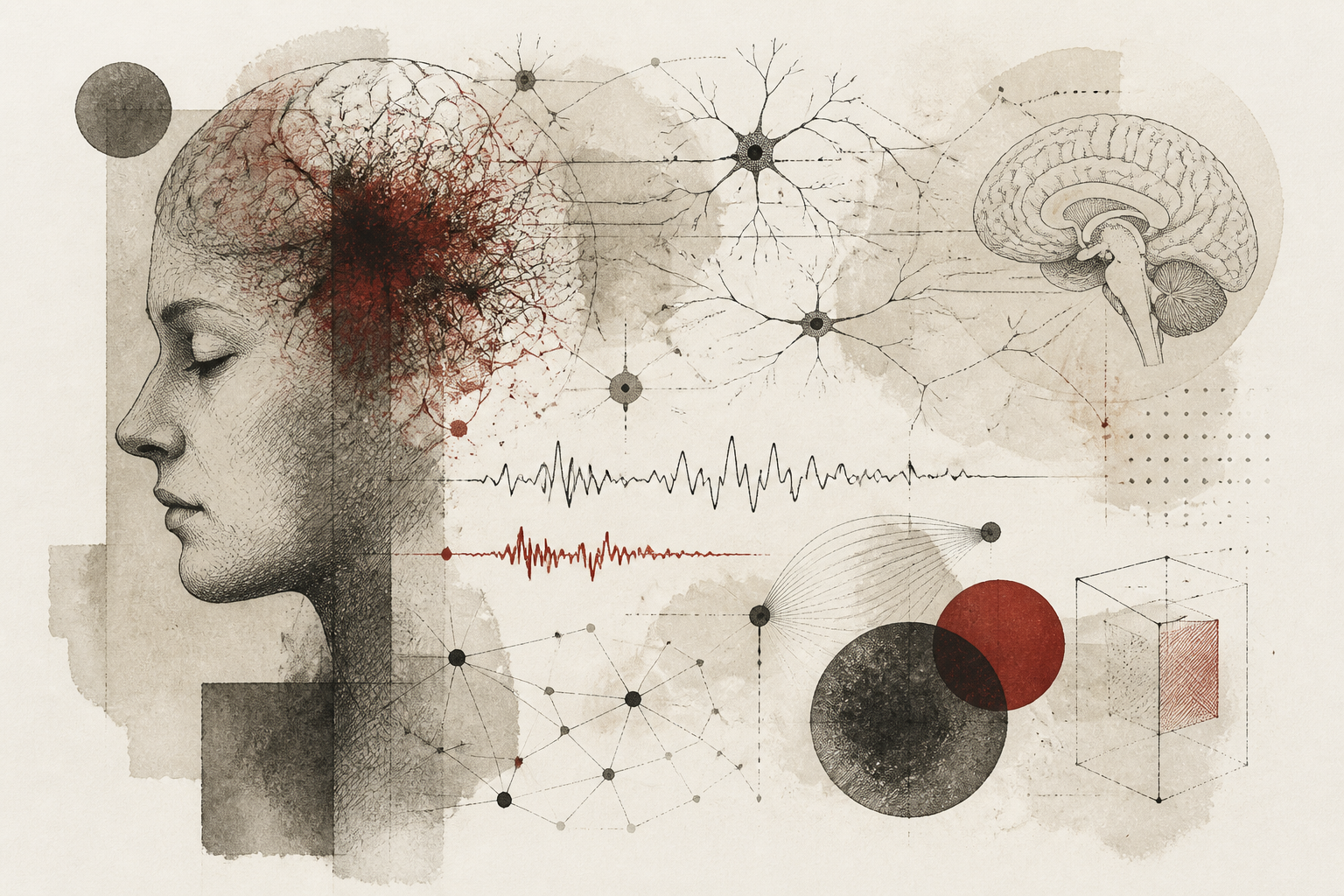
In the complex environment of the modern world, the human brain is constantly required to switch between different cognitive frameworks to achieve specific goals. Whether navigating a new city or managing multifaceted professional responsibilities, individuals must prioritize relevant information while suppressing distracting stimuli. However, the efficiency of this process is significantly degraded when the requirements of a task are not clearly defined. A recent study published in Nature Neuroscience, titled "Feature interference underlies a neuronal basis for the behavioral cost of task uncertainty," provides a compelling investigation into why ambiguity in task demands leads to a measurable decrease in cognitive performance. By examining the interplay between neural activity and behavioral outcomes, the researchers have identified a phenomenon known as feature interference, which serves as a biological bottleneck for decision-making under uncertainty.
The Cognitive Burden of Uncertainty
Cognitive flexibility, or the ability to adapt our thoughts and behaviors in response to changing environmental demands, is a hallmark of human intelligence. Under ideal circumstances, the brain functions like a well-tuned filter, amplifying signals that are necessary for the current objective and dampening those that are irrelevant. For example, when searching for a specific face in a crowd, the visual system prioritizes shape and skin tone over background elements like the color of the pavement or the sound of distant traffic. This process is generally seamless when the objective is clear. However, when an individual is unsure which features of an environment they should be attending to—a state termed task uncertainty—performance inevitably suffers. Reaction times increase, and the accuracy of decisions declines.
Prior to this research, the scientific community had recognized the "behavioral cost" of uncertainty but struggled to pinpoint the exact neuronal dynamics responsible for it. Traditional models often attributed these delays to a general slowdown in processing speed or a lack of motivation. The new findings published in Nature Neuroscience suggest a far more specific mechanism. The researchers propose that when a task is ambiguous, the brain fails to distinctively separate the neural representations of different features. Instead of a clean focus on a single variable, the neural signals for multiple, competing features overlap and interfere with one another, creating a state of internal noise that hampers the execution of the task.
Mechanisms of Feature Interference
To explore this phenomenon, the investigative team utilized high-resolution neuroimaging and sophisticated behavioral modeling. Participants were tasked with performing various categorization exercises where the relevant rules were either explicitly stated or remained ambiguous. The methodology allowed the researchers to track how the brain encodes specific features—such as orientation, color, or motion—under varying levels of certainty. The data revealed that under clear instructions, the neural populations responsible for processing the relevant feature showed high activity, while those associated with irrelevant features were effectively suppressed. This creates a high signal-to-noise ratio that facilitates rapid decision-making.
However, in conditions of task uncertainty, this neural suppression failed to occur. The researchers observed that the brain began to represent both the relevant and the potentially relevant features simultaneously. This lack of selective gating leads to what the authors describe as feature interference. When the neural signatures of two different task-relevant possibilities overlap, the brain’s decoding mechanisms become confused. This interference acts as a drag on the system, requiring more time for the individual to reach a conclusion and increasing the probability of error. The study suggests that the behavioral cost observed in humans is not merely a byproduct of hesitation, but a direct consequence of this underlying neuronal competition.
Interpretation of the Neural Bottleneck
These findings provide a significant shift in how psychologists and neuroscientists view the architecture of executive function. The concept of feature interference suggests that the brain has a limited capacity for maintaining distinct representational spaces when the rules of engagement are unclear. If the neural representations are too similar or if the brain attempts to track too many variables at once without a clear hierarchy, the resulting interference effectively jams the cognitive signals. This interpretation aligns with the theory of biased competition, which posits that different stimuli compete for neural representation, but it extends this theory into the realm of abstract task rules and internal uncertainty.
Furthermore, the study indicates that the cost of uncertainty is not uniform across all individuals or scenarios. The degree of interference recorded in the neural data closely predicted the magnitude of the behavioral slowdown in individual participants. This correlation provides strong evidence that feature interference is a primary driver of cognitive inefficiency. By quantifying this relationship, the research moves the field closer to a biological metric for mental workload and cognitive strain, potentially allowing for better assessments of how people handle complex, ambiguous environments in real-time.
Limitations and Open Questions
While the study offers a robust explanation for the neural basis of task uncertainty, several limitations must be considered. First, the experimental design utilized relatively simple visual features to model interference. In real-world scenarios, tasks are often far more abstract and involve complex social or linguistic variables. It remains to be seen whether the same mechanism of feature interference applies to higher-order reasoning or if the brain employs different compensatory strategies when dealing with conceptual rather than sensory ambiguity. Additionally, the study primarily focused on the immediate costs of uncertainty, leaving open the question of how the brain adapts to chronic ambiguity over long periods.
Another critical area for future investigation is the role of individual differences in neural plasticity and executive control. Some individuals appear to navigate ambiguity with greater ease than others; whether this is due to a more efficient suppression of irrelevant features or an innate ability to maintain distinct neural representations remains a subject for further inquiry. Furthermore, the researchers noted that while they identified the presence of interference, the specific brain regions acting as the "orchestrator" of this suppression—or the failure thereof—need more granular mapping. The prefrontal cortex is a likely candidate, but the precise circuit-level interactions are still being elucidated.
Implications for Cognitive Science
The research published in Nature Neuroscience has profound implications for both theoretical psychology and practical applications. Understanding that uncertainty leads to a physical "collision" of neural signals suggests that reducing ambiguity is not just a matter of providing more information, but of ensuring that the information provided allows for the distinct separation of task features. In educational settings, workplace design, and human-computer interaction, these findings emphasize the importance of clear goal-setting to minimize the internal noise that degrades human performance.
Ultimately, this work highlights the inherent fragility of the brain's focus. By revealing the neuronal basis for the behavioral cost of task uncertainty, the study provides a roadmap for future interventions aimed at improving cognitive resilience. Whether through training programs that enhance selective attention or through the design of environments that reduce unnecessary ambiguity, leveraging our knowledge of feature interference could lead to significant improvements in how we manage the complexities of modern life. As we continue to bridge the gap between neuronal activity and human behavior, the clarity of our tasks may prove just as important as the strength of our intellect.
Quick answers
- What is the primary cause of decreased performance during uncertain tasks according to the study?
- The study identifies 'feature interference' as the cause, where the brain fails to distinguish between different task-related signals, leading to neural overlap and internal noise.
- How did the researchers measure the effect of uncertainty on the brain?
- They used high-resolution neuroimaging and behavioral modeling to track how neural populations encoded specific features when task rules were either clear or ambiguous.
- Why does ambiguity make humans act more slowly?
- Ambiguity prevents the brain from suppressing irrelevant information, causing competing neural signals to interfere with each other, which requires more time and effort to process.
Rewritten by Zeit editorial AI. Based on original reporting at Nature Neuroscience.