The Neural Conduit: How Stress-Induced Brown Fat Activity Triggers Arthritic Inflammation
Researchers identify a sympathetic nerve-brown fat axis that transports IL-6 to dormant joints, explaining why psychological stress causes autoimmune flares.
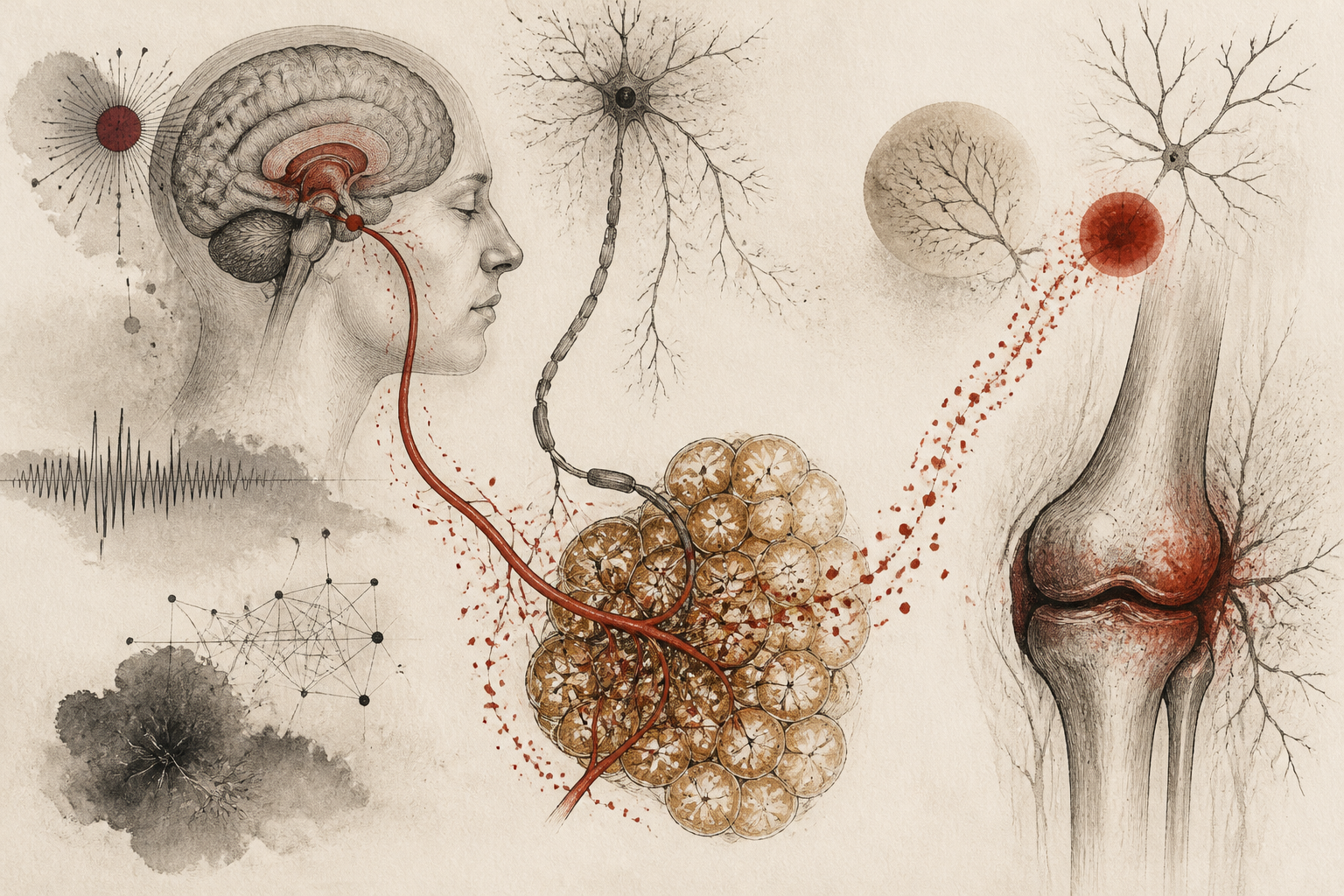
The historical observation that psychological distress can precipitate physical illness has moved from clinical anecdote to molecular certainty. For patients suffering from rheumatoid arthritis, the periods of relative remission are often interrupted by sudden, painful flares that appear to correlate with high-stress life events. While the subjective link between the mind and joint inflammation has been noted for decades, the precise biological mechanism remained elusive. Recent research published via NeuroscienceNews.com has unveiled a complex physiological pathway that bridges the gap between the brain’s stress response and the reactivation of dormant inflammation in the joints. This discovery identifies a specific communication route involving the sympathetic nervous system and brown adipose tissue, which acts as a conduit for inflammatory signals.
Traditionally, the study of autoimmune diseases focused almost exclusively on the immune system's dysregulation within the musculoskeletal environment. However, this new body of evidence suggests that the nervous system plays a far more active role in orchestrating these inflammatory cycles than previously understood. By tracing the signals from the brain down to the microscopic level of joint tissue, scientists have mapped a process where mental states are translated into chemical messengers that target vulnerable areas of the body. This shift in perspective provides a more holistic view of chronic illness, framing the flare-up not as a random glitch in the immune system, but as a systemic response to perceived environmental threats.
The Sympathetic-Adipose Connection
At the heart of this physiological chain reaction is the sympathetic nervous system, the component of the autonomic nervous system responsible for the body's 'fight or flight' response. When an individual experiences psychological stress, the brain triggers a surge of activity in these neural pathways. The research highlights that this neural firing is not contained within the brain or the major muscle groups; instead, it extends to brown adipose tissue, commonly known as brown fat. Unlike white fat, which primarily stores energy, brown fat is highly metabolic and plays a crucial role in thermogenesis. The study demonstrates that under stress, sympathetic nerves stimulate these brown fat deposits, initiating a metabolic shift that has unintended consequences for systemic inflammation.
Once activated by the sympathetic nerves, the brown adipose tissue begins to secrete specific proteins into the bloodstream. The most significant of these is Interleukin-6 (IL-6), a well-known pro-inflammatory cytokine. In a healthy physiological state, IL-6 serves as a signaling molecule that helps coordinate the immune response to infection or injury. However, in the context of stress-induced activation, the brown fat acts as an endocrine organ, pumping excessive levels of IL-6 into circulation. This systemic elevation of cytokines creates a volatile environment for individuals with pre-existing, albeit dormant, inflammatory conditions. The brown fat essentially serves as a relay station, converting a neural signal into a chemical one that can travel throughout the entire body.
Mechanisms of Joint Reactivation
The most striking aspect of these findings is the specificity with which these cytokines target previously affected joints. In patients with rheumatoid arthritis, joints that have undergone inflammation in the past often contain 'dormant' immune cells or structural changes that make them more sensitive to future insults. The research indicates that the IL-6 released from the brown fat travels through the vasculature and eventually settles in these predisposed synovial tissues. Once the cytokine reaches the joint, it binds to receptors that reawaken the local immune response, leading to the swelling, pain, and stiffness characteristic of an arthritic flare. This mechanism explains why a person might feel a surge in joint pain following a period of intense mental strain, even if they have not experienced physical trauma to the joint itself.
To validate these observations, researchers employed sophisticated tracing methods to monitor the flow of IL-6 from adipose tissue to the articular environment. By manipulating the sympathetic drive in experimental models, they were able to either induce or suppress joint inflammation, confirming that the nervous system's influence on brown fat is a primary driver of the flare-up. The methodology also ruled out other potential sources of IL-6, such as direct production within the joint or release from white adipose tissue, pointing specifically to the unique metabolic properties of brown fat as the culprit. This clarity in the pathway offers a definitive link between the psychological experience of stress and the biological reality of autoimmune reactivation.
Clinical Implications and Interpretations
The identification of the sympathetic-brown fat-IL-6 axis represents a significant paradigm shift in how clinicians might approach the management of rheumatoid arthritis. If the nervous system is a gateway for inflammation, then interventions targeting stress management are no longer just 'complementary' therapies—they are fundamental to preventing physical joint damage. This research suggests that by modulating the sympathetic nervous system's activity, it may be possible to 'mute' the signal that triggers the brown fat to release IL-6. This could involve pharmacological approaches, such as beta-blockers or other agents that dampen sympathetic output, or behavioral interventions like mindfulness-based stress reduction and biofeedback.
Furthermore, the role of brown fat opens new avenues for therapeutic targeting. Since brown fat activity can be influenced by temperature and metabolic demands, understanding how these factors interact with psychological stress could lead to more personalized treatment plans. For instance, patients who are highly reactive to stress might benefit from therapies that specifically inhibit the IL-6 pathways originating from adipose tissue. By treating the source of the cytokine surge rather than just the symptoms in the joint, physicians could potentially extend the duration of remission for millions of patients worldwide. The study underscores the necessity of an interdisciplinary approach to medicine, where neurology, endocrinology, and rheumatology converge.
Limitations and Future Directions
Despite the robustness of the discovered axis, several questions remain for the scientific community. While the link between brown fat and IL-6 is clear, it is not yet fully understood why certain individuals possess more active brown fat than others, or why the sympathetic nervous system reacts more violently to psychological stimuli in some patients. Genetic predispositions likely play a role, as do previous environmental exposures. Additionally, the study primarily focuses on IL-6, but it is possible that other cytokines or adipokines are also involved in the reactivation process. Future research will need to investigate whether blocking this specific axis leads to long-term joint preservation or if the body eventually finds alternative pathways to trigger inflammation.
Another limitation lies in the translation from experimental models to diverse human populations. Human brown fat distribution varies significantly with age, BMI, and sex, which may mean that the stress-arthritis link manifests differently across different demographics. Longitudinal studies in human subjects will be essential to confirm if pharmacological inhibition of this pathway is both safe and effective over the course of a chronic disease. Furthermore, the psychological aspect of 'stress' is multifaceted; differentiating between acute, short-term stress and chronic, low-level anxiety will be necessary to determine which types of mental states are most likely to activate the sympathetic-adipose conduit.
Why the Neuro-Immune Link Matters
The broader implications of this research extend beyond the confines of arthritis. The discovery of a direct neural-adipose-immune pathway suggests that many other stress-sensitive conditions, such as psoriasis, irritable bowel syndrome, or even certain cardiovascular issues, might share similar underlying mechanisms. By proving that the brain can actively recruit fat tissue to produce inflammatory markers, the study provides a biological foundation for the field of psychoneuroimmunology. It validates the lived experience of patients who have long insisted that their mental well-being is inextricably tied to their physical health, moving the conversation from 'it’s all in your head' to 'it’s all in your biology.'
For the academic and medical communities, this research serves as a call to action to break down the silos between mental and physical health services. As we continue to map the intricate networks that connect the mind to the body, the goal remains clear: to develop more precise, effective interventions that treat the human being as a unified system. Understanding the sympathetic nerve-brown fat axis is a major step toward that goal, offering hope for a future where the devastating flares of arthritis can be predicted, managed, and perhaps one day, entirely prevented through the integrated care of both mind and body.
Quick answers
- How does stress cause joint pain in arthritis patients?
- Stress activates the sympathetic nervous system, which stimulates brown fat to release the inflammatory cytokine IL-6 into the blood, eventually triggering dormant inflammation in the joints.
- What is the role of brown fat in autoimmune flares?
- Brown fat acts as a relay station; when stimulated by nerves during stress, it secretes IL-6, a messenger that travels to joints and reawakens immune cells.
- Can stress management help reduce arthritis symptoms?
- Yes, because the study identifies a neural pathway for inflammation, reducing sympathetic nervous system activity through stress management can theoretically prevent the release of joint-damaging cytokines.
Rewritten by Zeit editorial AI. Based on original reporting at NeuroscienceNews.com.