The Limits of Facial Feedback: Why Repeated Forced Smiling May Diminish Emotional Well-Being
University of Florida researchers find that while a single forced smile offers a brief mood boost, repetitive artificial expressions may eventually exacerbate negative emotional states.
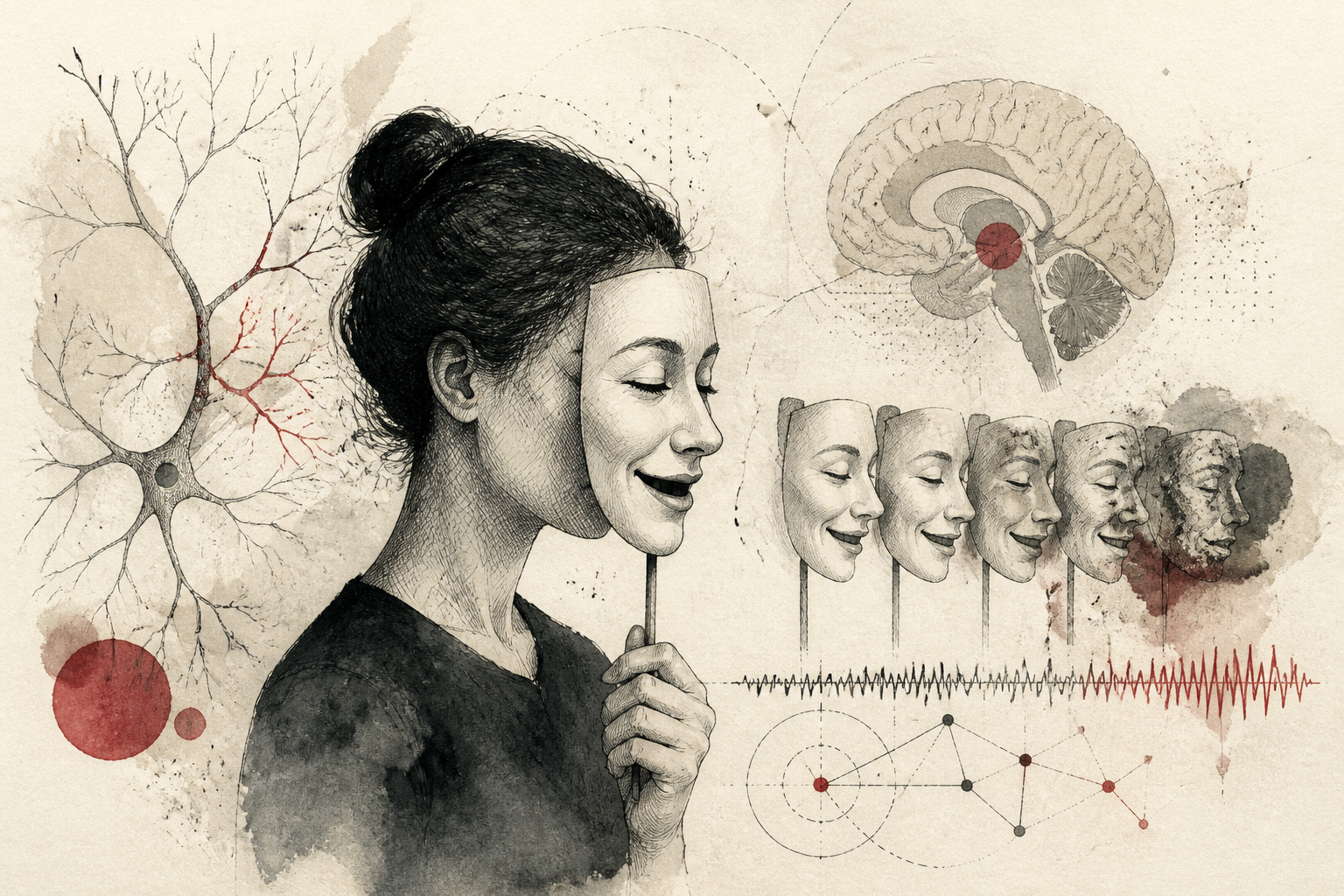
The longstanding psychological concept known as the facial feedback hypothesis suggests that the physical act of shaping one's face into an expression can influence the internal emotional state. For decades, popular psychology and self-help literature have championed the idea that "faking it until you make it"—specifically through the use of a forced smile—can serve as a reliable tool for mood regulation. However, new evidence from the University of Florida, as reported by ScienceDaily, challenges the sustainability of this practice. The study suggests that while an isolated instance of a forced smile might provide a negligible uptick in positive affect, the repetitive application of this technique may actually prove detrimental to one’s psychological health, potentially leading to increased misery rather than relief.
Historically, the facial feedback hypothesis gained prominence through studies suggesting that activating the zygomaticus major muscles could trick the brain into a state of happiness. This theory posited a bidirectional relationship between the brain and facial muscles, where the physiological movement of a smile sends signals to the nervous system that are interpreted as joy. This logic has been integrated into various clinical and corporate environments, where individuals are often encouraged to maintain a positive outward appearance to improve internal morale. Yet, the nuance of how these effects translate over time and through frequent repetition has remained largely under-examined until this recent large-scale investigation.
Quantitative Findings and the Diminishing Returns of Artificiality
The University of Florida study, which involved a robust cohort of over 1,100 participants, sought to quantify the efficacy of forced smiling across varying frequencies. The research team designed an experimental framework to observe how mood shifted not just after a single intervention, but over the course of multiple trials. The initial results appeared to align with traditional theories; participants who forced a smile for the first time reported a slight, albeit statistically significant, improvement in their immediate mood. This initial boost supports the idea that the physical act of smiling can, in a vacuum, trigger a brief neurochemical response associated with positive emotions.
However, the core contribution of this research lies in its longitudinal observation within the study sessions. As participants were asked to repeatedly fake smiles, the benefit began to erode. The data indicated a clear threshold of diminishing returns. Beyond a certain point of repetition, the positive affect recorded in the first trial was not only erased but, in many cases, reversed. Participants who frequently engaged in forced expressions reported feeling worse than they did before the experiment began. This suggests that the brain may recognize the incongruity between the physical expression and the internal emotional reality, leading to a state of cognitive and emotional fatigue that outweighs any physiological benefit derived from muscle activation.
The Mechanism of Emotional Labor and Incongruence
To understand why repeated smiling leads to negative outcomes, one must look toward the psychological cost of emotional labor. When an individual forces an expression that does not align with their internal state, they are engaging in what psychologists call "surface acting." This process requires significant cognitive resources to maintain a facade while simultaneously suppressing genuine feelings of sadness, irritation, or exhaustion. The University of Florida researchers suggest that while the motor system can mimic a smile, the recurring effort to sustain this mismatch creates a psychological friction. This friction acts as a constant reminder of the individual’s actual negative state, thereby amplifying it through a process of heightened self-awareness of one's own unhappiness.
Furthermore, the neurological feedback loop may function differently under conditions of repetition. A single smile may briefly stimulate the brain's reward centers, but repeated forced activation without an underlying emotional catalyst may lead to a form of habituation or, worse, a negative association. The brain may begin to associate the physical sensation of the "fake" smile with the stress of the effort required to produce it. Instead of the smile serving as a trigger for happiness, it becomes a physiological signal of emotional suppression and external pressure, which the body interprets as a stressor rather than a relief mechanism.
Academic Interpretation and the Impact of Social Context
These findings provide a vital counterpoint to the "toxic positivity" often found in modern social and professional settings. In an academic context, the results suggest that the efficacy of facial feedback is highly sensitive to frequency and duration. It implies that the human emotional system is not easily fooled by simple muscular movements when those movements are disconnected from authentic cognitive appraisals. If a smile is used as a temporary bridge to navigate a brief social interaction, it may serve its purpose; however, when used as a primary strategy for long-term mood management, it fails because it addresses only the physiological symptom rather than the psychological cause.
Interpretation of this data also highlights the potential risks for individuals in service-oriented professions. Those who are required by their job descriptions to maintain a constant positive demeanor—such as hospitality workers or educators—may be at higher risk for emotional exhaustion. The University of Florida study provides empirical evidence that the requirement to "keep smiling" could be actively contributing to the misery of these workers by forcing them into a cycle of repetitive, artificial emotional displays that offer no internal reward and potentially deepen their sense of dissatisfaction.
Limitations, Open Questions, and Practical Applications
While the study is comprehensive in its sample size, there are still limitations and areas for future inquiry. The researchers noted that the study primarily focused on the frequency of forced smiling rather than the specific environmental triggers that might make a forced smile more or less taxing. For instance, does a forced smile in a private setting have the same negative impact as one performed under social scrutiny? Additionally, the long-term cumulative effects over months or years, rather than hours or days, remain to be seen. Further research is needed to determine if there is an optimal "dosage" for facial feedback or if the practice should be discarded entirely in favor of more authentic emotional processing techniques.
Ultimately, this research serves as a cautionary tale for the application of simplified psychological theories to complex human experiences. For the academic community and the general public alike, the takeaway is clear: authenticity remains a cornerstone of emotional health. While a quick smile might provide a momentary lift, it is no substitute for addressing the underlying factors of one’s emotional state. Forcing a positive exterior in the face of internal distress is not only unsustainable but may, according to this new evidence, be a direct path to increased emotional suffering. True psychological resilience likely stems not from the suppression of negative affect through forced expressions, but from the honest acknowledgment and processing of all emotional states.
Quick answers
- Does smiling when you are sad actually help your mood?
- A single forced smile may provide a very small, temporary boost, but according to University of Florida research, repeating this action can actually make you feel worse.
- What is the facial feedback hypothesis?
- It is the theory that facial muscle movements can influence emotional experiences; however, recent studies show this effect is limited and potentially harmful if forced repeatedly.
- Why does faking a smile eventually lead to misery?
- Repeatedly faking a smile creates emotional incongruence and requires 'surface acting,' which exhausts cognitive resources and reminds the brain of the negative emotions being suppressed.
Editorial Team