Subtle Sleep Disturbances Identified as Early Biological Markers for Alzheimer’s Risk
Recent research indicates that frequent micro-awakenings in healthy middle-aged adults may serve as a pre-symptomatic indicator of genetic predisposition to Alzheimer's disease.
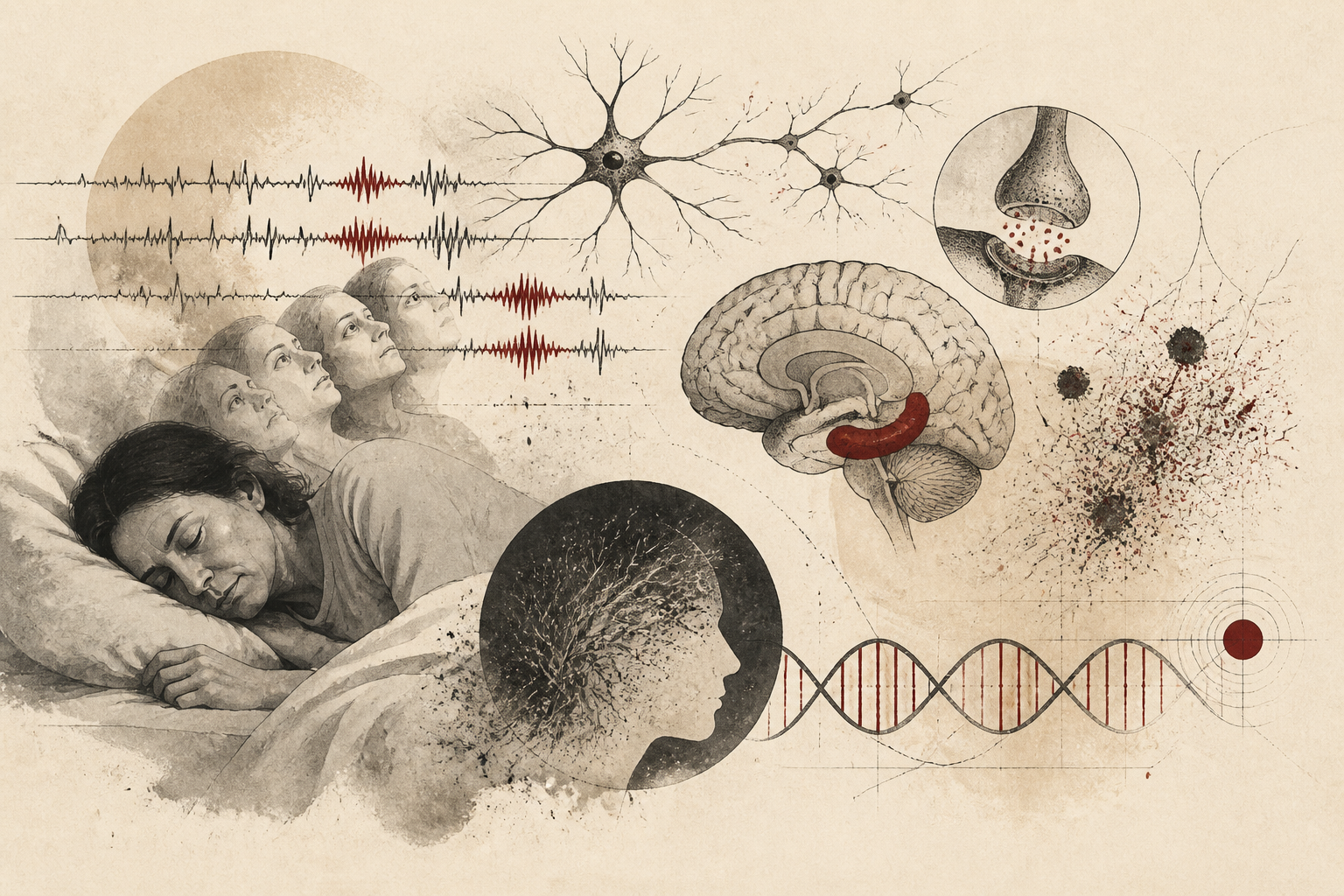
For decades, the clinical understanding of Alzheimer’s disease was primarily reactive, focused on the cognitive decline and memory loss that define its later stages. However, a significant shift is occurring in the field of neurology as researchers look toward the decade preceding the onset of symptoms. According to a recent report by ScienceDaily, a new study has identified a potential early warning system hidden within the architecture of human sleep. Specifically, frequent micro-awakenings—brief, often unremembered disruptions in the sleep cycle—have been linked to a higher genetic risk for Alzheimer’s disease in healthy, middle-aged adults who currently exhibit no cognitive impairment. This discovery suggests that the physiological foundations of the disease may be detectable through sleep monitoring long before traditional diagnostic markers emerge.
The Genetic Landscape and Sleep Architecture
To understand the significance of these findings, one must first consider the complex relationship between the brain’s restorative processes and neurodegenerative risk. Alzheimer’s disease is characterized by the accumulation of amyloid-beta plaques and tau tangles, but these protein deposits do not appear overnight. They are the result of a multi-decade process. The study highlighted by ScienceDaily focused on middle-aged individuals who carried known genetic risk factors for the disease but were otherwise cognitively healthy. By examining this specific demographic, researchers aimed to isolate the very first physiological deviations that might signal a future decline. Sleep has long been suspected as a critical variable in this equation, as the glymphatic system—the brain’s waste-clearance mechanism—is primarily active during deep sleep stages, flushing out the metabolic byproducts that lead to plaque formation.
Quantifying Micro-Awakenings as a Diagnostic Variable
The core of the research involved the measurement of micro-awakenings, which differ significantly from the full awakenings that a person might remember, such as getting up for a glass of water. These are transient shifts in brain wave activity that move a sleeper from a deeper stage of sleep to a lighter stage or a very brief state of wakefulness. The study found that individuals with a higher polygenic risk score for Alzheimer’s experienced these disruptions at a significantly higher frequency than their lower-risk counterparts. This correlation was observed even when the total duration of sleep remained within normal parameters, suggesting that the quality and continuity of sleep, rather than just the quantity, are the primary indicators of neurological health. By utilizing advanced polysomnography and genetic profiling, the research team was able to map these subtle nocturnal patterns against the participants' hereditary risk profiles.
Neurological Mechanisms and the Bidirectional Relationship
The mechanism driving this association appears to be a bidirectional relationship between sleep stability and brain health. While it is well-established that advanced Alzheimer’s destroys the brain regions responsible for regulating sleep-wake cycles, this new evidence suggests that the relationship begins much earlier. Frequent micro-awakenings may be a symptom of early, sub-clinical changes in the brain's hypothalamus or brainstem. Conversely, these disruptions may themselves accelerate the disease process. If the brain is constantly interrupted during its restorative phases, it may lose its ability to efficiently clear the proteins associated with Alzheimer’s, creating a feedback loop that hastens neurodegeneration. This suggests that sleep is not merely a bystander in the progression of the disease but is an active participant in its early development.
Limitations and the Path Toward Clinical Application
While the discovery of micro-awakenings as a risk marker is a significant advancement, the researchers urge a measured interpretation of the data. It is important to note that experiencing micro-awakenings does not guarantee a future diagnosis of Alzheimer’s. Sleep is influenced by a myriad of factors, including stress, diet, environment, and other underlying health conditions like sleep apnea. The study’s findings represent a statistical correlation within a specific cohort of middle-aged adults, and further longitudinal research is required to determine how accurately these sleep patterns predict actual cognitive decline over several decades. Additionally, the technology required to precisely measure micro-awakenings is currently more common in laboratory settings than in consumer-grade wearable devices, though this may change as the technology matures.
Implications for Preventative Neurology
The broader significance of this research lies in its potential to transform Alzheimer’s from a late-stage diagnosis into a manageable, early-intervention condition. If sleep monitoring can be validated as a reliable screening tool, it could allow for lifestyle interventions or pharmacological treatments to be deployed years, or even decades, before irreversible brain damage occurs. This shift toward "pre-symptomatic" neurology aligns with the growing trend of personalized medicine, where an individual's genetic and physiological data are used to tailor preventative care. As reported by ScienceDaily, this study opens a new window into the silent years of Alzheimer’s development, providing a potential roadmap for identifying those at risk during a period when the brain is still highly resilient and responsive to intervention.
Quick answers
- What are micro-awakenings in the context of sleep and Alzheimer’s?
- Micro-awakenings are brief, often unnoticed interruptions in the sleep cycle that shift the brain from deep sleep to a lighter state. New research links their high frequency in middle-aged adults to an increased genetic risk for Alzheimer's.
- Can sleep patterns predict Alzheimer’s before symptoms appear?
- Yes, studies suggest that subtle changes in sleep architecture, specifically frequent disruptions, may appear years or decades before memory loss, serving as a potential early biological marker.
- Does having interrupted sleep mean I will develop Alzheimer's?
- Not necessarily. While there is a correlation between micro-awakenings and genetic risk, sleep is affected by many factors like stress and environment. These findings are currently used for risk assessment rather than definitive diagnosis.
Rewritten by Zeit editorial AI. Based on original reporting at ScienceDaily — Mind & Brain.