Stress Hormone CRH Identified as Critical Catalyst in Myelin Regeneration
Recent neurobiological research reveals that the stress-related signaling molecule CRH plays a dual role in brain development and post-injury repair of protective nerve insulation.
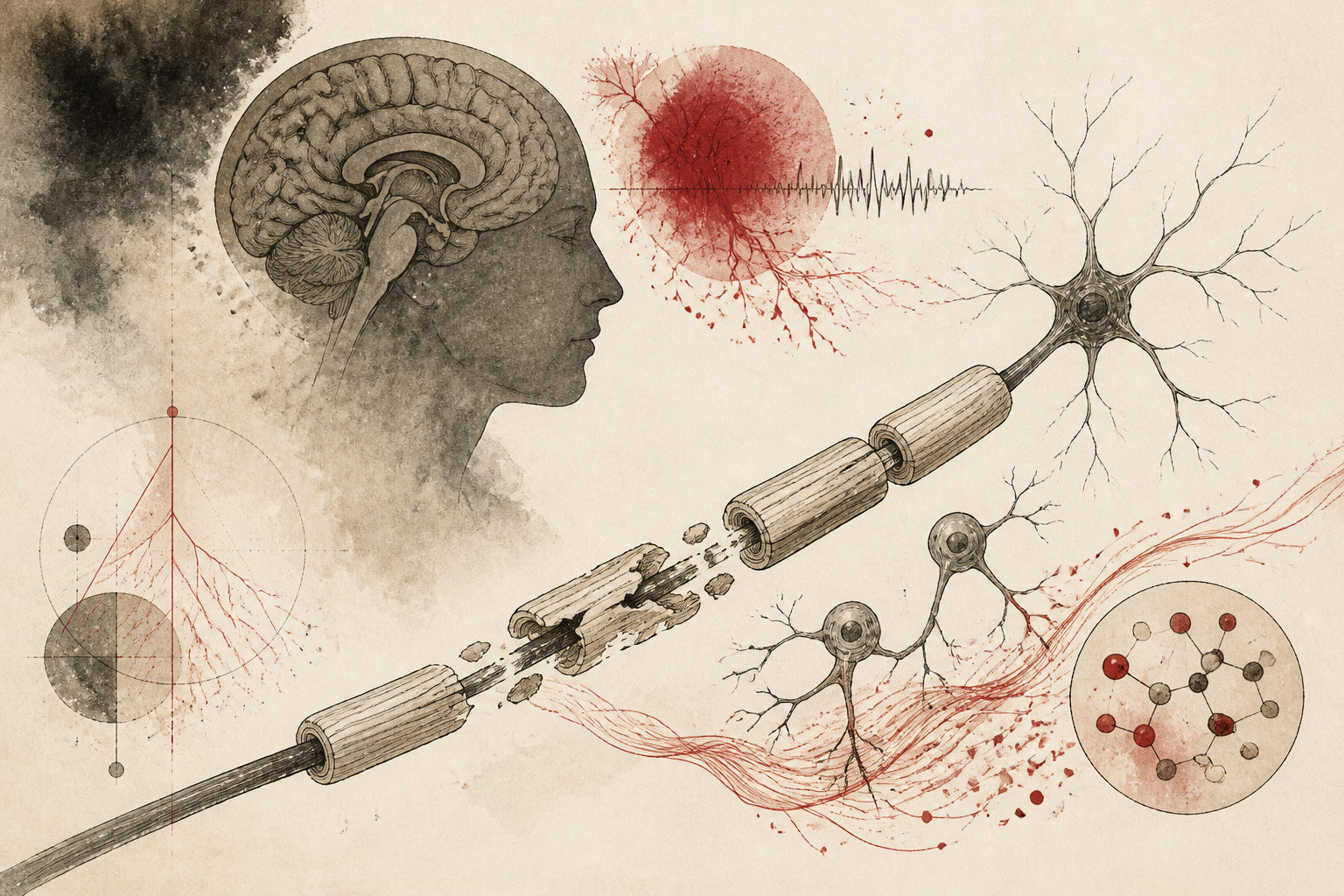
In the conventional lexicon of clinical psychology, stress hormones are frequently characterized as physiological antagonists to long-term health. Corticotropin-releasing hormone (CRH), a primary orchestrator of the endocrine stress response, has long been associated with the systemic symptoms of anxiety and the hypothalamic-pituitary-adrenal (HPA) axis activation. However, a significant new study reported by ScienceDaily highlights a paradigm shift in our understanding of this molecule. Far from being a mere marker of distress, CRH appears to function as a vital signaling mechanism for neuroregeneration. Specifically, researchers have identified that CRH facilitates the repair of the brain’s white matter by regulating the maturation of cells responsible for myelinating neurons. This dual identity of CRH—as both a stress signal and a regenerative catalyst—offers a profound new lens through which we might view the intersection of trauma, development, and neurological recovery.
The Dual Role of CRH in Neural Architecture
The fundamental architecture of the central nervous system relies on myelin, the fatty, protective sheath that facilitates rapid electrical transmission between neurons. When this insulation is compromised through traumatic brain injury or neurodegenerative conditions, the brain’s ability to function is severely hindered. The recent investigation into CRH focused on oligodendrocyte precursor cells (OPCs), which are the progenitors responsible for generating new myelin. The discovery that these precursor cells rapidly release CRH in the immediate vicinity of damaged tissue suggests that the brain leverages its internal stress-signaling infrastructure to prioritize structural repairs. This finding indicates that the presence of CRH is not merely a byproduct of trauma but an active, local participant in the biological response to injury.
Beyond immediate repair, the study suggests that this hormonal pathway is integral to the standard blueprint of human brain development. In the early stages of life, the thickness and integrity of the myelin sheath are determined by a complex interplay of genetic and environmental factors. The researchers found that the CRH signaling system influences the long-term thickness of myelin, effectively shaping the brain’s white matter landscape well into adulthood. This discovery bridges the gap between our understanding of developmental biology and clinical pathology, suggesting that the same mechanisms we use to build a healthy brain are recruited when we must repair one that has been broken.
Mechanisms of Cellular Maturation and Recruitment
The methodological core of this research involved tracking the behavior of OPCs following localized brain injuries. Scientists observed that upon sensing damage, these precursor cells underwent a rapid shift in their biochemical profile, producing and secreting CRH. This localized secretion does not appear to act on the body’s systemic stress response in the same way that hypothalamic CRH does; instead, it acts as a paracrine signal, influencing neighboring cells. The hormone serves as a trigger that controls the rate and efficiency at which these precursor cells transition into mature, myelin-producing oligodendrocytes. Without this precise hormonal nudge, the regeneration process may become stalled or disorganized, leading to permanent neurological deficits.
Furthermore, the study illuminated the temporal nature of this repair mechanism. The release of CRH is described as a rapid-onset event, occurring shortly after the detection of neural compromise. By modulating the timing of cellular maturation, CRH ensures that the brain does not simply produce any myelin, but the correct thickness of insulation required for optimal signal conduction. This precision is vital, as dysregulated myelination is a hallmark of several complex psychiatric and neurological conditions. The ability of a single stress-related molecule to govern such a delicate maturation process highlights the sophisticated economy of the brain’s chemical signaling systems.
Implications for Early-Life Stress and Psychiatry
One of the most compelling extensions of this research lies in its potential to explain the long-term impacts of early-life stress on psychiatric health. It has long been observed that individuals exposed to high levels of environmental stress during childhood exhibit differences in brain structure, particularly within the white matter tracts. If CRH is indeed a regulator of myelin thickness during development, then chronic activation of this system—or its suppression—could fundamentally alter how a child’s brain is wired. The findings provide a biological mechanism that may link excessive stress-hormone exposure to the development of disorders such as depression, schizophrenia, and post-traumatic stress disorder, all of which have been associated with myelin abnormalities.
This paradigm shift suggests that the psychiatric consequences of stress are not only chemical or behavioral but are also rooted in the physical construction of the brain’s communication lines. When the CRH system is overstimulated or exhausted during critical developmental windows, the resulting myelin might be too thin or poorly formed to support healthy cognitive and emotional processing. This research offers a scientific basis for the "scarring" effects of trauma, demonstrating that stress leaves a physical imprint on the white matter by modulating the activity of the very cells meant to protect and insulate our neurons.
Limitations and Future Directions in Regenerative Medicine
While the identification of CRH as a regenerative signal is groundbreaking, the researchers emphasize that there are significant limitations to our current understanding. The study primarily focused on the immediate response of precursor cells, but it remains unclear how chronic systemic stress interacts with this localized repair mechanism. For instance, would a person already suffering from high systemic cortisol levels have a diminished capacity for local CRH-mediated brain repair? Additionally, the threshold at which CRH stops being a helpful regenerative signal and starts becoming a detrimental stressor is yet to be clearly defined. The delicate balance between these two roles must be meticulously mapped before pharmacological interventions can be considered.
Open questions also remain regarding the specificity of this response across different regions of the brain. The brain's white matter is not a monolith, and different tracts may respond to CRH signals with varying degrees of sensitivity. Future research will need to investigate whether this mechanism is universal across the central nervous system or if it is a specialized response found only in areas more prone to injury. Furthermore, the translation of these findings from laboratory models to human clinical trials represents a significant hurdle, requiring non-invasive methods to monitor CRH activity and myelin density in real-time.
A New Horizon for Clinical Intervention
The significance of this discovery for the field of psychology and neurology cannot be overstated. By redefining a stress hormone as a repair agent, the scientific community opens the door to novel therapeutic strategies for treating brain injuries and developmental delays. If we can learn to harness the regenerative properties of CRH without triggering its deleterious stress-related side effects, we may be able to accelerate recovery in patients with traumatic brain injuries or stroke. This research underscores the necessity of a holistic view of neurobiology, where the signals of distress are recognized as the precursors to healing. As reported by ScienceDaily, these findings represent a vital step toward understanding how the brain manages the constant tension between environmental pressure and structural integrity, ultimately offering hope for new treatments for the psychiatric disorders that arise when that balance is lost.
Quick answers
- What is the role of CRH in brain injury?
- CRH, typically known as a stress hormone, acts as a local signal that helps oligodendrocyte precursor cells mature and repair damaged myelin insulation around nerves.
- How does stress affect brain development according to this study?
- The study suggests CRH influences the thickness of myelin sheaths during development, potentially explaining how early-life stress leads to physical changes in brain structure and psychiatric disorders.
- Can stress hormones actually be good for the brain?
- In the specific context of tissue repair, certain stress signals like CRH are beneficial because they trigger the brain's natural mechanisms for regenerating protective nerve coatings.
Rewritten by Zeit editorial AI. Based on original reporting at ScienceDaily — Mind & Brain.