Sonogenetic Synergy: A Novel Triple-Threat Strategy Against Glioblastoma Multiforme
University of Virginia researchers have pioneered a non-invasive method using sound waves and nanoparticles to deliver genetic therapies across the blood-brain barrier.
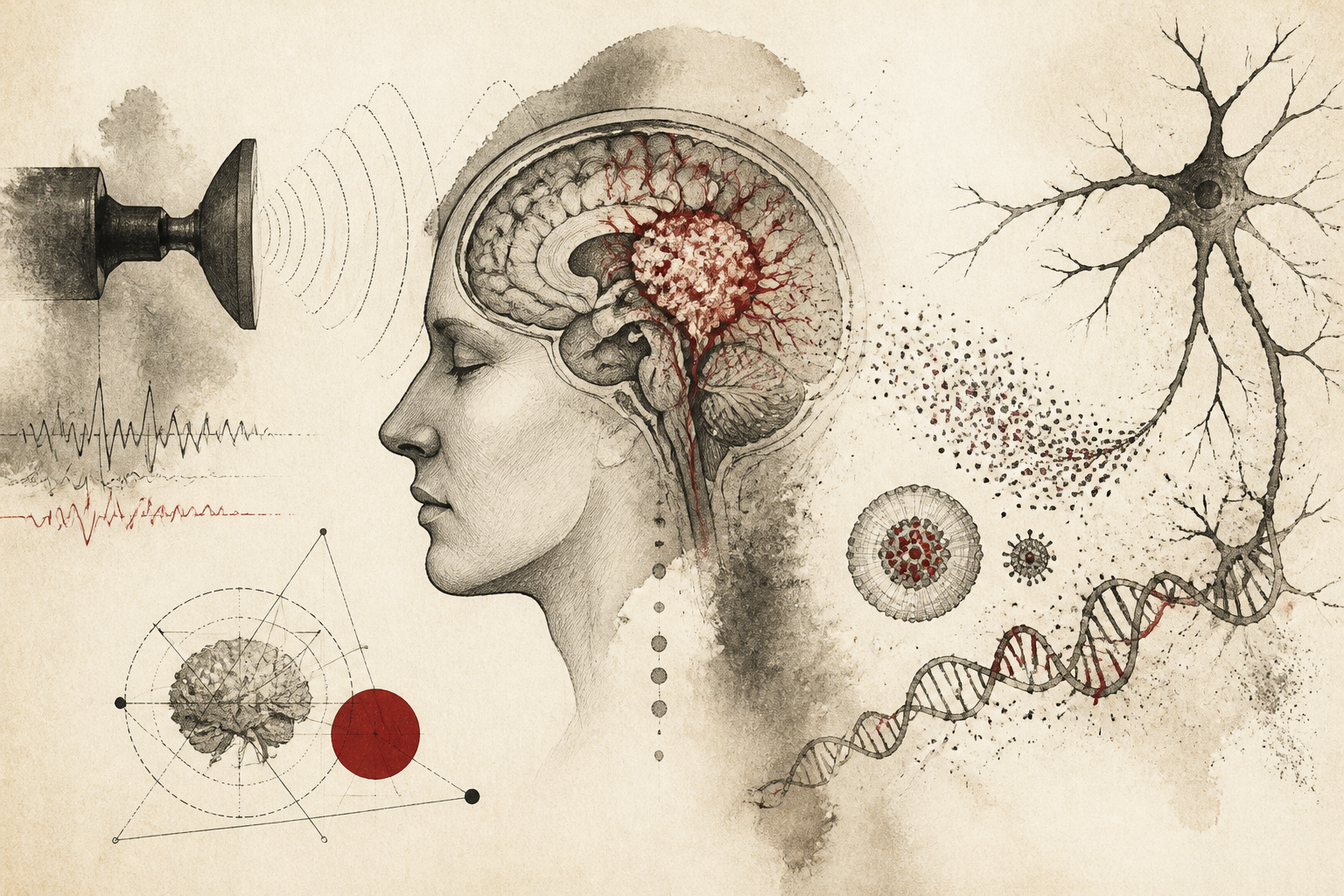
The clinical management of glioblastoma multiforme remains one of the most formidable challenges in modern neuro-oncology. Characterized by aggressive infiltration and a high rate of recurrence, this primary brain malignancy often eludes conventional surgical, radiological, and pharmacological interventions. However, a recent breakthrough from the University of Virginia offers a sophisticated new avenue for treatment. By integrating focused ultrasound technology, specialized nanoparticles, and microRNA molecules, researchers have demonstrated an experimental method to penetrate the brain's natural defenses and silence the genetic drivers of tumor growth. As reported by ScienceDaily, this multi-pronged approach represents a significant departure from singular drug therapies, instead utilizing physics and genetics to dismantle the cancer's survival mechanisms from within.
Overcoming the Blood-Brain Barrier through Focused Ultrasound
The primary obstacle in treating brain pathologies is not merely the resistance of the cancer cells themselves, but the structural integrity of the blood-brain barrier. This physiological gatekeeper is essential for protecting the central nervous system from toxins and pathogens, yet it simultaneously prevents nearly ninety-five percent of therapeutic agents from reaching their intended targets in the brain. The University of Virginia team addressed this fundamental limitation by utilizing focused ultrasound. Unlike traditional diagnostic ultrasound, this method converges high-frequency sound waves onto a specific focal point within the cranium. When combined with intravenously injected microbubbles, these sound waves cause the bubbles to oscillate, temporarily and safely opening the tight junctions of the blood-brain barrier.
This transient opening creates a window of opportunity for larger therapeutic molecules to pass into the brain parenchyma. The precision of this technique is paramount; by focusing the ultrasound beam exclusively on the site of the tumor, clinicians can ensure that the blood-brain barrier remains intact in healthy regions of the brain, thereby minimizing potential systemic side effects. This spatial control transforms the brain's defense mechanism from an impassable wall into a selective gateway, allowing for the localized delivery of potent genetic materials that would otherwise be filtered out by the body's natural circulatory defenses.
The Role of Nanoparticles and MicroRNA Payloads
Once the barrier is breached, the challenge shifts to the effective delivery and uptake of the therapeutic agent by the malignant cells. The University of Virginia researchers employed sophisticated nanoparticles to serve as transport vehicles. These particles are engineered to protect their delicate cargo from degradation while traveling through the bloodstream. The cargo in question consists of microRNAs—small, non-coding genetic molecules that play a crucial role in regulating gene expression. While traditional chemotherapy typically targets a single protein or metabolic pathway, microRNAs are capable of broad-spectrum regulation. They can simultaneously suppress multiple oncogenes, the genes responsible for driving the rapid proliferation and survival of glioblastoma cells.
By delivering a specific cocktail of microRNAs directly into the tumor environment, the researchers were able to attack the cancer’s infrastructure on several fronts at once. This multi-target strategy is particularly vital for glioblastoma, which is known for its heterogeneity and ability to adapt to single-agent treatments. The nanoparticles ensure that these microRNAs are internalized by the cancer cells, where they can then bind to messenger RNA and prevent the production of proteins essential for tumor growth. This integration of nanotechnology and genetic engineering allows for a level of molecular precision that was previously unattainable through traditional systemic administration.
Methodological Innovation and Therapeutic Efficacy
The methodology behind this study involves a sequence of highly coordinated steps that bridge the gap between physics and molecular biology. Initially, the researchers had to optimize the nanoparticle design to ensure stability and biocompatibility. Following this, the focused ultrasound parameters were calibrated to achieve the necessary permeability of the blood-brain barrier without causing thermal damage to the surrounding neural tissue. In laboratory settings, this synergy proved highly effective. The researchers observed that the combination of focused ultrasound and microRNA-laden nanoparticles led to a significant reduction in tumor volume and an increase in survival rates within experimental models.
What sets this method apart is the "attack on multiple cancer-driving genes simultaneously," a phrase that underscores the complexity of the intervention. By silencing a network of genes rather than a single target, the therapy makes it significantly harder for the glioblastoma to develop resistance. Furthermore, the use of sound waves as the catalyst for delivery removes the need for invasive neurosurgical procedures to administer the drugs, which often carry high risks of infection and neurological deficit. The ability to monitor the delivery in real-time using imaging techniques further enhances the safety and reliability of the protocol, providing a data-driven framework for future clinical applications.
Limitations, Ethical Considerations, and Future Directions
Despite the promising results reported by the University of Virginia, several hurdles remain before this technology can be translated into standard clinical practice. One primary limitation is the scaling of the focused ultrasound technology for human subjects, whose skulls are significantly thicker and more variable than those of the animal models used in initial testing. Furthermore, while the temporary opening of the blood-brain barrier is considered safe in a controlled environment, there are ongoing questions regarding the long-term effects of repeated openings on neurological health. The specificity of the microRNA cocktail also requires further refinement to ensure that it does not inadvertently silence essential genes in healthy neurons that may take up the nanoparticles.
Open questions also persist regarding the duration of the therapeutic effect. Glioblastoma is notorious for its ability to hide in a quiescent state before re-emerging, necessitating studies on whether this sonogenetic approach can prevent long-term recurrence. Researchers must also determine the optimal frequency and dosage of the treatments to balance efficacy with patient tolerance. The path from experimental success to FDA approval is long, requiring rigorous phase-controlled human trials to validate the safety profiles and survival outcomes observed in the preliminary research stages.
Why This Research Matters for Neuro-Oncology
The implications of this study extend beyond the treatment of glioblastoma. The successful use of focused ultrasound to deliver genetic payloads establishes a proof-of-concept for treating a wide array of central nervous system disorders, including Alzheimer’s disease, Parkinson’s disease, and various pediatric brain tumors. It represents a shift toward "precision neuro-medicine," where treatments are tailored to the genetic profile of a patient’s specific pathology and delivered with surgical accuracy using non-invasive tools. According to the original reporting by ScienceDaily, this development offers a new hope for a patient population that has seen very little improvement in prognosis over the last several decades.
In conclusion, the University of Virginia’s experimental strategy marks a sophisticated convergence of bioengineering and oncology. By weaponizing sound waves to breach the brain’s defenses and deploying genetic tools to dismantle the cancer’s internal machinery, scientists are closer to turning one of the most deadly diagnoses into a manageable condition. While the journey toward a definitive cure remains ongoing, this research provides a critical foundation for the next generation of non-invasive, genetically-driven therapies. As the academic community continues to evaluate these findings, the focus remains on refining the technology to ensure it is as safe as it is powerful, ultimately aiming to improve both the length and quality of life for those afflicted by brain cancer.
Quick answers
- How does focused ultrasound help treat brain cancer?
- Focused ultrasound uses high-frequency sound waves to temporarily open the blood-brain barrier, allowing therapeutic nanoparticles to enter the brain and reach the tumor without invasive surgery.
- What is the role of microRNA in the University of Virginia study?
- MicroRNAs are genetic molecules that act as the therapeutic payload; they are delivered into cancer cells to simultaneously silence multiple genes that drive tumor growth and survival.
- Why is glioblastoma difficult to treat with traditional medicine?
- Glioblastoma is difficult to treat because the blood-brain barrier blocks most drugs, and the cancer is highly aggressive with multiple genetic pathways that allow it to resist single-drug therapies.
Rewritten by Zeit editorial AI. Based on original reporting at ScienceDaily — Mind & Brain.