Social Hierarchy Influences Neurological Pathways of Methamphetamine Addiction
Research published in Nature Neuroscience reveals how social dominance and subordination dictate distinct dopaminergic mechanisms in drug-seeking behavior.
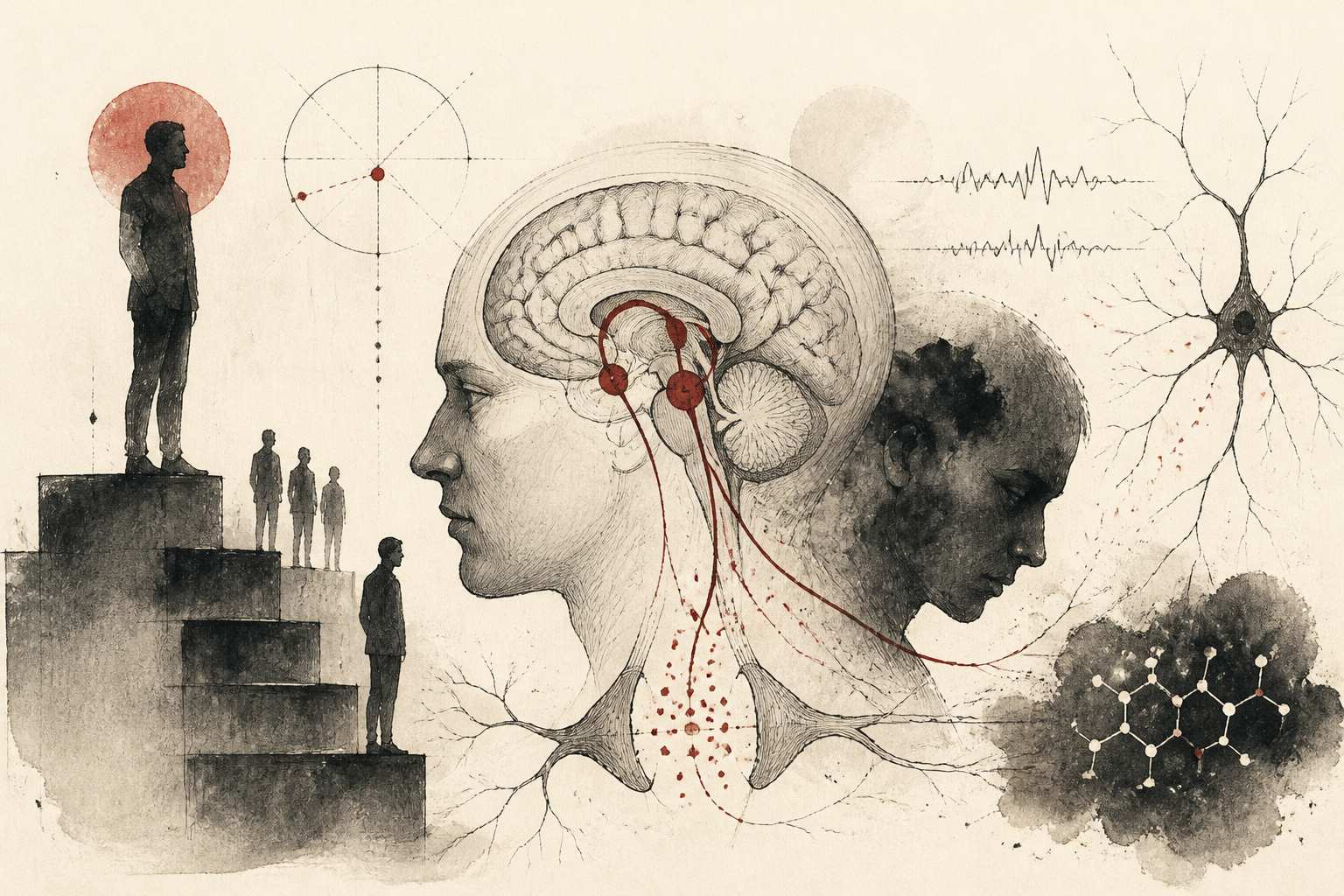
The intersection of social environment and neurological vulnerability has long been a focal point for behavioral science. Recent investigations published in Nature Neuroscience have illuminated a critical dimension of this relationship, specifically how an individual's position within a social hierarchy influences the neurobiological mechanisms driving substance use disorders. By examining male rodents in controlled social environments, researchers have identified that the drive to seek methamphetamine is not a uniform process across a population; rather, it is mediated by specific dopaminergic pathways that differ significantly between dominant and subordinate individuals. This finding suggests that social standing does not merely influence the psychological stress levels of a subject but fundamentally redirects the neural circuitry involved in addiction and reward seeking.
The Neurobiology of Social Stratification
Understanding the impact of social rank on drug-seeking behavior requires a deep dive into the dopaminergic system, the primary reward pathway of the brain. In the context of the study reported by Nature Neuroscience, researchers observed that social status functions as a powerful modulator of how the brain processes the craving for stimulants like methamphetamine. In high-ranking or dominant individuals, the neurological drive to seek the drug appears to follow a distinct trajectory compared to those in subordinate positions. This stratification is significant because it suggests that the environment and the individual’s perceived or actual status within that environment can alter the biological expression of addiction.
Historically, addiction research has often treated the subject as an isolated biological entity, focusing on the direct chemical interactions between a substance and the brain's receptors. However, this study underscores the necessity of a socio-biological approach. By analyzing the behavior of rodents within established social hierarchies, the researchers were able to map how the pressure of maintaining dominance or the stress of being subordinate creates different neurochemical predispositions. These predispositions, in turn, dictate which specific dopaminergic circuits are activated when the individual is exposed to triggers associated with methamphetamine use.
Distinct Pathways for Dominants and Subordinates
One of the most striking findings of the research is the identification of mutually exclusive pathways based on social rank. In dominant male rodents, methamphetamine-seeking behavior was linked to a specific subset of dopaminergic neurons that are often associated with goal-oriented behavior and the reinforcement of high-status positions. For these individuals, the drug may serve as a chemical surrogate for the rewards of social success or as a mechanism to sustain the high-energy demands of maintaining rank. The neural signatures in these subjects showed high activity in regions associated with executive control and the anticipation of positive outcomes.
Conversely, subordinate individuals exhibited drug-seeking behavior through entirely different dopaminergic mechanisms. For these subjects, the neural activity was more closely aligned with the brain's stress response and the mitigation of negative affect. In the subordinate population, methamphetamine seeking appeared to be a response to the chronic stressors associated with low social standing. The researchers found that the pathways involved in these individuals were linked to the amygdala and other regions associated with fear and avoidance, rather than the reward-centric regions dominant in their high-ranking counterparts. This divergence indicates that while the outward behavior—seeking the drug—remains the same, the internal biological motivation is radically different depending on one's social context.
Methodological Approaches to Social Neurobiology
The study utilized a robust experimental design to isolate the variables of social rank and drug-seeking behavior. Rodents were placed in social housing environments where hierarchies emerged naturally through competition for resources and space. Once ranks were firmly established and verified through behavioral observation, the subjects were introduced to methamphetamine-seeking protocols. This allowed the research team to observe how the drive for the substance interacted with the already established social dynamics. The use of advanced neuroimaging and optogenetic techniques permitted the researchers to trace the specific dopaminergic pathways in real-time as the subjects engaged in or resisted drug-seeking actions.
By manipulating these pathways, the scientists could confirm the causal link between social rank and neural function. For instance, when specific circuits associated with subordination were inhibited, the drug-seeking behavior in those individuals diminished, while the same intervention had little to no effect on dominant individuals. This level of specificity is a hallmark of modern neuroscience, providing a roadmap for how behavioral traits and social environments are etched into the physical architecture of the brain. The methodology highlights the importance of the prefrontal cortex and its communication with the ventral tegmental area, showing how these connections are remodeled by the social experience.
Implications and Limitations of Hierarchical Research
The implications of these findings for human psychology and the treatment of addiction are profound, though they must be interpreted with academic caution. If the neurological drivers of addiction vary based on an individual's social standing, then a "one size fits all" approach to rehabilitation may be biologically flawed. For a person in a position of high social stress or low perceived status, the neural pathways driving their addiction might require different pharmacological or therapeutic interventions than someone in a high-status, high-pressure leadership role. This research paves the way for personalized medicine in the field of psychiatry, where social history and current status are integrated into the diagnostic process.
However, the study is not without its limitations. The research was conducted on male rodents, and the dynamics of social rank and addiction may differ significantly in females or in more complex human social structures. Human social status is also more fluid and multifaceted than the linear hierarchies found in rodent colonies. Furthermore, while the study establishes a strong correlation and identifies specific pathways, the transition from animal models to clinical human applications requires extensive validation. There are also ethical considerations regarding how this data might be used; understanding the biology of status must not lead to the deterministic labeling of individuals based on their social or economic standing.
Why Social Context Matters in Addiction Science
This research serves as a pivotal reminder that the brain does not exist in a vacuum. It is a social organ, constantly being reshaped by the world around it. The work published in Nature Neuroscience contributes to a growing body of evidence that the "nature versus nurture" debate is a false dichotomy; instead, it is the interaction between the two that defines the human experience. By identifying that social rank modulates the very pathways that lead to drug craving, the study highlights the necessity of addressing social inequality and environmental stress as part of any comprehensive public health strategy against substance abuse.
As the scientific community continues to explore the nuances of the dopaminergic system, the role of the social environment will likely move from the periphery to the center of neurobiological inquiry. For institutions like Zeit Psychology Online University, these findings reinforce the importance of a multidisciplinary education that bridges the gap between pure biology and the social sciences. Understanding the mechanics of methamphetamine seeking is a critical step in reducing the harm caused by the drug, but understanding the social heart of the problem is what will ultimately lead to more effective and compassionate solutions for individuals across all levels of society.
Quick answers
- How does social status affect drug-seeking behavior?
- Social status dictates which specific neural pathways in the brain drive drug-seeking behavior. Dominant individuals use circuits associated with reward and goal-attainment, while subordinates use circuits linked to stress and fear.
- What is the role of dopamine in this study?
- Dopamine acts as the primary neurotransmitter in the reward system. The study shows that different dopaminergic circuits are activated by methamphetamine based on the subject's social rank.
- Why is this research important for addiction treatment?
- It suggests that addiction treatment may need to be tailored to an individual's social environment and status, as the biological motivations for drug-seeking vary between different social groups.
Rewritten by Zeit editorial AI. Based on original reporting at Nature Neuroscience.