Short-Term Meditation Retreats Induce Rapid Neural and Physiological Reorganization
Recent findings published in ScienceDaily suggest a one-week intensive meditation program can alter brain connectivity and immune markers, mirroring effects seen in psychedelic therapy.
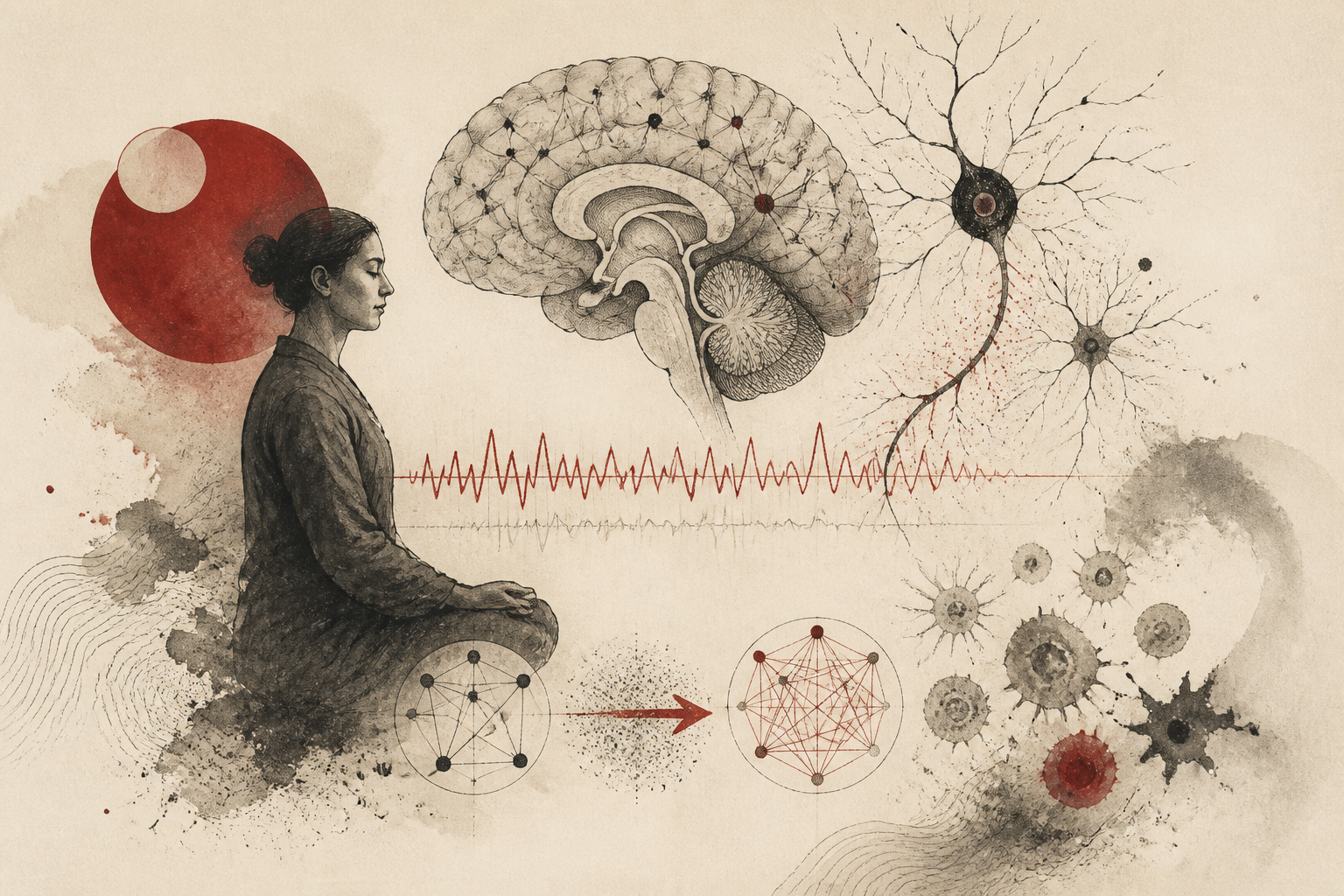
In the evolving field of contemplative neuroscience, the temporal requirements for significant biological change have often been debated. While traditional views suggested that mastery of the mind required decades of practice, a recent investigation highlighted by ScienceDaily suggests that the threshold for structural and functional reorganization may be significantly lower than previously assumed. Research into an intensive seven-day meditation retreat has revealed striking evidence that even a week of focused practice can trigger comprehensive changes across the human brain and body. These findings, which span neuroplasticity, metabolic regulation, and immune function, suggest that intensive short-term interventions may offer a viable pathway for therapeutic neurological modulation.
The Landscape of Contemplative Neuroplasticity
Historically, studies on meditation have focused on two primary cohorts: long-term practitioners with thousands of cumulative hours and novices engaged in eight-week Mindfulness-Based Stress Reduction (MBSR) programs. This new research fills a critical gap by examining the "sprint" model—an immersive environment where participants engage in deep practice for consecutive days. The study observed participants during a one-week retreat, monitoring a suite of biomarkers and neural imaging data to determine the pace at which the human physiology adapts to sustained meditative states. The results indicate that the human nervous system is remarkably responsive to environmental and behavioral shifts, provided the immersion is sufficiently rigorous.
According to the data reported, the changes observed were not merely psychological or self-reported feelings of calm. Rather, researchers identified objective shifts in the way brain regions communicate with one another and how the body manages physiological stress. The study situates these findings within the broader context of neuroplasticity, which is the brain's inherent ability to reorganize its structure, functions, and connections in response to new experiences. The seven-day timeframe is particularly noteworthy, as it suggests that the biological machinery required for systemic change is primed for rapid activation under the right conditions.
Neural Connectivity and the Psychedelic Parallel
One of the most profound findings of the study involves the specific patterns of brain connectivity observed in participants post-retreat. Researchers utilized advanced neuroimaging to map the functional integration of various brain networks. They discovered that the participants' brains exhibited connectivity patterns remarkably similar to those recorded during psychedelic-assisted therapy sessions. Specifically, there was a visible decrease in the activity of the default mode network (DMN)—the system associated with self-referential thought and the 'ego'—coupled with an increase in global connectivity between regions that typically do not communicate.
This phenomenon, often referred to as 'neural ego dissolution' in psychedelic research, suggests that intensive meditation can facilitate altered states of consciousness without pharmacological intervention. The implications for clinical psychology are significant. If seven days of meditation can induce a state of neural plasticity and connectivity comparable to substances like psilocybin, it provides a non-invasive, drug-free alternative for individuals seeking the therapeutic breakthroughs often associated with psychedelic experiences. This suggests that the brain possesses endogenous mechanisms for reaching high-order states of integration, which can be accessed through specific behavioral and attentional training.
Multi-Systemic Physiological Adaptation
Beyond the cranium, the retreat triggered a cascade of changes throughout the body’s regulatory systems. The study tracked markers related to immunity, metabolism, and natural analgesia. Participants showed a marked shift in their immune profile, characterized by a reduction in pro-inflammatory markers and an enhancement of pathways associated with cellular repair. This supports the growing body of evidence that the mind-body connection is a two-way street where mental states directly influence the peripheral immune system.
Metabolically, the intensive practice appeared to optimize energy utilization. Data indicated changes in metabolic signaling that suggest the body enters a state of heightened efficiency, potentially reducing the oxidative stress that contributes to aging and chronic disease. Furthermore, the researchers noted shifts in the pathways tied to natural pain relief. By modulating the way the brain processes nociceptive signals, the meditation retreat appeared to bolster the participants' internal capacity for managing physical discomfort. This finding is particularly relevant for the study of chronic pain, as it points toward a method of upregulating the body’s own opioid and non-opioid pain-management systems through sustained attentional focus.
Methodological Framework and Investigative Scope
The researchers employed a multi-omic approach, combining functional Magnetic Resonance Imaging (fMRI) with blood-based biomarker analysis to ensure a comprehensive view of the participants' transformation. By measuring changes both before and after the seven-day period, the team could isolate the effects of the retreat environment and practice. The intensive nature of the retreat—which typically involves several hours of meditation daily, silence, and a controlled diet—creates a unique laboratory for observing human adaptation.
However, the study also highlights the necessity of distinguishing between transient states and permanent traits. While the seven-day mark showed a 'rewiring' effect, the longitudinal durability of these changes remains a primary question for the scientific community. The mechanism behind these rapid changes is thought to involve the rapid expression of genes related to stress response and neural growth factors, such as BDNF (Brain-Derived Neurotrophic Factor). This molecular 'priming' allows the brain to forge new synaptic connections and prune inefficient ones at an accelerated rate, essentially condensing months of gradual change into a single week of high-intensity practice.
Limitations and Future Inquiries
Despite the promising results, the academic community urges a cautious interpretation regarding the universality of these effects. The study participants were often in a controlled, supportive environment, which may contribute significantly to the observed physiological shifts. It is unclear if the same 'rewiring' would occur if the meditation were practiced for the same duration in a high-stress, urban setting. Furthermore, the researchers acknowledge that while the brain connectivity mirrored psychedelic states, the subjective experience of participants may vary, and not everyone may achieve the same level of neural integration within a week.
Open questions also remain regarding the 'washout' period of these benefits. Scientific inquiry must now turn toward how long these changes in neuroplasticity and immune function persist once a participant returns to their daily routine. Does the brain revert to its baseline state, or does a one-week retreat provide a 'reset' that offers long-term protection against stress? Determining the optimal 'dosage' of meditation for different clinical outcomes—such as depression, autoimmune disorders, or cognitive decline—will be the next frontier for researchers in this field.
Institutional and Clinical Implications
The findings reported by ScienceDaily underscore a shift in how we view mental health interventions. The ability of the brain to undergo such significant reorganization in just 168 hours suggests that intensive meditation could be integrated into clinical settings as a rapid-response treatment. For patients who may not be candidates for psychedelic therapies due to medical or psychological contraindications, the intensive retreat model offers a viable alternative for achieving profound neural shifts.
For educational institutions like Zeit Psychology Online University, these findings validate the inclusion of contemplative practices in psychological curricula. Understanding that the brain is not a static organ, but a highly dynamic system capable of rapid evolution, changes the way we approach therapy, wellness, and human potential. As we move forward, the integration of these high-intensity contemplative models into mainstream healthcare could provide a powerful tool for enhancing human resilience and neurological health, proving that the mind truly has the power to reshape the body from the inside out.
Quick answers
- How long does it take for meditation to change the brain?
- According to research reported by ScienceDaily, intensive meditation can trigger significant changes in brain connectivity and physiological biomarkers in as little as seven days.
- Does meditation have the same effect as psychedelics?
- Studies show that intensive meditation can produce brain connectivity patterns similar to those seen in psychedelic experiences, specifically reducing activity in the default mode network and increasing global connectivity.
- What physical changes occur during a meditation retreat?
- Participants in intensive retreats show shifts in immune system markers, improved metabolic signaling, and enhanced pathways for natural pain relief and neuroplasticity.
Rewritten by Zeit editorial AI. Based on original reporting at ScienceDaily — Mind & Brain.