Secreted Phospholipase Identified as Key Mediator of Neuroprotection in the Aging Brain
Researchers have identified a specific secreted phospholipase that confers cognitive resilience and neuroprotection against age-related decline, according to a report in Nature Neuroscience.
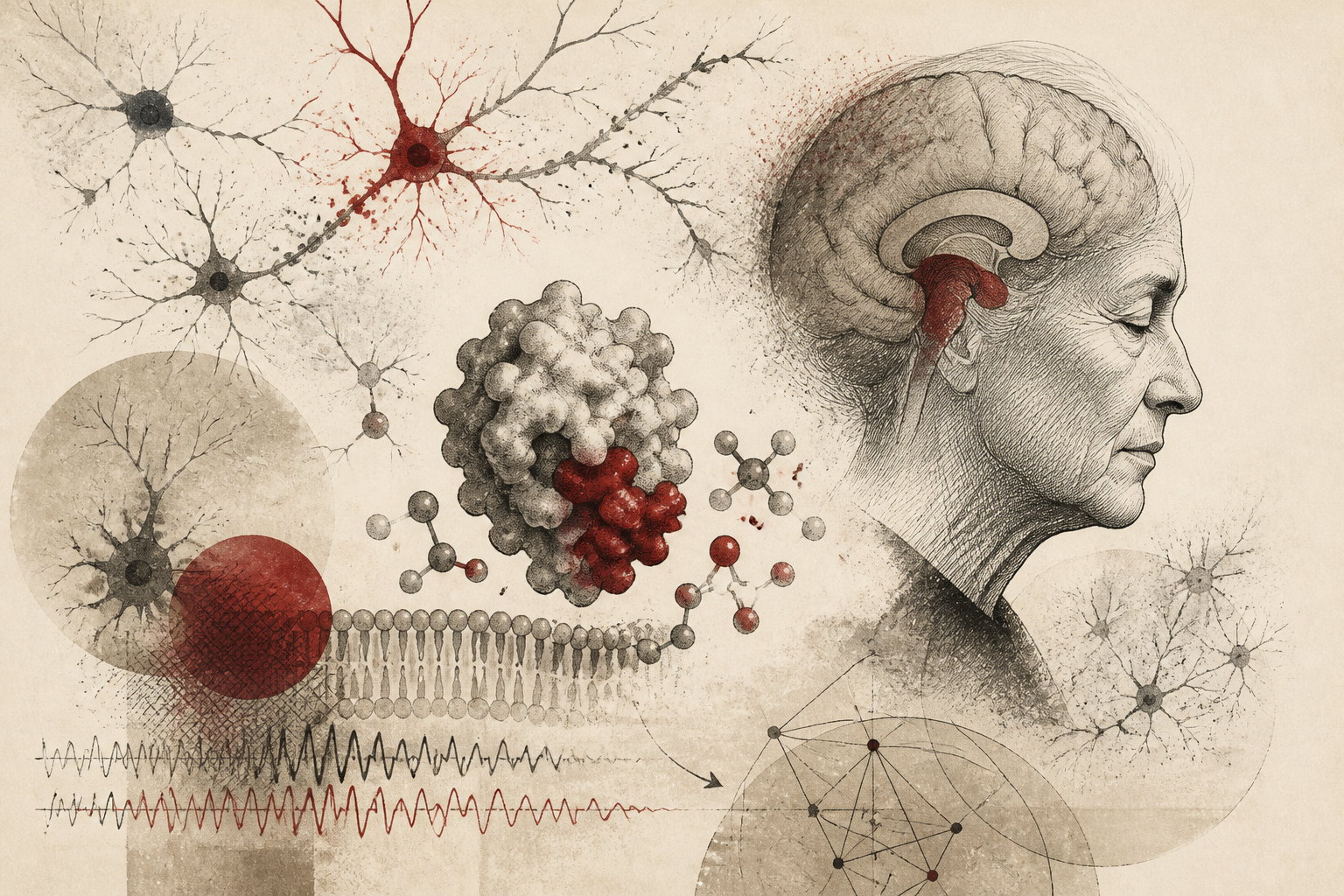
The trajectory of human cognitive aging remains one of the most complex puzzles in contemporary neuroscience, particularly the phenomenon where some individuals maintain high levels of mental acuity despite advanced chronological age. A recent study published in Nature Neuroscience has provided significant insight into this biological variation, identifying a specific secreted phospholipase that appears to act as a robust mediator of neuroprotection. This discovery offers a potential molecular explanation for cognitive resilience, shifting the focus toward endogenously produced proteins that may shield the brain from the standard degradations associated with the passage of time. By examining the interplay between aging-sensitive secretions and neuronal health, the research team has mapped a previously underappreciated pathway that could redefine how clinicians approach age-related cognitive impairment.
The Molecular Landscape of Cognitive Resilience
For decades, the field of gerontology has distinguished between chronological age and biological age, noting that the brain’s functional capacity does not always mirror the calendar. The study in Nature Neuroscience delves into the proteomic changes that occur within the cerebral environment as organisms age, specifically targeting proteins that are secreted and thus capable of systemic or paracrine signaling. The researchers sought to identify why certain biochemical markers decline precipitously in the majority of the population while remaining stable in those who exhibit successful aging. The identification of this aging-sensitive secreted phospholipase represents a critical step in understanding the endogenous defense mechanisms of the central nervous system. Unlike many factors that are purely intracellular, this secreted protein operates in the extracellular space, suggesting that it may be part of a broader communication network designed to maintain homeostasis under the stress of cellular senescence.
Understanding these mechanisms requires a departure from traditional models that focus solely on the accumulation of neurotoxic proteins like amyloid-beta or tau. While those factors are undeniably important, the presence of protective agents—or the lack thereof—may be equally decisive in determining the clinical outcome for an aging patient. The study establishes that this phospholipase is not merely a passive bystander in the aging process but a functional component of the brain's resilience toolkit. Its levels appear to correlate strongly with preserved synaptic function and memory retention, providing a biological basis for the "cognitive reserve" often cited in psychological literature. By bridging the gap between molecular biology and functional psychology, this research provides a comprehensive view of how a single protein can influence the macro-level experience of aging.
Methodological Approaches to Secreted Factors
To isolate the effects of the phospholipase, the research team employed a rigorous multi-stage experimental design involving both longitudinal observations and targeted interventions. The methodology was rooted in identifying proteins that show high sensitivity to the aging process, specifically those that decrease in concentration as cognitive performance wanes. By using advanced proteomic screening, the researchers were able to pinpoint the secreted phospholipase as a primary candidate for further investigation. The study utilized animal models to demonstrate that restoring the levels of this specific protein could mitigate the cognitive deficits typically observed in older subjects. This causal link was established through a series of behavioral assessments designed to test spatial memory, executive function, and learning capacity, all of which showed marked improvement when the phospholipase was present at youthful levels.
Furthermore, the researchers investigated the cellular origins of this protein, looking at which types of brain cells are responsible for its production and secretion. The findings suggest a complex regulatory system where the expression of the phospholipase is tied to the metabolic state of the brain. The methodological strength of this study lies in its ability to move from high-level behavioral data down to the molecular signaling pathways. By observing the interactions between the phospholipase and neuronal membranes, the team was able to visualize the physical changes that occur at the synapse. These observations were supported by electrophysiological recordings, which confirmed that the presence of the phospholipase enhanced long-term potentiation—the cellular basis for learning and memory formation.
Mechanisms of Neuroprotection and Synaptic Integrity
The primary mechanism identified in the Nature Neuroscience report involves the phospholipase’s ability to modulate the lipid composition of neuronal membranes. As the brain ages, the integrity of these membranes often degrades, leading to inefficient signaling and increased vulnerability to oxidative stress. The secreted phospholipase appears to function by processing specific lipids that are essential for maintaining the fluidity and structural stability of the synaptic junction. This process is vital for the proper functioning of neurotransmitter receptors, which must be precisely positioned within the membrane to receive signals from neighboring neurons. By ensuring that these receptors remain functional, the phospholipase effectively preserves the brain’s ability to process information rapidly and accurately.
In addition to its role in membrane maintenance, the study suggests that the phospholipase may have anti-inflammatory properties. Chronic, low-grade inflammation, often referred to as "inflammaging," is a hallmark of the aging brain and a major contributor to neurodegenerative diseases. The research indicates that the presence of this secreted factor helps to dampen the inflammatory response of microglia, the brain’s resident immune cells. By keeping these cells in a surveillance state rather than an activated inflammatory state, the phospholipase prevents the collateral damage to healthy neurons that often accompanies aging. This dual role—maintaining structural integrity while modulating immune activity—positions the phospholipase as a central pillar of neurobiological resilience.
Limitations and the Path to Clinical Application
Despite the promising results, the researchers at Nature Neuroscience acknowledge several limitations that must be addressed before these findings can be translated into human therapies. The majority of the mechanistic data was derived from model organisms, and while these models share significant biological similarities with humans, the complexity of the human brain may introduce additional variables. For instance, the human lifespan is significantly longer, meaning that the phospholipase would need to remain active and stable over decades rather than months. There is also the question of how to deliver such a protein effectively across the blood-brain barrier if it were to be developed as a pharmacological intervention. The study primarily highlights the endogenous role of the protein, and exogenous supplementation remains a significant technical challenge.
Future research will need to focus on longitudinal human studies to confirm whether baseline levels of this phospholipase can predict the onset of cognitive decline. There is also an open question regarding the genetic and environmental factors that influence a person’s natural production of this protein. Why do some individuals maintain high levels throughout their lives while others experience a sharp decline? Understanding the regulatory elements that control the expression of the phospholipase gene could lead to lifestyle or dietary interventions that naturally boost its production. Additionally, the specificity of the phospholipase’s action must be further mapped to ensure that any potential treatments do not interfere with other essential lipid-signaling pathways in the body.
Implications for Geriatric Psychology and Medicine
The identification of a secreted factor that confers neuroprotection has profound implications for the way we view the aging process. It suggests that cognitive decline is not an inevitable consequence of getting older, but rather a biological state that is subject to molecular regulation. For the field of geriatric psychology, this provides a biological framework for understanding why some patients respond better to cognitive training and social engagement than others. It may be that these lifestyle factors interact with the brain’s chemistry to maintain the secretion of protective proteins like the phospholipase identified in this study. This research moves the conversation away from treating symptoms and toward the preservation of the brain’s innate defensive capabilities.
Ultimately, the work published in Nature Neuroscience serves as a call to action for the scientific community to explore the "secretome" of the aging brain more deeply. By cataloging the various factors that the brain produces to protect itself, researchers can develop a more nuanced understanding of resilience. This study does not just identify a single protein; it opens a door to a new strategy in the fight against dementia and other age-related cognitive disorders. As we continue to unravel the complexities of the aging brain, the focus on protective secreted factors will likely become a cornerstone of both preventative medicine and therapeutic intervention, offering hope for a future where cognitive health can be maintained throughout the human lifespan.
Quick answers
- What is the main discovery of the Nature Neuroscience study on aging?
- Researchers identified a specific secreted phospholipase protein that declines with age but provides neuroprotection and maintains cognitive function when present at high levels.
- How does the identified phospholipase protect the brain?
- It maintains the lipid integrity of neuronal membranes, ensures efficient synaptic signaling, and may reduce harmful brain inflammation associated with aging.
- Can this protein be used to treat dementia?
- While it shows promise in animal models for restoring memory and learning, further research is needed to overcome delivery challenges and confirm its efficacy in humans.
Rewritten by Zeit editorial AI. Based on original reporting at Nature Neuroscience.