Restoring Interneuron Rhythmicity to Combat Memory Loss in Alzheimer’s Disease
Recent research reveals how stabilizing sodium channel function in interneurons can reset gamma wave timing and reverse cognitive deficits associated with neurodegeneration.
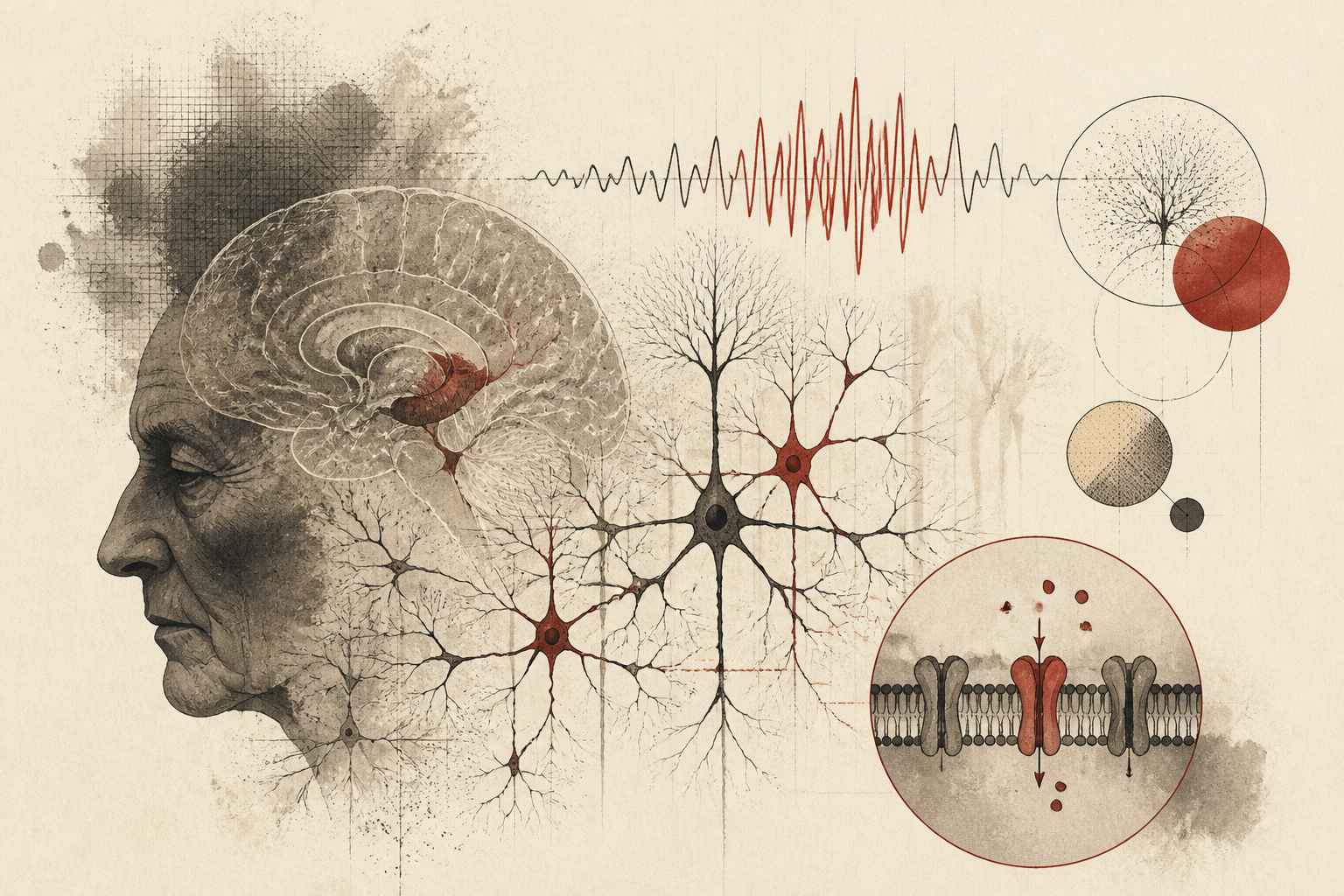
In the complex architecture of the mammalian brain, the precision of cellular communication is the fundamental bedrock of cognitive function. When this precision falters, the resulting desynchronization often manifests as the debilitating memory loss characteristic of Alzheimer’s disease. Recent findings published in NeuroscienceNews.com highlight a significant breakthrough in our understanding of these neural mechanics, focusing on the specific role of interneurons and their contribution to gamma oscillations. By examining the temporal dynamics of these cells, researchers have identified a potential therapeutic pathway that involves the restoration of a specific sodium channel, Nav1.1, which appears to be central to the brain’s ability to maintain rhythmic timing and, by extension, functional memory.
The Role of Interneuron Synchrony in Neural Communication
The biological basis for memory depends heavily on the brain's ability to generate high-frequency electrical patterns known as gamma waves. These oscillations serve as a temporal framework that allows different regions of the brain to communicate and process information efficiently. At the heart of this rhythmic activity are interneurons, a specialized class of inhibitory nerve cells that act as the regulators of the neural circuit. Unlike excitatory neurons that transmit signals across long distances, interneurons function locally to dampen activity, ensuring that the firing of the network remains organized and balanced.
Research indicates that for gamma waves to be effective, interneurons must fire in a highly coordinated, sequential fashion—effectively "taking turns" to create a steady pulse of inhibition. In the healthy brain, this turnover is seamless, allowing for the clear encoding and retrieval of information. However, in the presence of Alzheimer’s pathology, this delicate timing is disrupted. The recent investigations suggest that when interneurons lose their ability to fire at the correct intervals, the resulting breakdown in gamma rhythmicity directly correlates with the cognitive decline observed in patients. This shift from a well-orchestrated rhythm to a chaotic state represents a primary driver of the inability to form new memories or recall old ones, moving the scientific focus from late-stage plaque accumulation to early-stage physiological signaling errors.
Nav1.1 and the Mechanics of Rhythmic Restoration
The mechanism behind this timing failure appears to be rooted in the dysfunction of the Nav1.1 sodium channel, a protein that is essential for the rapid firing capabilities of interneurons. Sodium channels are responsible for the flow of ions across the cell membrane, which triggers the electrical impulses necessary for neuronal communication. According to the data reported by NeuroscienceNews.com, a significant reduction in Nav1.1 levels is a hallmark of the Alzheimer’s brain, particularly within the inhibitory circuits. Without sufficient Nav1.1 activity, interneurons become sluggish and lose their ability to maintain the high-frequency firing required to sustain gamma oscillations.
To test whether this deficiency could be reversed, researchers utilized experimental models to augment the expression or function of these specific sodium channels. The results were striking: by restoring the levels of Nav1.1, the interneurons regained their ability to fire with the necessary precision. This restoration of cellular timing effectively "reset" the gamma brain waves to their natural state. More importantly, this physiological correction led to a measurable rescue of memory function in the subjects. The study demonstrates that the brain possesses a degree of functional plasticity that can be tapped into if the underlying timing mechanisms are addressed at the molecular level. This shift in perspective suggests that the cognitive symptoms of Alzheimer’s are not merely a result of cell death, but rather a functional failure of existing circuits that may be correctable.
Implications for Clinical Translation and Limitations
While the discovery of the Nav1.1 pathway offers a promising new target for intervention, the transition from laboratory models to clinical application involves significant hurdles. One of the primary interpretations of this research is that Alzheimer’s should be viewed as a disorder of neural synchrony as much as a disorder of protein aggregation. By focusing on the temporal dynamics of interneurons, scientists are opening a new front in the development of pharmacological treatments that could potentially enhance the stability of gamma waves. However, the complexity of the human brain compared to experimental models means that the precise modulation of Nav1.1 must be handled with extreme care to avoid over-inhibition or other unintended side effects on the nervous system.
Furthermore, the research raises questions regarding the timing of such interventions. It remains to be seen whether restoring Nav1.1 function in the advanced stages of the disease, where significant neuronal loss has already occurred, will yield the same cognitive benefits as it does in earlier stages. There is also the question of whether this mechanism is universal across all forms of dementia or specific to the pathophysiology of Alzheimer’s. Despite these open questions, the study provides a robust framework for future inquiries into how fine-tuning the electrical properties of specific cell types can influence global cognitive outcomes. The reliance on interneuron timing as a metric for brain health represents a paradigm shift toward more targeted, physiologically-based therapies.
Why Temporal Dynamics Matter for Future Therapy
The significance of this research lies in its potential to change the way we treat memory disorders. For decades, the primary strategy in Alzheimer’s research has centered on clearing amyloid-beta plaques and tau tangles. While these remain important markers, the limited success of plaque-clearing drugs suggests that we must also address the functional integrity of the neural circuits themselves. By identifying Nav1.1 as a master regulator of interneuron timing, this study provides a specific biological handle for improving brain communication without necessarily needing to eliminate all pathological proteins first.
In conclusion, the work reported by NeuroscienceNews.com underscores the vital importance of temporal precision in the brain. The ability of interneurons to maintain their rhythm through Nav1.1-mediated signaling is what allows the human mind to process complex information and retain experience. As we move forward, the challenge will be to develop safe and effective ways to boost these natural rhythmic processes in patients. If successful, this approach could offer a new lease on life for millions of individuals suffering from cognitive decline, replacing the static fog of memory loss with the rhythmic clarity of a healthy, synchronized brain.
Quick answers
- What is the role of interneurons in Alzheimer's disease?
- Interneurons regulate brain rhythms by providing inhibitory signals. In Alzheimer's, their firing timing becomes disrupted, leading to a breakdown in the gamma waves necessary for memory.
- How does the Nav1.1 sodium channel affect memory?
- Nav1.1 is crucial for the fast-firing capability of interneurons. Low levels of this channel cause these cells to lose their rhythm, but restoring Nav1.1 can reset brain wave timing and recover memory functions.
- Can gamma brain waves be restored in patients with Alzheimer's?
- Research suggests that by targeting the molecular function of interneurons, specifically the Nav1.1 channel, it is possible to restore rhythmic gamma oscillations and improve cognitive performance.
Rewritten by Zeit editorial AI. Based on original reporting at NeuroscienceNews.com.