Restoring Circadian Rhythms: Novel Study Reanimates Biological Clocks in Drosophila
Researchers have identified mechanisms to restart internal biological clocks in arrhythmic fruit flies, offering new insights into circadian stability.
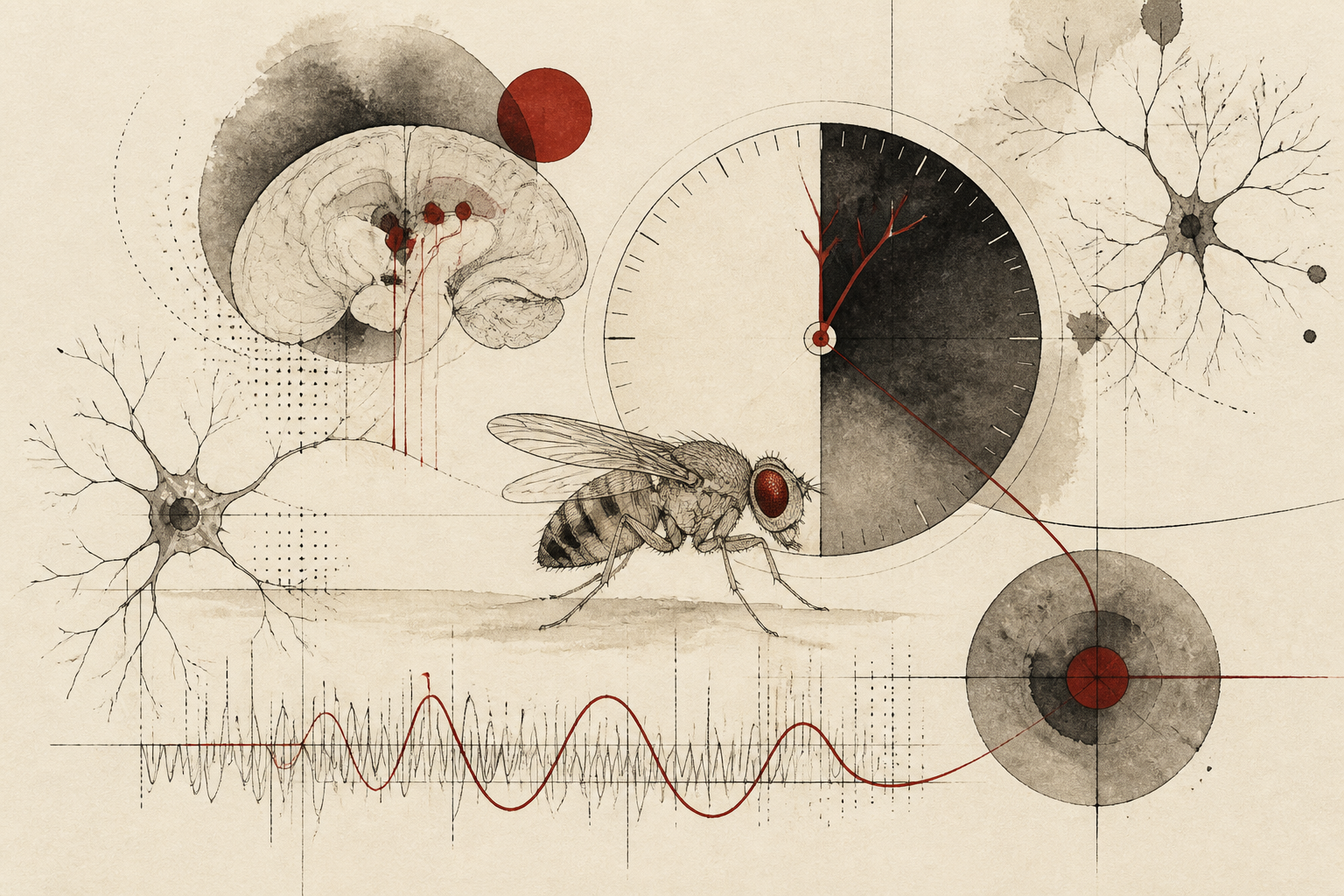
A recent study in *Nature Neuroscience* has unveiled a surprising resilience within the biological clocks of fruit flies, demonstrating that circadian rhythms can be effectively 'restarted' even after prolonged periods of complete arrhythmia. This discovery challenges prior assumptions about the enduring stability of the internal biological clock, which orchestrates a vast array of physiological processes, from sleep-wake cycles and hormonal release to metabolic regulation. The findings suggest a previously underestimated plasticity in the underlying neural architecture that governs these crucial temporal patterns, hinting at significant implications for understanding and potentially treating circadian disruptions in more complex organisms, including humans.
Unpacking the Biological Clock's Resilience
The internal biological clock, often referred to as the circadian clock, is an intricate molecular mechanism found in nearly all living organisms. In mammals, a primary "master clock" resides in the suprachiasmatic nucleus (SCN) of the hypothalamus, while peripheral clocks exist in virtually every cell and tissue. These clocks operate on an approximately 24-hour cycle, synchronizing internal physiology with external environmental cues, most notably the light-dark cycle. Disruptions to this delicate system, whether due to genetic predispositions, shift work, jet lag, or aging, can have profound consequences, contributing to a range of health issues from metabolic disorders and cardiovascular disease to significant mood disturbances and cognitive decline. The prevailing understanding often suggested that sustained disruption could lead to irreversible degradation of rhythmic function, making the prospect of restoring a silenced clock particularly challenging. This new research, however, offers a more optimistic outlook by demonstrating that the core machinery can be reactivated.
Research Insights: Reanimating Rhythms in Drosophila
To explore the potential for rhythm restoration, researchers meticulously designed experiments using *Drosophila melanogaster*, the common fruit fly. These organisms serve as a powerful model system due to their genetic tractability and the high evolutionary conservation of their circadian clock components with those of humans. The team focused on pacemaker neurons, the critical cells that drive circadian oscillations. Initially, these neurons were manipulated to induce a state of total arrhythmia, effectively silencing their internal oscillations and leading to a complete absence of rhythmic behavior in the flies. This state of desynchronization provided a baseline for testing the resilience of the clock mechanism.
The pivotal phase of the study involved a combination of precise genetic manipulations and targeted environmental stimuli. By carefully isolating and modulating specific molecular pathways within the pacemaker neurons, the scientists were able to trigger a resumption of rhythmic behavior in flies that had previously shown no discernible pattern of activity. This revival of rhythmicity was not merely a transient effect but represented a sustained re-establishment of the biological clock's function. The research indicates that the fundamental core clock mechanism does not necessarily undergo permanent degradation or irreversible damage during periods of inactivity. Instead, it appears to retain a latent capacity for function, capable of being brought back into alignment with external cues under appropriate conditions.
Mechanisms and Methods of Restoration
The process of re-invigorating the silenced clocks involved a deep dive into the molecular machinery governing circadian rhythms. The researchers leveraged advanced genetic techniques to selectively activate or suppress key genes known to be involved in the feedback loops that constitute the circadian clock. For instance, they might have employed optogenetic or pharmacogenetic tools to precisely control the activity of specific proteins or neuronal populations. Concurrently, environmental stimuli, such as carefully timed light-dark cycles, were introduced. The study suggests that the successful restoration hinges on a delicate interplay between these external cues and intrinsic protein syntheses occurring within the brain's clock cells. It is this coordinated interaction that appears to kickstart the dormant rhythmic machinery, re-establishing the cyclical expression of clock genes and proteins, which in turn drives rhythmic physiological and behavioral outputs. The precision with which these molecular pathways were targeted underscores the sophisticated understanding the researchers have achieved regarding the inner workings of the *Drosophila* circadian system.
Interpretations, Limitations, and Open Questions
Expert interpretation of these findings suggests that the brain’s master regulators of timing possess a degree of latent stability that was perhaps underappreciated. This resilience implies that even after significant disruption, the clock's structural and functional integrity might be largely preserved, awaiting the right cues to resume operation. However, it is crucial to acknowledge that while *Drosophila* offers an excellent model, directly extrapolating these findings to humans requires caution. The complexity of the human circadian system, with its hierarchical organization and numerous interacting components, may present additional challenges. Limitations of the study include the specific methods used to induce arrhythmia, which might not perfectly mirror the diverse etiologies of circadian disorders in humans. Furthermore, the long-term stability and functional robustness of these 'restarted' clocks warrant further investigation. Open questions remain about the precise molecular thresholds for successful re-synchronization, whether certain types of disruption are more amenable to restoration than others, and the potential for individualized approaches based on genetic background or the specific nature of the circadian dysfunction.
Significance for Psychology and Neuroscience Students and Clinicians
For students and clinicians in psychology and neuroscience, these findings are profoundly significant. They underscore the dynamic nature of neural systems and the inherent capacity for recovery, even in fundamental biological processes like circadian timing. Given that circadian disorders are frequently intertwined with mood disturbances, sleep pathologies, and cognitive decline—conditions that are central to psychological and neurological practice—this research provides a critical foundation. It offers a new perspective on the potential for therapeutic interventions that aim not just to manage symptoms but to actively restore underlying rhythmic function. The university’s psychology department emphasizes that such biological breakthroughs are indispensable for fostering holistic approaches to mental health maintenance and improving sleep hygiene, moving beyond symptomatic treatment towards addressing root causes.
Forward Look
This pioneering research opens compelling new avenues for future exploration. The ability to restart internal biological clocks in *Drosophila* provides a robust framework for investigating similar mechanisms in mammalian models and, eventually, in humans. Researchers can now delve deeper into identifying the specific molecular "switches" that facilitate this rhythm restoration. This could lead to the development of novel pharmacological or light-based therapies designed to reactivate dormant or desynchronized clocks. The implications are far-reaching, offering hope for more effective treatments for chronic disruptions to the human biological clock, including jet lag, shift work disorders, and the circadian dysregulation associated with neurological conditions and psychiatric illnesses. Ultimately, this work represents a significant step towards harnessing the brain's intrinsic plasticity to promote health and well-being through the restoration of fundamental biological rhythms.
Quick answers
- Can a broken biological clock be fixed according to this study?
- Yes, the study demonstrates that arrhythmic flies can regain their circadian cycles through specific triggers, indicating that biological clocks are more resilient than previously thought.
- Why were fruit flies used for this neuroscience research?
- Drosophila are used because their circadian genes are remarkably similar to those found in humans, making them an ideal model for studying the brain's timing mechanisms.
- What are the practical applications of restarting circadian rhythms?
- Potential applications include developing new therapies for chronic sleep disorders, jet lag, and mental health issues associated with disrupted sleep-wake cycles.
Rewritten by Zeit editorial AI. Based on original reporting at Nature Neuroscience.