Restoring and Amplifying Cognitive Capacity Through Targeted Neuromodulation
Researchers explore how non-invasive and invasive brain stimulation techniques are shifting from experimental interventions to reliable tools for cognitive recovery and enhancement.
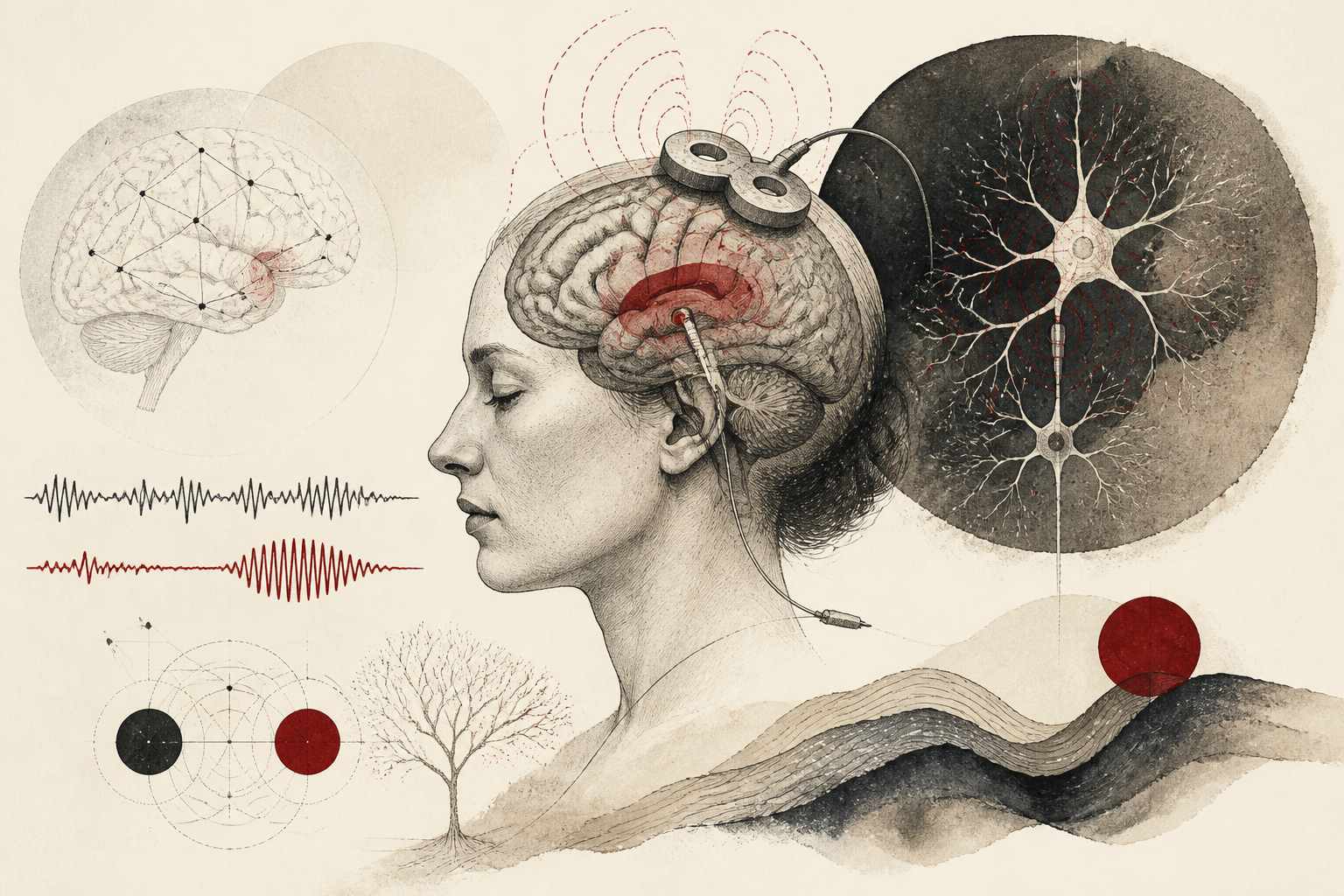
Recent developments in neurotechnology have transitioned from the realm of clinical trials into the broader landscape of applied cognitive science, signaling a pivotal shift in how we understand and manipulate human brain function. A comprehensive review recently published in Nature Neuroscience explores the current state of neuromodulation, detailing how these interventions are being utilized not only to restore functions lost to injury or disease but also to amplify existing cognitive capacities in healthy individuals. As the boundary between therapeutic recovery and elective enhancement blurs, the academic community is forced to reconcile the technical efficacy of these tools with the ethical and physiological implications of their widespread adoption. At its core, neuromodulation involves the application of electrical, magnetic, or chemical stimuli to specific neural circuits, aiming to alter activity patterns and facilitate long-term plastic changes within the brain. The promise of this field lies in its precision, offering a targeted alternative to systemic pharmacological treatments that often carry significant side effects.
Evolutionary Milestones in Neural Stimulation
The trajectory of neuromodulation has been defined by a movement from crude, global interventions to highly refined, circuit-specific manipulations. Historically, the field was dominated by technologies such as electroconvulsive therapy, which, while effective for severe psychiatric conditions, lacked the spatial resolution required for targeted cognitive work. According to the analysis in Nature Neuroscience, the modern era is characterized by tools like Deep Brain Stimulation, Transcranial Magnetic Stimulation, and Transcranial Direct Current Stimulation. Each of these methods operates on the principle of neuroplasticity—the brain's inherent ability to reorganize itself by forming new neural connections. By introducing external energy into the neural system, researchers can either excite or inhibit specific nodes within a network, effectively 'retraining' the brain to process information more efficiently. This evolution has been supported by advancements in neuroimaging, which allow clinicians to map individual brain architecture with unprecedented accuracy, ensuring that stimulation is tailored to the unique topographical needs of the patient or participant.
Mechanisms of Action and Methodological Rigor
The fundamental mechanism behind neuromodulation involves the modulation of resting membrane potentials and the synchronization of neuronal firing. When a device like Transcranial Magnetic Stimulation is applied, it generates a magnetic field that induces an electric current in the underlying cortex, triggering action potentials that can influence both the immediate area and downstream connected regions. The Nature Neuroscience report emphasizes that the timing and frequency of these pulses are critical. High-frequency stimulation is typically associated with potentiation, or the strengthening of synaptic connections, whereas low-frequency stimulation often leads to long-term depression, or the weakening of those same connections. This dual capability allows for a sophisticated level of control: researchers can 'turn up' the volume on circuits involved in memory and attention while 'muting' those associated with pathological states like chronic pain or intrusive depressive thoughts. Furthermore, the integration of closed-loop systems—where the stimulator adjusts its output based on real-time feedback from the brain's own electrical activity—represents the current frontier of methodological precision, minimizing the risk of over-stimulation and maximizing therapeutic windows.
Interpreting Cognitive Restoration and Amplification
One of the most significant findings highlighted in the research is the distinction between restoration and amplification. Restoration focuses on returning a patient to a baseline level of function following a neurological insult, such as a stroke or traumatic brain injury. In these cases, neuromodulation serves as a rehabilitative scaffold, helping the brain bypass damaged pathways. Amplification, conversely, seeks to elevate healthy baseline performance, enhancing attributes like executive function, working memory, or motor skill acquisition. The review suggests that the same mechanisms used to repair the brain can be leveraged to optimize it. However, this interpretation brings forth a complex debate regarding the 'ceiling effect' of human cognition. While data shows clear benefits in clinical populations, the extent to which a healthy, high-functioning brain can be further improved remains a subject of intense empirical scrutiny. Some studies suggest that the gains in healthy subjects are modest compared to the dramatic recoveries seen in clinical settings, yet the potential for 'super-normal' performance continues to drive both commercial and academic interest.
Current Limitations and Open Empirical Questions
Despite the optimistic outlook presented by the Nature Neuroscience authors, several critical limitations persist. The most pressing issue is the variability of individual response. Factors such as skull thickness, baseline neurochemistry, and even the time of day can influence how a subject responds to neuromodulation, making it difficult to establish universal protocols. There is also the question of 'off-target effects,' where stimulating one cognitive domain might inadvertently impair another due to the interconnected nature of the brain. For instance, enhancing working memory might come at the cost of creative flexibility. Furthermore, the long-term safety of chronic brain stimulation is not yet fully understood. While short-term sessions appear safe, the consequences of years of frequent neuromodulation remain unknown. Open questions also surround the ethical landscape: should these technologies be regulated like medical devices or like consumer electronics? The risk of exacerbating socioeconomic disparities through unequal access to cognitive enhancement tools is a concern that researchers and policymakers must address in tandem with technical development.
The Broader Implications for Science and Society
Why does this research matter beyond the confines of the laboratory? The implications of reliable neuromodulation are profound, touching on the very definition of human identity and agency. If cognitive states can be modulated at will, the traditional concepts of effort and achievement may be fundamentally altered. For academia, these findings provide a robust framework for investigating the causal links between brain activity and behavior, moving beyond the correlational data provided by traditional neuroimaging. For the public, it offers a glimpse into a future where neurological decline is not an inevitable part of aging, but a manageable condition. As Zeit Psychology Online University continues to monitor these developments, it is clear that neuromodulation represents more than just a new therapeutic modality; it is a fundamental shift in our relationship with the biological hardware of the mind. The ongoing challenge will be to ensure that these powerful tools are developed with a rigorous commitment to safety, equity, and the preservation of the human experience.
Quick answers
- What is the difference between cognitive restoration and amplification?
- Restoration aims to return a patient to baseline function after injury, while amplification seeks to enhance healthy brain performance beyond normal levels.
- How does Transcranial Magnetic Stimulation (TMS) work?
- TMS uses magnetic fields to induce electric currents in the brain, which can excite or inhibit specific neural circuits to alter cognitive function.
- What are the risks of using brain stimulation for enhancement?
- Risks include potential 'off-target' effects where one skill is improved at the expense of another, as well as unknown long-term impacts of chronic stimulation.
Rewritten by Zeit editorial AI. Based on original reporting at Nature Neuroscience.