Quantifying the Metabolic Link: Type 2 Diabetes and Alzheimer’s Risk Elevation
A comprehensive meta-analysis of 40 studies reveals that individuals with type 2 diabetes face a 53 percent increased risk of developing Alzheimer’s disease.
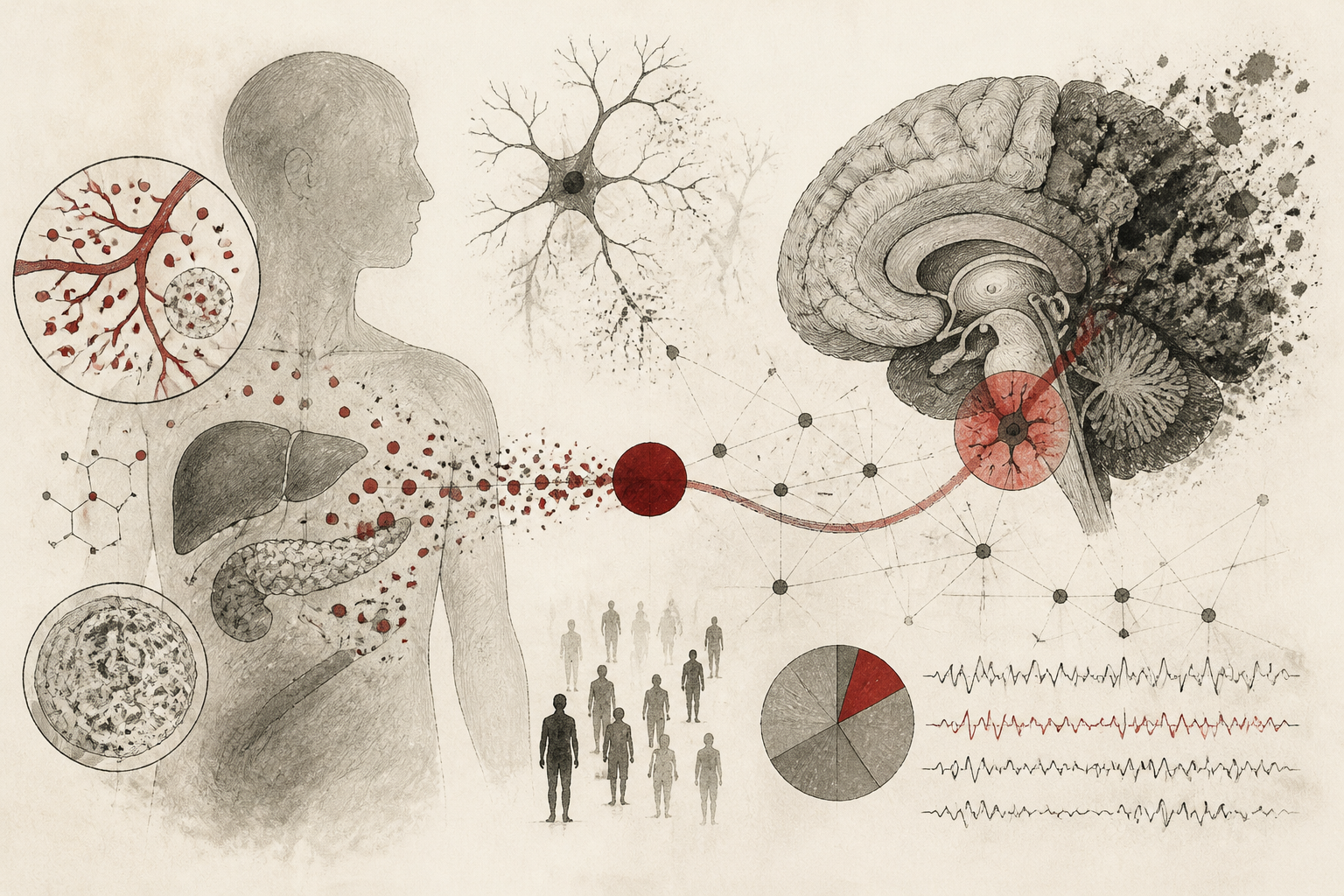
The intersection of metabolic dysfunction and neurodegenerative decline has long been a focal point of clinical inquiry, yet the precise magnitude of this relationship has often been obscured by broad study parameters. A significant new review, as reported by ScienceDaily, has sought to clarify this association by synthesizing data from 40 independent studies. The findings provide a stark quantification of the risks involved: individuals diagnosed with type 2 diabetes exhibit a 53 percent higher likelihood of developing Alzheimer’s disease compared to those without the metabolic condition. This comprehensive analysis shifts the conversation from a general understanding of comorbidity to a specific, data-driven assessment of how blood sugar regulation influences cognitive longevity.
At the core of the study’s findings is an incidence rate that provides a tangible metric for public health officials and clinicians. Researchers estimate that approximately five out of every 1,000 individuals living with type 2 diabetes will develop Alzheimer’s disease on an annual basis. While this rate may seem modest in isolation, its cumulative impact across a global population increasingly burdened by metabolic disorders represents a significant challenge for healthcare infrastructure. By isolating type 2 diabetes and Alzheimer’s from other forms of dementia or metabolic syndromes, the review offers one of the most granular perspectives to date on the bidirectional relationship between the body’s insulin response and the brain’s structural integrity.
Historical Context and the Metabolic Hypothesis
To understand the implications of a 53 percent risk increase, one must consider the historical evolution of "Type 3 Diabetes," a term coined by some researchers to describe the insulin-resistant state of the brain in Alzheimer’s patients. For decades, the medical community observed that patients with chronic hyperglycemia often suffered from accelerated cognitive decline. However, earlier studies frequently conflated various forms of dementia—such as vascular dementia, which is directly tied to blood vessel damage—with Alzheimer’s disease, which is characterized by amyloid-beta plaques and tau tangles. This new meta-analysis refines the literature by focusing specifically on Alzheimer’s, suggesting that the link is not merely a byproduct of cardiovascular strain but may involve intrinsic neurobiological pathways.
As the global prevalence of type 2 diabetes continues to rise, driven by sedentary lifestyles and nutritional shifts, the secondary epidemic of cognitive impairment has become an urgent priority for the neuroscientific community. The data presented in this review underscores the necessity of viewing diabetes not as a localized metabolic failure, but as a systemic condition with profound implications for the central nervous system. This background sets the stage for a deeper investigation into how systemic insulin resistance might facilitate the pathological hallmarks of Alzheimer’s disease.
Analyzing the 53 Percent Margin
The methodology behind this review involved a systematic evaluation of 40 longitudinal and cross-sectional studies, ensuring a diverse and robust dataset. The 53 percent increased risk serves as a weighted average that accounts for variations in patient demographics and study duration. This margin is particularly significant because it persists even when controlling for other common risk factors, such as age and obesity. The consistency of the findings across the 40 analyzed sources suggests that the metabolic-cognitive link is a universal biological phenomenon rather than a localized statistical anomaly.
Furthermore, the researchers' estimate of five new cases per 1,000 diabetic patients annually provides a baseline for predictive modeling. This figure allows health systems to project future demand for memory care and neurology services within the diabetic population. The review highlights that while the absolute risk for any single individual remains relatively low in a single year, the lifetime risk is substantially compounded by the duration of the diabetic state. The earlier the onset of type 2 diabetes, the longer the brain is exposed to metabolic stress, potentially lowering the threshold for neurodegenerative onset.
Mechanisms of Neuro-Metabolic Interaction
While the review primarily focuses on epidemiological outcomes, it prompts critical questions regarding the underlying mechanisms that explain such a sharp increase in risk. Scientific consensus points toward several intersecting pathways. First is the role of insulin in the brain; insulin is not just a regulator of glucose but also a neuroprotective hormone that supports synaptic plasticity and memory formation. When the brain becomes insulin resistant—a common correlate of systemic type 2 diabetes—neurons are deprived of their primary energy source and their ability to repair themselves is compromised.
Another proposed mechanism involves the glycation of proteins. Chronic high blood sugar leads to the formation of advanced glycation end-products (AGEs), which can trigger inflammation and oxidative stress within the brain. This inflammatory environment is known to exacerbate the accumulation of amyloid-beta, the protein fragments that form the signature plaques of Alzheimer’s. Additionally, the enzyme responsible for breaking down insulin, known as insulin-degrading enzyme (IDE), is also responsible for clearing amyloid-beta from the brain. In a state of hyperinsulinemia, where the body is flooded with insulin, IDE may become overwhelmed, prioritizing insulin clearance and allowing toxic proteins to build up in the neural tissue.
Interpretations and Clinical Limitations
The interpretation of this 53 percent risk increase must be handled with academic caution. While the correlation is robust, the review does not definitively establish that diabetes causes Alzheimer’s in a linear fashion. Rather, it suggests a shared vulnerability or a synergistic effect where one condition accelerates the progression of the other. It is also important to note that the review relies on existing literature, which may vary in how Alzheimer’s is diagnosed—ranging from clinical observation to biomarker testing. These variations can introduce a degree of heterogeneity into the final calculations.
Another limitation lies in the "survivor effect." Because type 2 diabetes is associated with higher mortality from cardiovascular events, some individuals may not live long enough to manifest the symptoms of Alzheimer’s, which typically appear later in life. This could potentially lead to an underestimation of the risk in certain populations. Furthermore, the review does not fully account for the impact of specific diabetes medications, such as metformin or GLP-1 agonists, which some studies suggest may actually have a protective effect on the brain. Future research must delineate whether the increased risk is inherent to the disease itself or if it can be mitigated through aggressive pharmacological management.
Why the Meta-Analysis Matters
The significance of this major review cannot be overstated for the future of preventative medicine. By identifying type 2 diabetes as a primary risk factor for Alzheimer’s with such high statistical confidence, the research paves the way for integrated care models. No longer can endocrinology and neurology operate in silos; a patient’s metabolic profile must be considered a key component of their cognitive health screening. This study provides the empirical weight necessary to advocate for early cognitive monitoring in diabetic patients and, conversely, metabolic screening for those showing early signs of memory loss.
Ultimately, the finding that nearly five in every 1,000 diabetic patients develop Alzheimer's annually serves as a call to action for lifestyle intervention. If metabolic health is a major driver of brain health, then the management of blood glucose, diet, and physical activity becomes a primary strategy for dementia prevention. This review reinforces the concept that the brain is deeply integrated into the body’s overall metabolic ecosystem, and protecting the former requires a diligent commitment to the latter. As the global population ages, understanding this 53 percent risk elevation will be essential for reducing the societal and individual burden of Alzheimer's disease.
Quick answers
- How much does type 2 diabetes increase the risk of Alzheimer's?
- According to a major review of 40 studies, people with type 2 diabetes have a 53% higher risk of developing Alzheimer's disease.
- How many people with diabetes develop Alzheimer's each year?
- Researchers estimate that approximately five out of every 1,000 people with type 2 diabetes develop Alzheimer's disease annually.
- Why is there a link between diabetes and Alzheimer's?
- The link is attributed to factors like insulin resistance in the brain, chronic inflammation, and the body's reduced ability to clear toxic proteins when insulin levels are imbalanced.
Editorial Team