Psilocybin and Neural Plasticity: Uncovering New Mechanisms of Structural Repair
Recent research reveals how psilocybin reshapes neural connections in mice, offering new pathways for treating stress-induced brain damage without psychedelic side effects.
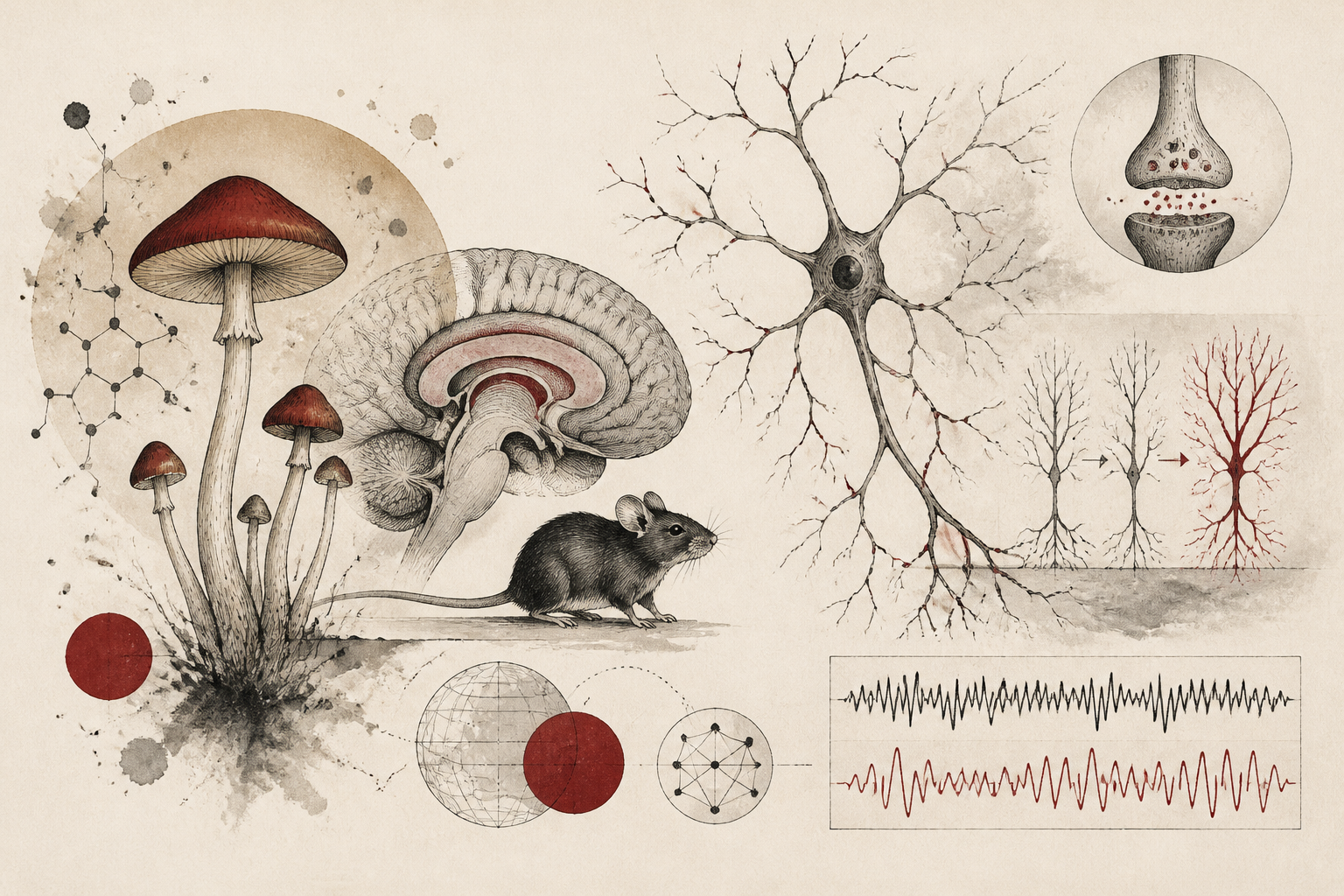
The pursuit of novel pharmacological treatments for refractory depression and chronic stress disorders has increasingly turned toward the therapeutic potential of psychedelic substances. While clinical trials have long suggested the efficacy of psilocybin—the primary psychoactive alkaloid found in certain species of fungi—the underlying neurological mechanisms have remained partially obscured. A significant breakthrough recently reported by ScienceDaily highlights a shift in our understanding of how this compound interacts with brain architecture. The findings suggest that psilocybin facilitates a rapid and profound restructuring of neural pathways, particularly within the context of stress-damaged circuits. This development at the intersection of molecular biology and psychiatry indicates that the drug’s utility may lie not just in its psychoactive experience, but in its fundamental ability to physically rewire the mammalian brain.
The Neurobiology of Connectivity and Stress
In healthy neural systems, synapses—the junctions where neurons communicate—maintain a state of dynamic equilibrium known as plasticity. This allows the brain to adapt to new information and recover from minor environmental challenges. However, chronic stress acts as a persistent neurobiological toxin, often leading to the atrophy of dendritic spines and the degradation of synaptic connections in key areas such as the prefrontal cortex and hippocampus. These structural deficits are frequently correlated with the cognitive and emotional impairments observed in major depressive disorder and post-traumatic stress disorder. Historically, standard antidepressants like selective serotonin reuptake inhibitors (SSRIs) have sought to address these issues by modulating neurotransmitter levels, though they often require weeks or months to facilitate structural changes, if they occur at all.
Researchers investigating the effects of psilocybin observed a starkly different trajectory. Unlike traditional medications, the psychedelic compound appears to initiate an immediate morphological response. The study utilized advanced imaging techniques to monitor the growth and stabilization of dendritic spines in murine models. What emerged was a narrative of rapid reconstruction. By introducing psilocybin into these systems, scientists observed the formation of new neural connections within hours of administration. This suggests that the compound acts as a catalyst for neuroplasticity, essentially providing the biological tools necessary for the brain to bypass damaged circuitry and establish new, functional pathways.
Differential Responses in Healthy and Stressed Models
One of the most striking revelations of the recent study is the distinction between how psilocybin interacts with a healthy brain versus one compromised by chronic stress. In healthy control subjects, the introduction of the compound led to a measurable increase in synaptic density, but the system remained relatively stable. However, in mice that had undergone prolonged exposure to stress—simulating the biological environment of human depression—the impact was far more pronounced. In these stressed models, psilocybin did not merely add new connections; it targeted the very areas where connectivity had been lost due to high cortisol levels and other stress-related biomarkers.
This differential response suggests that psilocybin may possess a homeostatic or "reparative" quality that is activated by the presence of pathology. The research team noted that the new neural connections formed in the stressed mice were not only numerous but also exhibited greater longevity than those formed in the control group. This implies that the drug does more than just trigger a temporary growth spurt; it creates a structural foundation that persists long after the drug has been metabolized. By strengthening these new synapses, the brain effectively builds a more resilient architecture, potentially explaining why the antidepressant effects of psychedelics in human trials often last for months after a single dose.
Decoupling the Trip from the Treatment
Perhaps the most transformative aspect of this research involves the identification of the specific pathways responsible for neural rewiring. Traditionally, the therapeutic benefits of psilocybin were thought to be inextricably linked to the "mystical" or hallucinogenic experience—the subjective state often referred to as a psychedelic trip. This has presented a significant barrier to widespread clinical application, as the intense psychological experience requires extensive supervision and is not suitable for all patient populations. However, the researchers discovered a method to decouple these effects. By manipulating the molecular signaling pathways, they were able to trigger the rapid growth and strengthening of synapses without inducing the behavioral markers typically associated with a psychedelic state in mice.
This discovery challenges the long-held assumption that the subjective experience is the primary driver of recovery. While the psychological insights gained during a controlled psychedelic session are undoubtedly valuable in a psychotherapeutic context, the purely biological ability to repair brain circuits independently of the hallucination opens a new frontier for drug development. It suggests the possibility of creating a new class of "non-hallucinogenic" neuroplasticity-promoting drugs. Such medications could theoretically be administered in a standard clinical setting, providing the structural benefits of psilocybin to patients who might otherwise be excluded from psychedelic-assisted therapy due to contraindications such as a history of psychosis.
Limitations and Theoretical Implications
Despite the enthusiasm surrounding these findings, several academic caveats remain. The transition from murine models to human subjects is a complex leap. While mouse neuroanatomy shares fundamental similarities with human structures, the cognitive complexities of human depression involve social, existential, and psychological layers that cannot be fully replicated in a laboratory setting. Furthermore, while the study identified a way to separate behavioral responses from structural rewiring, it is yet to be determined if the "non-hallucinogenic" version of the treatment provides the same long-term emotional relief in humans as the full psychedelic experience. There is also the question of dosage and frequency; while a single administration shows rapid results, the long-term stability of these new connections over several years remains a subject for longitudinal study.
Ethical and practical considerations also persist. The mechanism by which psilocybin promotes this rapid growth—likely involving the 5-HT2A receptor and the subsequent release of brain-derived neurotrophic factor (BDNF)—must be mapped with even greater precision to ensure that excessive plasticity does not lead to unintended side effects, such as the reinforcement of maladaptive neural pathways. The scientific community continues to debate whether the "rewiring" is inherently positive or if it requires a concurrent therapeutic environment to guide the new connections toward healthy cognitive patterns.
The Future of Neuroplasticity Research
As ScienceDaily reports, the implications of this discovery for the field of neuropsychiatry are profound. We are moving away from a model of chemical imbalance and toward a model of circuit connectivity. If psilocybin and its derivatives can be used to physically repair the damage caused by chronic stress, our approach to mental health treatment could shift from symptom management to structural restoration. The ability to stimulate the growth of dendritic spines and strengthen synaptic bonds offers a tangible biological target for treating the most persistent forms of mental illness.
Ultimately, this research serves as a bridge between the historical use of plant-based medicines and the future of precision neurology. By isolating the mechanisms of neural repair, scientists are not only validating the potential of psilocybin but are also paving the way for a new generation of treatments that harness the brain’s innate ability to heal itself. As the academic community continues to dissect the surprising ways in which these compounds interact with the mammalian brain, the focus remains on translating these molecular successes into lasting clinical outcomes for those suffering from the debilitating effects of chronic stress and depression.
Quick answers
- How does psilocybin affect brain connections in stressed mice?
- Psilocybin rapidly creates new neural connections and strengthens existing ones, specifically targeting brain circuits damaged by chronic stress.
- Can psilocybin repair the brain without causing hallucinations?
- New research suggests that the brain-rewiring mechanism can be triggered independently of the behavioral psychedelic effects, potentially allowing for non-hallucinogenic treatments.
- Why is the study of psilocybin and neuroplasticity important?
- It shifts mental health treatment from managing neurotransmitter levels to physically repairing structural damage in the brain caused by long-term stress.
Rewritten by Zeit editorial AI. Based on original reporting at ScienceDaily — Mind & Brain.