Protein Restoration Reverses Cognitive and Physiological Markers of Aging in Murine Models
Researchers identify the loss of the brain protein Menin as a driver of systemic aging, showing that restoration can improve cognition, bone density, and skin health.
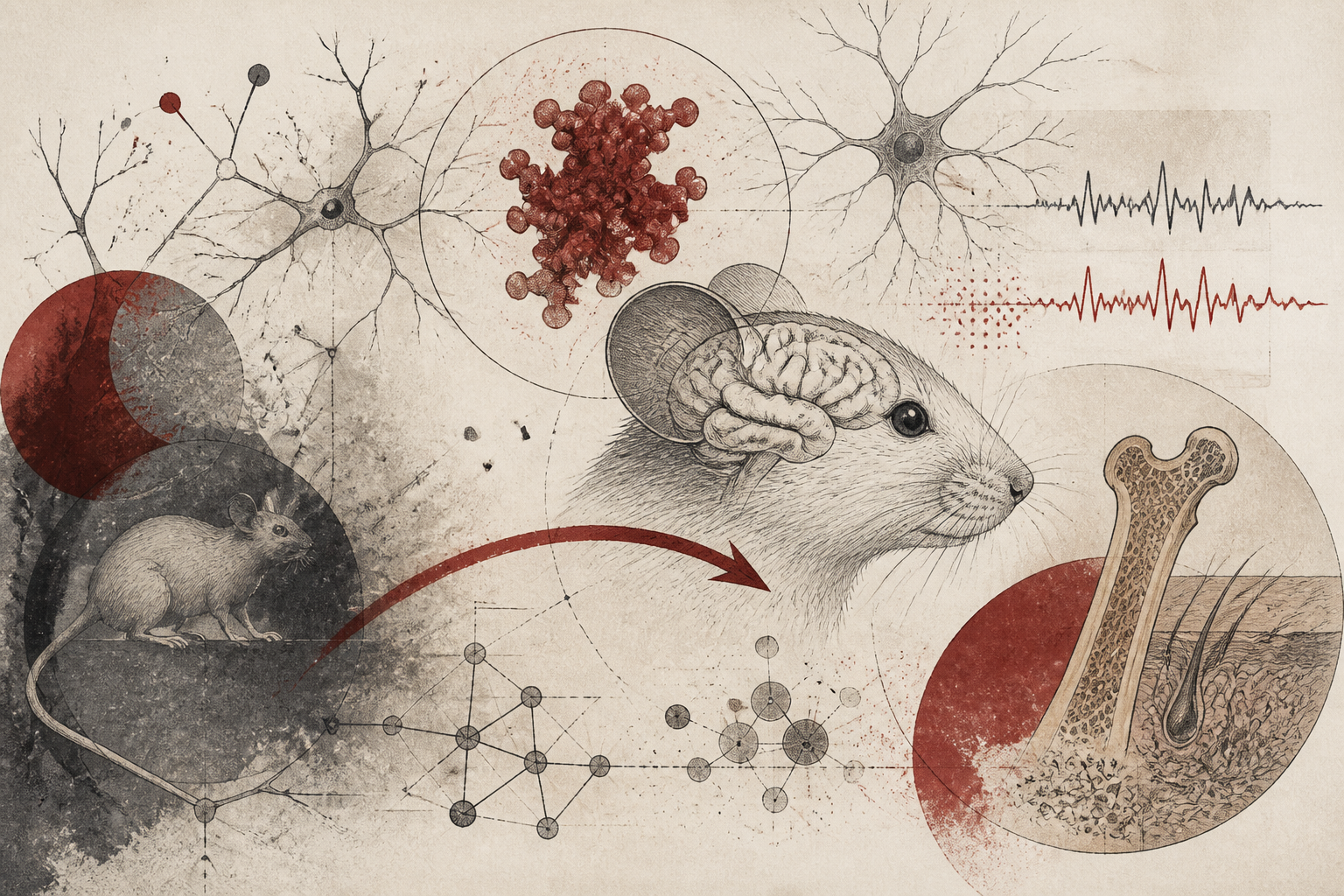
The biological quest to decelerate or reverse the deleterious effects of aging has long focused on cellular senescence and metabolic decay. However, a compelling new study published in ScienceDaily highlights a specific molecular regulator within the brain that appears to orchestrate the systemic progression of age-related decline. Researchers have identified that the protein Menin, primarily localized in the hypothalamus, serves as a crucial mediator of the aging process. As levels of this protein naturally diminish over the life course, a cascade of physiological degradation follows, encompassing cognitive impairment, skeletal weakening, and dermal thinning. By experimentally restoring Menin levels in aging murine subjects, the research team observed a significant reversal of these hallmark signs of senescence, positioning this protein as a focal point for future gerontological intervention.
The Role of the Hypothalamus and Menin Depletion
To understand the implications of this discovery, it is necessary to examine the hypothalamus's role as the central regulatory hub for systemic homeostasis. The hypothalamus governs vital functions ranging from metabolic rate to sleep-wake cycles and hormonal balance. The recent findings suggest that Menin, a protein encoded by the MEN1 gene, acts as a functional scaffold within this region to maintain youth-associated physiological states. The study indicates that as mice reach advanced chronological age, the concentration of Menin in the hypothalamus drops precipitously. This decline is not merely a symptom of aging but appears to be a primary driver. When researchers artificially accelerated the depletion of Menin in younger mice, the subjects exhibited premature aging symptoms, including diminished cognitive performance and systemic inflammation. This suggests that Menin serves as a protective barrier against the molecular pathways that facilitate biological decay.
Systemic Impact and Experimental Restoration
The scope of the study extended beyond neurological observation, measuring the systemic impact of Menin levels on peripheral tissues. The researchers found that low levels of the protein were consistently correlated with an increase in biomarkers associated with chronic inflammation, a state often referred to in academic literature as "inflammaging." This inflammatory environment was linked to a measurable decrease in bone mineral density and a noticeable loss of skin thickness and elasticity, mimicking the physical degradation seen in elderly humans. The most striking aspect of the research, however, involved the therapeutic restoration of the protein. By utilizing viral vectors to reintroduce Menin into the hypothalamus of aged mice, the scientists were able to reverse several of these changes. The intervention resulted in improved bone structure and skin health, suggesting that the hypothalamus exerts a top-down influence on the physical vitality of the entire organism through Menin-mediated pathways.
Cognitive Enhancement and the D-serine Pathway
A critical component of the research focused on the neurobiological mechanisms underlying cognitive decline. The decline of Menin was found to disrupt the production of D-serine, a crucial amino acid that functions as a co-agonist at NMDA receptors in the brain. These receptors are vital for synaptic plasticity, learning, and memory formation. As Menin levels fell, so did the availability of D-serine, leading to impaired long-term potentiation and memory deficits in the subjects. In a parallel experiment, the researchers bypassed the protein restoration and directly administered D-serine to the aging mice. This targeted supplementation resulted in a significant improvement in cognitive functions, suggesting that the Menin-D-serine axis is a fundamental pathway through which the brain maintains its intellectual capacity during the aging process. This discovery provides a more accessible pharmacological target, as D-serine or similar metabolic precursors might be easier to regulate than complex protein structures within the brain.
Limitations and Methodological Considerations
While the results are promising, the study’s reliance on murine models necessitates a cautious interpretation regarding human application. The biological complexity of the human hypothalamus and the multi-decade duration of human aging present variables that cannot be fully replicated in short-lived laboratory animals. Furthermore, the use of viral vectors to deliver protein treatments directly to the brain remains an invasive procedure with significant safety and ethical hurdles for clinical transition. There are also unresolved questions regarding the long-term effects of Menin over-expression; as the MEN1 gene is also associated with tumor suppression and cell proliferation, any intervention must be finely tuned to avoid unintended oncogenic consequences. The study primarily identifies a correlation and a specific causal pathway in a controlled environment, but the interplay between Menin and other age-related factors like oxidative stress or telomere shortening remains a subject for further investigation.
Implications for Future Gerontology
The identification of Menin as a master regulator of aging shifts the focus of anti-aging research toward centrally-mediated neurobiological interventions. If the Menin-D-serine pathway functions similarly in humans, it opens a new frontier for treating age-related neurodegenerative diseases and systemic frailty. The ability to potentially address bone loss, skin health, and cognitive decline through a single molecular target represents a significant departure from current geriatric medicine, which typically treats these conditions as isolated symptoms. As populations worldwide continue to age, the demand for interventions that not only extend life but also improve "healthspan"—the period of life spent in good health—becomes increasingly urgent. This research provides a foundational blueprint for understanding how the brain’s internal chemistry can be harnessed to preserve the integrity of the body, marking a significant step toward the realization of therapeutic age reversal.
Quick answers
- What is the role of the Menin protein in the aging process?
- Menin is a regulatory protein in the hypothalamus that declines with age. Its reduction is linked to increased inflammation, bone loss, skin thinning, and cognitive impairment.
- How did researchers reverse signs of aging in the study?
- Scientists restored Menin levels in the hypothalamus of aged mice using viral vectors, which led to improvements in skin thickness, bone density, and cognitive function.
- What is the connection between Menin and D-serine?
- Menin facilitates the production of D-serine, an amino acid essential for synaptic plasticity. When Menin declines, D-serine levels drop, causing memory and learning deficits.
Rewritten by Zeit editorial AI. Based on original reporting at ScienceDaily — Mind & Brain.