Predictive Neural Patterns Offer Early Detection of Alzheimer’s Disease Progression
Stanford University researchers identify hidden brain signals that forecast Alzheimer’s risk years before clinical symptoms manifest, highlighting new avenues for cognitive resilience.
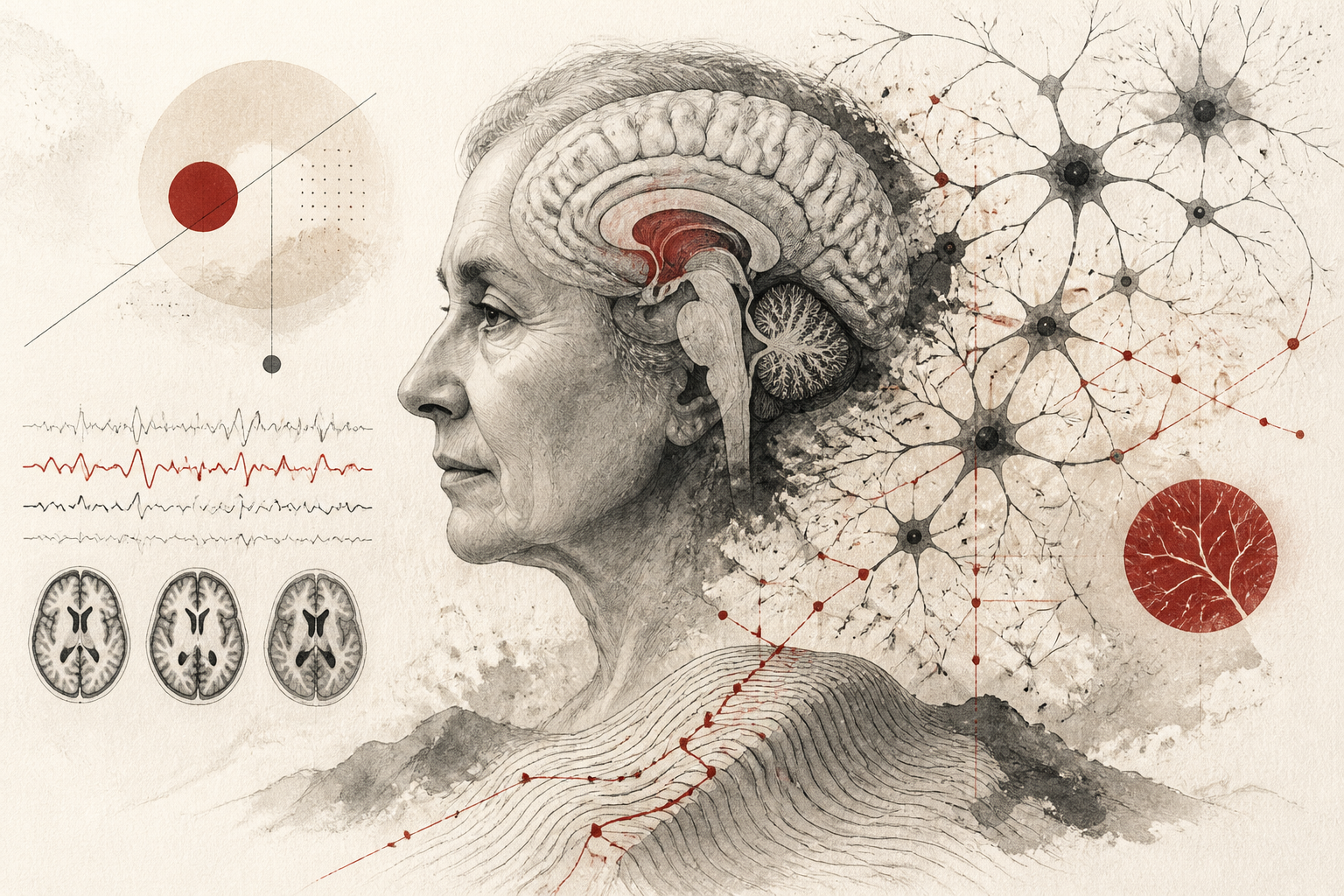
The trajectory of neurodegenerative research has long been characterized by a search for the earliest possible window of intervention. While clinical Alzheimer’s disease is typically diagnosed following the onset of cognitive impairment and the detection of overt biomarkers like amyloid-beta plaques, a significant gap remains in identifying individuals at risk during the preclinical phase. According to a recent study conducted by researchers at Stanford University, published in late 2026, the key to bridging this gap may lie in subtle, previously hidden patterns of brain activity. These neural signatures appear to predict the eventual development of Alzheimer’s years before traditional diagnostic tools flag the condition, potentially redefining the timeline for preventative neurology.
Historically, the medical community has relied on the presence of physical protein aggregations—specifically tau and amyloid—to confirm the pathology of Alzheimer’s. However, these markers often appear after significant neurological damage has already occurred. The Stanford findings suggest that functional changes in how the brain processes information and communicates across different regions may precede physical deterioration. By leveraging advanced computational models to analyze neuroimaging data, the research team identified specific signal fluctuations that serve as a harbinger for future decline. This shift from physical pathology to functional signal analysis represents a pivotal moment in the study of geriatric cognitive health.
Deciphering the Hidden Signals of Cognitive Decline
The core of the Stanford discovery centers on the identification of specific neural patterns that do not align with the standard markers of aging. In the study, researchers utilized high-resolution functional neuroimaging to observe the brain in various states of activity and rest. Unlike traditional studies that look for the atrophy of brain structures, this team focused on the dynamic interactions between neurons. They discovered that individuals who would later develop Alzheimer’s exhibited a specific set of "hidden" signals—subtle irregularities in neural firing patterns and connectivity—that remained invisible to standard diagnostic scans for years.
These patterns are not merely indicators of general aging but are highly specific to the progression of Alzheimer’s disease. The researchers found that these signals were present even in participants who scored perfectly on standard memory and cognitive assessments at the start of the study. Over the course of longitudinal tracking, those exhibiting these specific neural signatures were significantly more likely to transition from healthy cognitive states to mild cognitive impairment and eventually full-blown Alzheimer’s. This predictive capability suggests that the brain undergoes a period of functional instability long before the structural integrity of the organ is compromised by protein buildup or tissue loss.
Mechanisms of Neural Resilience and Vulnerability
Beyond the identification of risk, the Stanford research provided unexpected insights into the concept of cognitive resilience. While some participants showed the early warning signals of decline, another distinct group exhibited patterns that suggested an unusual resistance to the biological markers of aging. These "resilient" brains appeared to maintain high levels of functional efficiency despite the presence of age-related stressors. The study indicates that these individuals possess a unique neural architecture or signaling efficiency that protects them from the cascade of neurodegeneration that affects their peers.
The mechanism behind this resilience is currently hypothesized to involve a higher degree of neural plasticity or alternative circuitry that allows the brain to bypass damaged pathways. By comparing the signals of the high-risk group with those of the resilient group, the researchers have begun to map the functional differences that separate a healthy aging brain from one on the path to dementia. This comparative analysis is crucial, as it shifts the focus from merely identifying disease to understanding the inherent protective mechanisms that some brains employ naturally. If these protective signals can be simulated or encouraged through future medical interventions, it may be possible to bolster the cognitive reserves of those identified as high-risk.
Methodological Advances in Neuroimaging Analysis
The detection of these signals was made possible through the application of sophisticated machine learning algorithms and longitudinal data analysis. Traditional neuroimaging often looks at static snapshots of the brain, but the Stanford team employed a more longitudinal and dynamic approach. By training their models on thousands of hours of brain activity data from a diverse cohort of participants, they were able to filter out the noise of everyday neural fluctuations to isolate the specific frequencies and connectivity patterns associated with neurodegeneration. This method allowed for the detection of signatures that are too subtle for the human eye to perceive on a standard MRI or PET scan.
The study followed participants over several years, ensuring that the predictive models were validated against actual clinical outcomes. This rigorous approach minimized the risk of false positives and provided a robust dataset for understanding how these hidden signals evolve over time. The researchers emphasize that the utility of this method lies in its sensitivity; it can detect deviations in brain function that occur at a microscopic or systemic level before they manifest as the macroscopic damage typically associated with Alzheimer’s. The integration of computational science with clinical neurology has thus provided a lens through which the earliest stages of the disease can finally be observed.
Clinical Implications and Future Directions
The discovery of these predictive signals has profound implications for the future of Alzheimer’s treatment and clinical trials. One of the primary hurdles in developing effective therapies for the disease has been the timing of treatment; by the time a patient shows symptoms, the disease is often too advanced for current medications to have a transformative effect. If these hidden signals can be used to identify patients ten or fifteen years before the onset of symptoms, it opens a vast window for preventative therapies that aim to preserve brain function rather than simply trying to slow its destruction.
However, the researchers also acknowledge several limitations and open questions that must be addressed before this technology can be implemented in a clinical setting. First, the accessibility of high-resolution neuroimaging and the specialized computational tools required for analysis are currently limited to high-resource research institutions. Scaling this technology for widespread screening would require significant infrastructure development. Furthermore, while the signals are highly predictive, they are not yet fully understood in terms of their biological cause. It remains to be determined whether these signals are a byproduct of the disease process or if they are themselves contributors to the eventual breakdown of neural networks.
Why Early Detection Matters for Global Health
As the global population ages, the prevalence of Alzheimer’s disease is expected to rise sharply, placing an immense burden on healthcare systems and families. The ability to identify at-risk individuals during the preclinical phase could revolutionize how society approaches aging. Beyond the medical benefits, early detection provides individuals and their families with the opportunity to make lifestyle changes, plan for the future, and participate in clinical trials that could lead to the next generation of treatments. The Stanford study offers a beacon of hope that the narrative of Alzheimer’s can be changed from one of inevitable decline to one of early intervention and potential resilience.
The goal of this research, as stated by the Stanford team and reported by ScienceDaily, is not just to predict a grim outcome, but to find the keys to preventing it. By understanding the hidden signals of both risk and resistance, science moves one step closer to a future where the cognitive decline associated with Alzheimer’s is no longer an unavoidable consequence of longevity. The focus now shifts to refining these predictive models and exploring how the lessons learned from resilient brains can be applied to protect the most vulnerable.
Quick answers
- How did Stanford scientists find Alzheimer's risk early?
- Researchers used advanced computational analysis of functional neuroimaging to identify 'hidden' brain activity patterns that precede physical symptoms and traditional biomarkers by several years.
- Can brain signals show resistance to aging?
- Yes, the study identified specific neural patterns in 'resilient' individuals whose brains appear to resist cognitive decline despite the presence of age-related stressors or early disease markers.
- What is the benefit of detecting Alzheimer's before symptoms appear?
- Early detection allows for a much wider window for preventative treatments and lifestyle interventions, potentially preserving brain function before irreversible damage occurs.
Editorial Team