Precision Neuromodulation Achieves 68% Remission Rate in Recent PTSD Clinical Trial
A breakthrough FDA-cleared treatment utilizing personalized brain mapping and magnetic stimulation demonstrates significant symptom reduction for individuals with post-traumatic stress disorder.
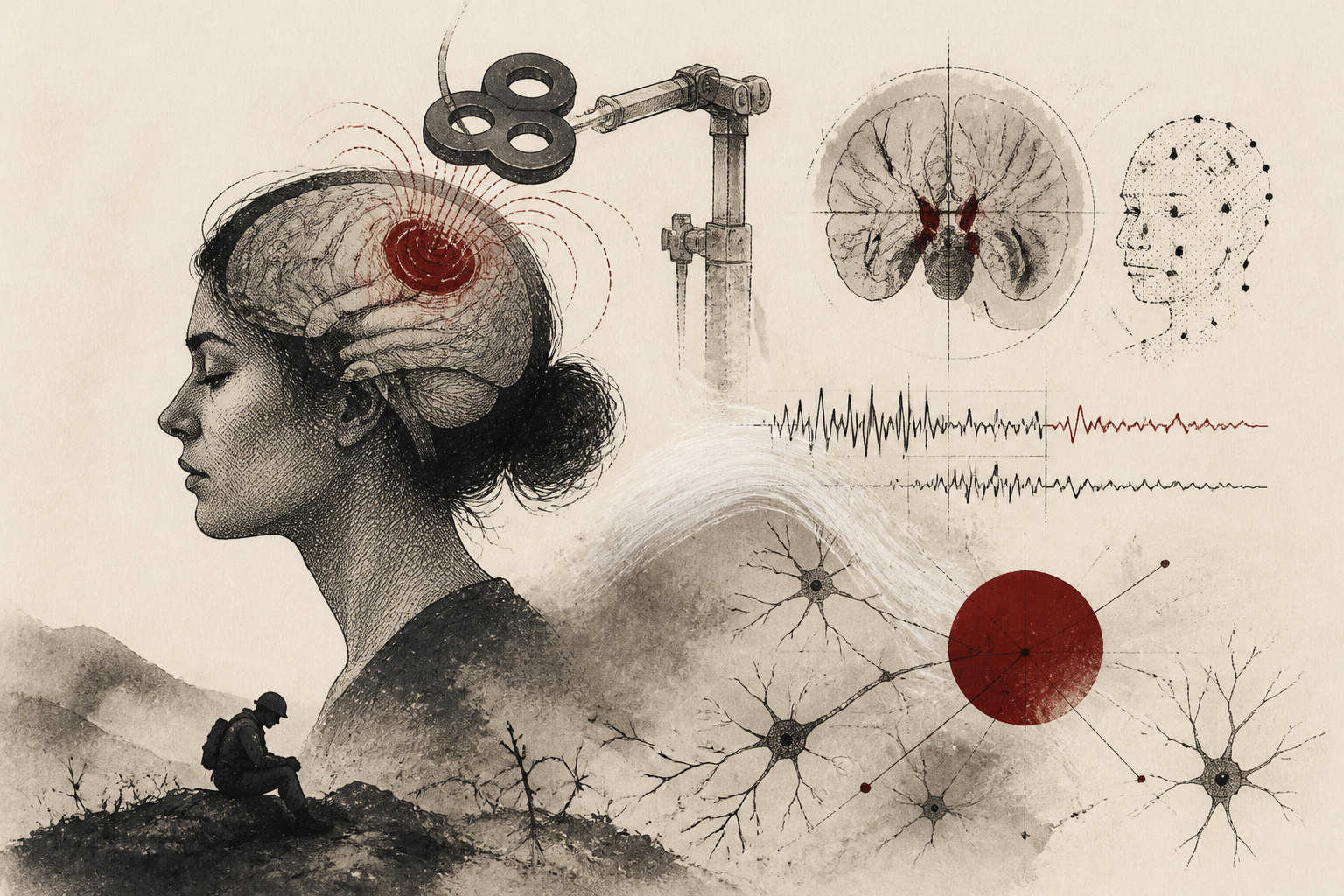
The landscape of psychiatric intervention is witnessing a paradigm shift as precision medicine transitions from oncology into the realm of behavioral health. A recent clinical trial, as reported by ScienceDaily, has unveiled a significant advancement in the treatment of Post-Traumatic Stress Disorder (PTSD), achieving a 68% remission rate among participants. This new intervention, which has recently received clearance from the U.S. Food and Drug Administration (FDA), utilizes a sophisticated combination of personalized brain mapping and targeted magnetic stimulation to address the neurological underpinnings of trauma. By focusing on individualized neural signatures rather than a one-size-fits-all protocol, the technology offers a potential lifeline to millions who have found little relief in traditional pharmacotherapy or psychotherapy.
For decades, the standard of care for PTSD has relied heavily on selective serotonin reuptake inhibitors (SSRIs) and trauma-focused cognitive behavioral therapies. While effective for many, a substantial portion of the patient population remains symptomatic, often referred to as treatment-resistant. The clinical trial data indicates that the new treatment produced a 52% reduction in overall symptom severity, a metric that underscores the potency of direct neural modulation. As the global burden of mental health conditions continues to rise, the emergence of a highly effective, non-invasive physiological intervention represents a critical evolution in how clinicians approach the biological dysregulation inherent in psychiatric disorders.
The Neurobiological Foundations of Personalized Stimulation
The technological core of this breakthrough lies in its ability to synthesize neuroimaging data with therapeutic delivery. Unlike traditional Transcranial Magnetic Stimulation (TMS), which typically targets standard anatomical landmarks on the scalp, this newly cleared method begins with a rigorous mapping phase. Researchers and clinicians use advanced imaging to identify specific areas of abnormal brain activity unique to the individual patient. PTSD is often characterized by a lack of synchronization between the prefrontal cortex—the area responsible for executive function and emotional regulation—and the amygdala, which processes fear and threat detection. By identifying exactly where these circuits are misfiring, the system can tailor the magnetic pulses to realign neural oscillations.
ScienceDaily reports that this personalized approach is what distinguishes the current trial from previous attempts at neuromodulation. The brain is an incredibly plastic organ, but its responses to external stimuli are governed by its current state of connectivity. By mapping the patient’s functional architecture before treatment begins, the technology ensures that the magnetic stimulation is applied at the precise frequency and location required to induce long-term potentiation or depression in the targeted circuits. This level of specificity aims to minimize the "noise" often associated with broad-spectrum psychiatric treatments, allowing for a more focused and effective therapeutic window.
Clinical Outcomes and the Mechanism of Remission
The primary outcome of the trial—a 68% remission rate—is particularly striking when compared to historical benchmarks for PTSD treatment. In clinical terms, remission indicates that a patient no longer meets the diagnostic criteria for the disorder, a state that signifies a profound restoration of daily functioning. The 52% reduction in symptom severity further suggests that even for those who did not achieve full remission, the quality of life improvements were substantial. These findings suggest that the targeted stimulation is doing more than just suppressing symptoms; it appears to be facilitating a structural or functional reorganization of the brain's stress-response systems.
The mechanism of action involves the use of electromagnetic coils placed against the scalp, which deliver pulses that pass through the skull to induce small electrical currents in the underlying neural tissue. When these pulses are synchronized with the patient’s specific brain rhythm, they can strengthen the inhibitory control of the prefrontal cortex over the hyperactive limbic system. Over the course of the treatment protocol, these repeated sessions encourage the brain to maintain this healthier state of balance. The ability of the technology to achieve these results without the systemic side effects associated with oral medications—such as weight gain, lethargy, or emotional blunting—marks a significant step forward in patient-centered care.
Constraints, Limitations, and Future Research Directions
While the results reported by ScienceDaily are promising, academic rigor requires a cautious interpretation of the data. One of the primary limitations inherent in high-tech medical interventions is accessibility. The requirement for personalized brain mapping and specialized magnetic stimulation equipment may limit the availability of this treatment to major urban medical centers or specialized psychiatric facilities in the short term. Furthermore, while the trial demonstrated high rates of remission at the conclusion of the study, further longitudinal research is necessary to determine the durability of these effects. It remains to be seen whether patients will require periodic "booster" sessions to maintain their progress or if the neural changes are truly permanent.
Another open question involves the demographic generalizability of the findings. PTSD presents differently across various populations, including combat veterans, survivors of domestic violence, and victims of natural disasters. Future iterations of this research must ensure that the personalized mapping algorithms are robust enough to account for these diverse clinical presentations. Additionally, researchers must explore how this technology interacts with concurrent treatments. There is a strong possibility that combining precision magnetic stimulation with traditional talk therapy could yield even higher success rates, as the stimulation may prime the brain to be more receptive to the cognitive restructuring required in psychotherapy.
Implications for the Future of Psychiatric Care
The implications of this FDA clearance extend far beyond the treatment of PTSD. The researchers involved in the trial believe that this technology could pave the way for a new era of precise treatments for a wide array of mental health conditions, including major depressive disorder, generalized anxiety, and perhaps even obsessive-compulsive disorder. The move toward "functional neuro-diagnostics" allows psychiatry to move closer to other medical specialties where treatment is dictated by objective physiological markers rather than subjective symptom checklists. By treating the brain as a dynamic network that can be tuned and recalibrated, the medical community is opening the door to a more empirical and effective form of mental health intervention.
Ultimately, the success of this clinical trial serves as a proof of concept for the broader application of personalized neurotechnology. As the costs of imaging and stimulation hardware decrease, it is possible that such interventions could become a first-line defense against the debilitating effects of trauma. For the millions of individuals currently living with the weight of PTSD, this shift represents a move from managing a chronic condition to the genuine possibility of recovery. The bridge between neuroscience and clinical practice has never been stronger, and this recent breakthrough is a testament to the power of precision medicine to transform human lives.
Quick answers
- What is the remission rate for the new PTSD brain mapping treatment?
- The treatment achieved a 68% remission rate in clinical trials, meaning the majority of participants no longer met the criteria for PTSD.
- How does personalized magnetic stimulation differ from standard TMS?
- Unlike standard TMS which uses generic locations, this method uses individualized brain mapping to target specific abnormal activity unique to each patient's neural circuits.
- Has the new PTSD treatment been approved by health authorities?
- Yes, the technology has recently received clearance from the U.S. Food and Drug Administration (FDA) for the treatment of PTSD.
Rewritten by Zeit editorial AI. Based on original reporting at ScienceDaily — Mind & Brain.