Precision Genetics and the Mechanism of Psychedelics in Neuropsychiatric Research
Researchers at UC San Francisco have developed specialized mouse models to isolate the therapeutic mechanisms of psychedelics from their hallucinogenic effects.
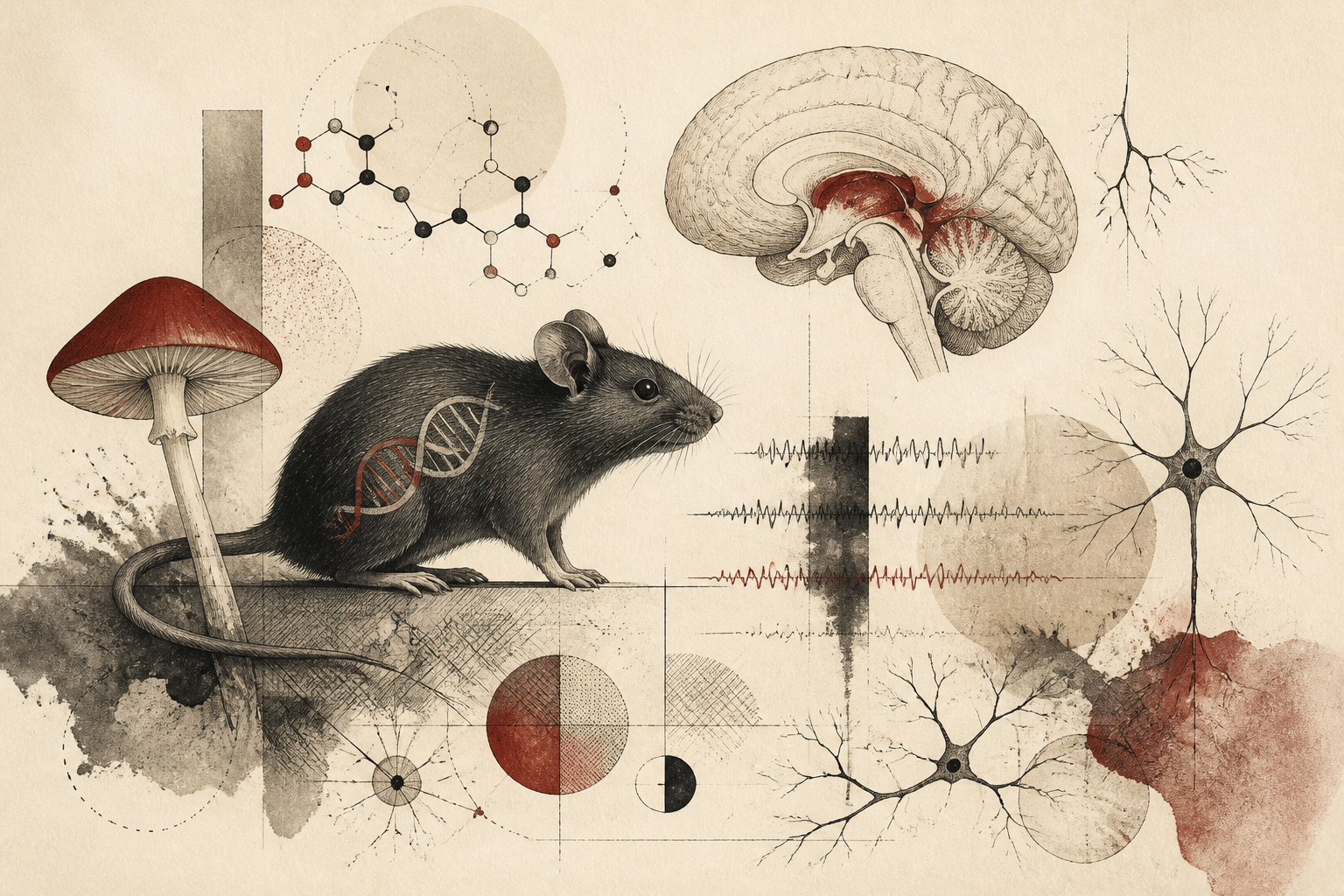
The therapeutic potential of psychedelic compounds has moved from the periphery of psychiatric research to the center of neurobiological inquiry. While substances like psilocybin and LSD show promise in treating resistant depression and anxiety, their clinical application remains complicated by their most distinct feature: the hallucinatory experience. For decades, scientists have debated whether the therapeutic benefit is a direct result of these subjective sensory alterations or if the molecular pathways responsible for healing can be separated from those inducing a 'trip.' A recent breakthrough, published in Nature Neuroscience by researchers at the University of California, San Francisco (UCSF), provides a sophisticated set of genetic tools designed to answer this question. By engineering specialized mouse models, the team has successfully isolated the serotonin receptors responsible for specific behavioral responses, paving the way for the development of non-hallucinogenic psychiatric medications.
The Genetic Framework of Serotonin Receptors
To understand the significance of the UCSF study, one must look at the complexity of the serotonin system. The human brain contains several serotonin receptors, but the 5-HT2A receptor is widely recognized as the primary gateway for psychedelic effects. When a compound like LSD or psilocin binds to this receptor, it triggers a cascade of signaling pathways that result in altered perception. However, the exact cellular mechanisms have been difficult to pinpoint because traditional pharmacological methods lack precision. When a drug is administered to a wild-type subject, it interacts with receptors across various cell types and brain regions simultaneously, making it impossible to determine which specific neuron population is responsible for which effect. The UCSF team, led by investigators including Stephen Liberles and David Julius, addressed this by utilizing the Cre-loxP recombination system, allowing for the selective expression or deletion of the 5-HT2A receptor in specific subsets of neurons. This level of granularity enables researchers to map the neuroanatomical origins of both the therapeutic and psychoactive properties of these drugs.
Identifying the Locus of Hallucinatory Behavior
In the study, the researchers focused on the 'head-twitch response' (HTR) in mice, a well-established behavioral proxy for hallucinogenic activity in humans. By selectively restoring 5-HT2A receptors in specific brain regions of mice that otherwise lacked the receptor, the team identified the excitatory neurons of the cortex as the primary drivers of the HTR. Specifically, they found that when the receptor was expressed in the deeper layers of the prefrontal cortex, the administration of psychedelic compounds reliably triggered the head-twitching behavior. Conversely, when the receptor was deleted from these specific excitatory neurons while remaining present in other parts of the brain, the hallucinogenic-like response was effectively neutralized. This finding is critical because it confirms that the hallucinatory effects are not a global brain phenomenon but are rooted in specific cortical circuits. The precision of these engineered mice allows for a 'modular' approach to studying the brain, where individual components of the psychedelic experience can be toggled on or off to observe the resulting changes in neuroplasticity and behavior.
Decoupling Perception from Neuroplasticity
One of the most pressing questions in modern neuropsychiatry is whether the 'trip' is a requirement for the 'cure.' Many clinicians argue that the profound subjective experience of a psychedelic session is what allows patients to reframe their trauma or break cycles of depression. However, the UCSF research suggests a molecular alternative. The study explored the possibility of activating the 5-HT2A receptor in a way that promotes neuroplasticity—the brain's ability to form new connections—without triggering the cortical excitatory circuits that lead to hallucinations. By examining the intracellular signaling pathways, the researchers found that certain ligands could potentially favor the 'plasticity' pathway over the 'hallucinatory' pathway. Their engineered mice provide a testing ground for these new ligands. If a compound can be shown to improve depressive-like symptoms in mice without inducing the HTR, it would suggest that the therapeutic benefits of psychedelics are driven by molecular changes at the synapse rather than the conscious experience of altered reality. This would allow for the creation of medications that could be taken at home, similar to traditional antidepressants, rather than requiring the intensive, supervised clinical settings currently necessary for psychedelic therapy.
Methodological Limitations and Ethical Considerations
Despite the rigor of the UCSF study, translating results from murine models to human psychiatry involves significant challenges. A mouse cannot report its subjective experience; researchers must rely on physical markers like the head-twitch response, which is at best an imperfect substitute for the complex visual and ego-dissolving experiences reported by humans. Furthermore, while the study successfully isolated excitatory neurons in the cortex, the brain is a highly interconnected organ. The downstream effects of 5-HT2A activation likely involve complex feedback loops with the thalamus and the claustrum—areas known to be involved in consciousness and sensory integration. There is also the question of duration; many psychedelic benefits are noted for their longevity after a single dose. The current mouse models are excellent for studying acute reactions, but further research is needed to determine how these genetic modifications affect long-term structural remodeling of the brain. Ethically, the development of non-hallucinogenic psychedelics raises questions about the 'medicalization' of these compounds and whether removing the psychoactive component strips the treatment of a vital, albeit poorly understood, psychological dimension.
The Future of Psychiatric Pharmacopeia
The implications of the UCSF research for the future of mental health treatment are profound. As the global burden of depression and PTSD continues to rise, the need for faster-acting, more effective treatments has never been greater. By providing a 'suite' of engineered mice, the researchers have given the scientific community a standardized toolkit to vet new drug candidates with unprecedented accuracy. This work facilitates a transition from 'discovery by serendipity'—where drugs like LSD were found by accident—to 'discovery by design.' In this new paradigm, pharmacologists can target specific cellular subsets to maximize healing while minimizing side effects. While the hallucination may remain a fascinating aspect of human consciousness and a tool for certain types of psychotherapy, the ability to bypass it pharmacologically could democratize access to the underlying neurobiological benefits of these powerful molecules. As this research moves toward human trials, the focus will remain on whether the molecular signature of change is enough to heal the human mind, or if the journey itself remains an essential part of the destination.
Quick answers
- What is the primary goal of the UCSF psychedelic mouse study?
- The goal is to create genetic tools to determine which specific neurons and receptors are responsible for the hallucinatory versus the therapeutic effects of psychedelic drugs.
- Can the therapeutic effects of psychedelics be separated from hallucinations?
- Research using engineered mice suggests that hallucinogenic responses are tied to specific cortical neurons, indicating it may be possible to develop drugs that trigger healing neuroplasticity without causing hallucinations.
- How do scientists measure if a mouse is having a psychedelic experience?
- Researchers use the 'head-twitch response' (HTR), a specific physical movement in mice that reliably occurs after they are given hallucinogenic substances.
Rewritten by Zeit editorial AI. Based on original reporting at Nature Neuroscience.