Precision CRISPR Activation Rescues Function in Autism-Linked Brain Organoids
Researchers have successfully used CRISPR-mediated gene enhancement to restore normal neural growth and activity in human organoid models of autism spectrum disorder.
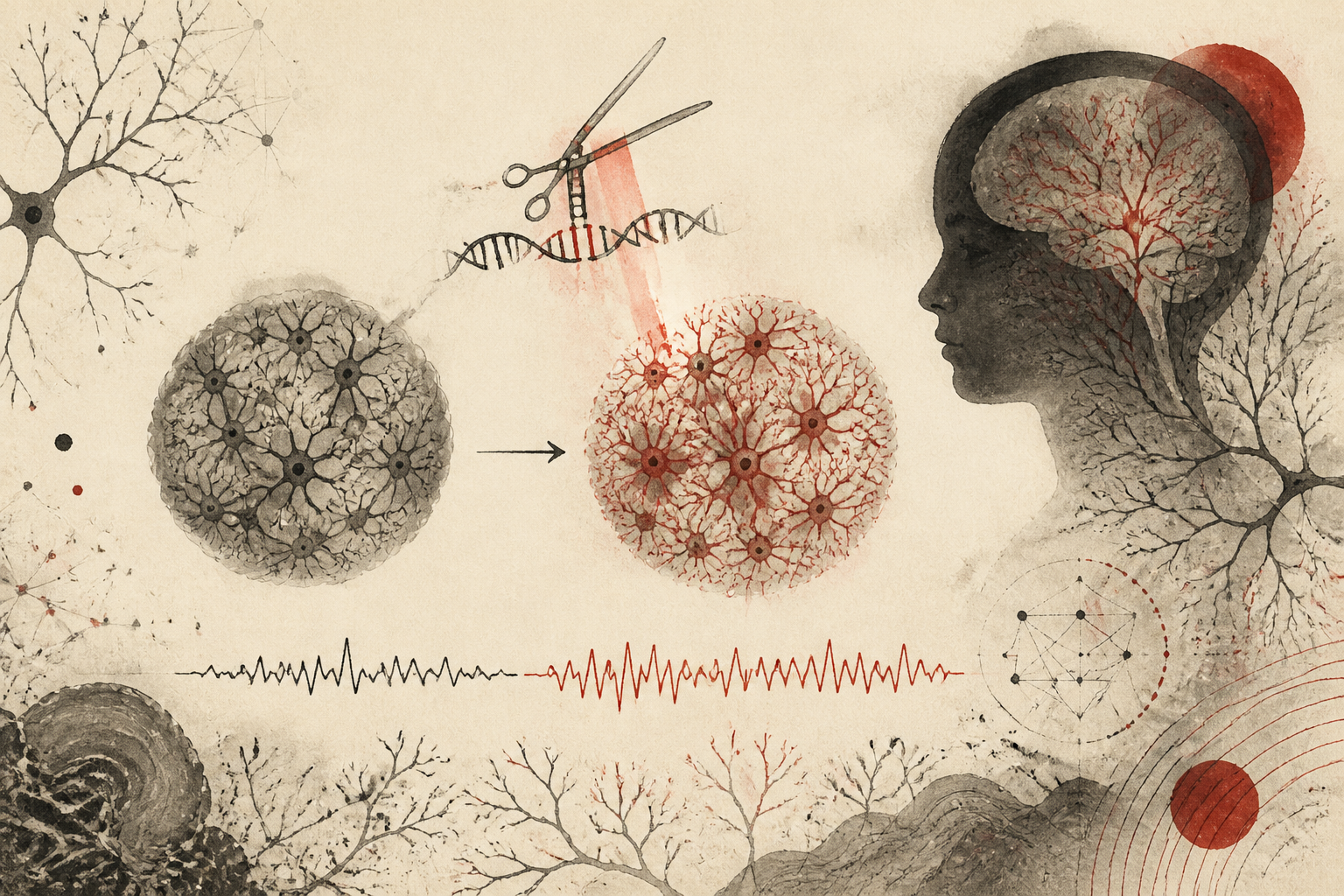
In a significant advancement for neurogenetics, researchers have demonstrated a novel application of CRISPR technology that addresses the cellular dysfunction associated with autism spectrum disorder (ASD). As reported by NeuroscienceNews.com, the study utilized human brain organoids to show that precision gene activation—rather than conventional DNA cutting—can effectively rescue physiological and structural deficits in neurons carrying specific genetic mutations. By targeting the natural regulatory mechanisms of the genome, the team successfully restored normal tissue growth and neuronal firing patterns in cells previously characterized by developmental abnormalities. This work represents a shift toward more nuanced therapeutic strategies that aim to calibrate, rather than rewrite, the genetic instructions governing brain development.
Cellular Models and the Genomic Architecture of ASD
Autism spectrum disorder is characterized by profound genetic heterogeneity, yet a handful of high-risk genes have consistently emerged as critical regulators of early brain development. Among these are CHD8 and SCN2A, both of which are haploinsufficient genes; this means that a mutation in one of the two copies of the gene results in a protein deficiency that disrupts typical neural maturation. Historically, studying these mutations has been challenging due to the lack of access to living human brain tissue. To circumvent this, the researchers employed human brain organoids—three-dimensional aggregates of cells derived from induced pluripotent stem cells. These organoids serve as simplified, lab-grown models of the human cortex, allowing scientists to observe how mutations manifest in a setting that mimics early fetal neurodevelopment.
The researchers focused on the impact of loss-of-function mutations in CHD8 and SCN2A. In these organoid models, the genetic deficits led to observable pathologies: overgrowth of neural tissue and aberrant electrical activity among neurons. These phenotypes correlate with observations in clinical populations, where certain ASD subtypes are associated with macrocephaly or synchronized firing patterns that deviate from neurotypical development. The foundational challenge was whether these developmental trajectories could be redirected once they had begun to deviate, without resorting to the risks associated with permanent DNA double-strand breaks.
Targeted Gene Enhancement Through CRISPR Activation
The methodology employed in this study represents a sophisticated evolution of the CRISPR-Cas9 system. Traditional CRISPR techniques often function like molecular scissors, cutting DNA to disable genes or insert new sequences. However, this study utilized CRISPR activation (CRISPRa), a non-cutting variant that acts as a precision volume knob. By tethering a transcription activator to a catalytically inactive Cas9 protein, the researchers were able to target the "enhancer" or "promoter" regions—the natural genetic dials—of the healthy, non-mutated copy of the gene. This approach effectively boosted the expression of the functional allele to compensate for the deficiency caused by the mutated counterpart.
According to the report from NeuroscienceNews.com, this precision activation was specifically aimed at restoring the physiological levels of CHD8 and SCN2A. The beauty of this mechanism lies in its specificity; the CRISPRa system was designed to operate only within the mutated cells, leaving neurotypical cells in the mosaic organoid environment unaffected. This level of selectivity is crucial for potential therapeutic applications, as over-expression of these genes in healthy tissue could lead to its own set of complications. The results were striking: the organoids treated with CRISPRa displayed a reversal of the overgrowth phenotype and a normalization of neuronal firing rates, effectively "rescuing" the tissue from its pathological state.
Interpreting the Reversal of Neural Pathologies
The success of this intervention suggests that the developmental window for correcting ASD-related cellular deficits may be more flexible than previously hypothesized. By restoring the dosage of critical proteins at a cellular level, the organoids regained the ability to regulate growth and signaling. In the case of CHD8, which is a chromatin remodeler, the restoration likely allowed for the proper downstream regulation of hundreds of other genes involved in neurogenesis. For SCN2A, which encodes a sodium channel, the enhancement directly addressed the excitability of the neurons, correcting the "firing" errors that contribute to the behavioral and cognitive symptoms associated with the mutation.
This study reinforces the theory that many aspects of ASD are essentially dosage problems. When the concentration of a specific protein falls below a critical threshold during a sensitive period of brain formation, the entire system begins to diverge from a typical path. The fact that the researchers could intervene and pull the system back toward homeostasis suggests that the underlying neural architecture retains a degree of plasticity. However, the interpretation of these findings must remain grounded in the limitations of the organoid model. While these miniature tissues replicate certain aspects of the human cortex, they lack the complexity of a fully vascularized brain with sensory inputs and integrated circuitries.
Limitations and Open Questions in Neurogenetics
Despite the promising results, several hurdles remain before such technology can be translated into a clinical setting. One primary limitation is the delivery mechanism. While CRISPRa worked effectively within the controlled environment of a lab-grown organoid, delivering these molecular components across the blood-brain barrier and into the correct populations of neurons in a living human being is a monumental challenge. Furthermore, the timing of the intervention is a critical variable. The study focused on early developmental stages; it remains unclear whether enhancing these genes in an adult brain would yield the same restorative effects once the primary neural pathways have already been established.
There are also ethical and safety considerations regarding long-term gene activation. While CRISPRa does not cut the DNA, the persistence of the activation and the potential for "off-target" effects—where the system accidentally boosts the wrong gene—must be rigorously evaluated. Future research will need to determine the longevity of the rescue effect and whether the normalized firing patterns observed in the lab translate to improved functional outcomes in more complex animal models. These open questions represent the next frontier for the research team as they move beyond the proof-of-concept phase.
Implications for Future Psychiatric Therapeutics
The broader significance of this research lies in its departure from traditional pharmacological approaches to psychiatry. Rather than treating the symptoms of neurodevelopmental disorders with broad-spectrum medications that affect the entire brain, this study points toward a future of precision genetic medicine. By identifying the specific genetic "dial" that is set too low and using CRISPR tools to turn it back up, scientists are targeting the root cause of the disorder at its molecular origin. This paradigm shift could potentially be applied to a wide range of haploinsufficient conditions, extending beyond autism to various forms of epilepsy and intellectual disability.
For the academic community at Zeit Psychology Online University, this study underscores the vital intersection of molecular biology and clinical psychology. As we deepen our understanding of the genetic underpinnings of behavior, the line between "biological" and "psychological" continues to blur. The ability to rescue the functional state of human brain tissue through genetic calibration offers a hopeful trajectory for the development of targeted therapies that could one day provide life-changing interventions for individuals with severe genetic forms of autism. This work, as detailed by NeuroscienceNews.com, serves as a cornerstone for the next generation of neurodevelopmental research, emphasizing that the key to the future may lie in the precision tuning of our own genetic code.
Quick answers
- What is the difference between traditional CRISPR and CRISPR activation used in this study?
- Traditional CRISPR acts like 'molecular scissors' to cut DNA, whereas CRISPR activation (CRISPRa) acts as a 'volume dial' to increase the expression of existing healthy genes without breaking the DNA strand.
- Which genes were targeted in the autism organoid research?
- The researchers targeted the CHD8 and SCN2A genes, both of which are linked to autism when one copy is mutated and protein production is insufficient.
- How did the CRISPR treatment affect the lab-grown brain tissue?
- The treatment restored normal growth rates and corrected abnormal electrical firing patterns in the neurons, effectively reversing the cellular symptoms of the genetic mutations.
Editorial Team