Polysubstance Cannabis Delivery Methods Correlated with Higher Rates of Dependency
New research involving over 17,700 adults suggests that diversifying cannabis consumption methods is a significant predictor for addiction and daily usage patterns.
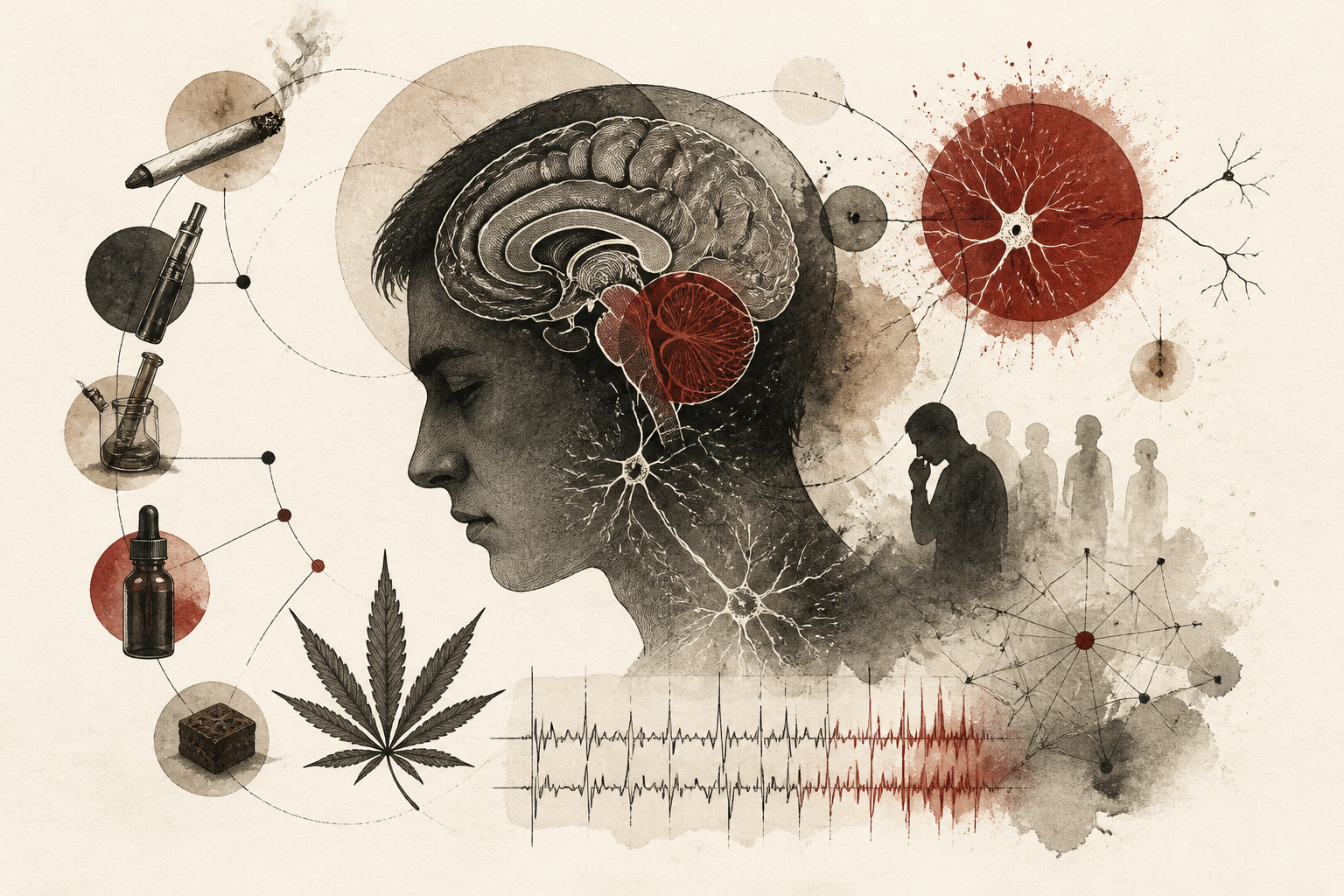
The modern landscape of cannabis consumption has evolved far beyond the traditional dried flower. With the legalization and commercialization of the substance in various jurisdictions, the market has expanded to include high-potency concentrates, vaporizers, oils, and sophisticated edible products. While research has long focused on the frequency of use and the concentration of tetrahydrocannabinol (THC) as primary indicators of potential addiction, a large-scale study of over 17,700 United States adults has identified a significant, previously under-recognized behavioral marker. The investigation reveals that the variety of delivery methods employed by a consumer may serve as a crucial diagnostic warning sign for Cannabis Use Disorder (CUD). By examining how individuals transition between different formats—ranging from smoking and vaping to dabbing and ingestion—researchers have uncovered a stark disparity in addiction rates that challenges previous assumptions about cannabis safety profiles.
Diversification of Consumption as a Clinical Indicator
Traditional clinical assessments for substance use disorders typically emphasize the quantity of the substance consumed and the impact of that consumption on daily functioning. However, according to findings recently detailed by ScienceDaily, the physical form the substance takes is increasingly relevant. The study conducted a comprehensive analysis of consumption habits among a vast demographic of American adults, identifying a direct correlation between the number of different cannabis delivery methods used and the likelihood of developing dependency. The data indicates that individuals who do not restrict themselves to a single method of intake are significantly more likely to exhibit the physiological and psychological symptoms associated with addiction. This diversification appears to be more than a simple matter of preference; it suggests a behavioral pattern where users seek out specific pharmacological effects that different methods provide, potentially leading to a more profound disruption of the brain's endocannabinoid system.
In the study's cohort, the contrast between single-method users and multi-method users was statistically dramatic. Those who primarily utilized a single format, such as edibles, demonstrated a relatively low prevalence of Cannabis Use Disorder, with approximately 15% meeting the clinical criteria. Conversely, the risk profile shifted drastically as the number of consumption formats increased. The researchers found that among participants who engaged with nearly every available form of the drug—including smoked flower, vaporized oils, concentrates like wax or shatter, and edibles—the rate of addiction surged to nearly 67%. This nearly four-and-a-half-fold increase highlights a critical threshold where the versatility of consumption becomes a primary predictor of adverse health outcomes, independent of the total volume of THC consumed.
The Mechanisms of Multi-Form Consumption
To understand why multiple delivery methods correlate so strongly with dependency, it is necessary to examine the pharmacokinetics of cannabis. Different methods of administration result in varying speeds of onset, peak blood-plasma concentrations, and durations of effect. For example, inhalation provides a near-instantaneous neurological response, whereas gastrointestinal absorption via edibles results in a slower, more prolonged experience often involving the conversion of THC into 11-hydroxy-THC in the liver. When a user employs multiple forms, they are essentially manipulating their neurochemistry with greater precision and frequency. This practice, often referred to as 'layering,' may prevent the downregulation of tolerance that might occur if the body were habituated to a single consistent delivery speed.
Furthermore, the study suggests that the shift toward multi-form use often coincides with the use of high-potency concentrates. 'Dabbing' or using vaporized concentrates can deliver THC levels exceeding 80%, compared to the 15-25% typically found in flower. The psychological component of searching for and utilizing diverse forms also points toward a behavioral preoccupation that is a hallmark of substance use disorders. When an individual’s routine involves the constant rotation of delivery devices and products, the substance occupies a larger portion of their cognitive and temporal space. This behavioral complexity likely reflects an escalating need to circumvent rising tolerance levels, as users seek more efficient or intense ways to achieve the desired effect as their sensitivity to the drug wanes.
Interpretations and Public Health Implications
These findings provide a vital tool for clinicians and public health officials who are navigating the complexities of modern cannabis regulation. For years, the 'edible-only' or 'flower-only' user was treated with the same broad strokes as the 'omni-user.' The current data suggests that this is a mistake. The relatively low addiction rate among those who primarily consume edibles suggests that the slow onset and long duration of this method may be less inherently addictive than the rapid-fire dopamine spikes associated with inhalants. However, when these methods are combined, the synergistic effect appears to accelerate the path to dependency. This suggests that public health messaging should focus not only on the amount of cannabis used but also on the variety of products being integrated into a user’s lifestyle.
From a diagnostic perspective, the number of consumption methods could serve as a 'hidden warning sign' that is easily identifiable during a standard patient screening. If a patient reports using three or more distinct forms of cannabis, the clinical suspicion for Cannabis Use Disorder should be significantly higher. This allows for earlier intervention strategies before the most debilitating symptoms of addiction—such as withdrawal, social withdrawal, or inability to fulfill professional obligations—become entrenched. The study underscores that the versatility of the modern cannabis market is not just a commercial phenomenon but a clinical one, necessitating a more nuanced understanding of how product variety influences human behavior.
Limitations and Future Directions
Despite the robust sample size of over 17,700 adults, the study acknowledges certain limitations inherent in cross-sectional research. Because the data represents a snapshot in time, it remains difficult to definitively establish the direction of causality. It is unclear whether the use of multiple forms of cannabis causes addiction, or whether individuals with a biological predisposition toward addiction are naturally drawn to experimenting with every available form of the substance. Longitudinal studies will be required to track users over several years to determine if the expansion of delivery methods precedes the onset of addiction symptoms or if it occurs as a byproduct of escalating dependency.
Additionally, the study relies on self-reported data, which can be subject to recall bias or social desirability bias, although the anonymity of such large surveys often mitigates these effects. Open questions also remain regarding the role of socioeconomic factors and the availability of different products in various legal environments. For instance, does an individual in a state with highly regulated, diverse dispensaries face a higher risk than someone in a region with limited product access? Future research must also account for the specific THC to CBD ratios across different formats, as the presence of other cannabinoids may modulate the addictive potential of the primary psychoactive component.
Why This Research Matters
As cannabis use continues to gain social and legal acceptance globally, the need for sophisticated risk-assessment tools has never been greater. The discovery that multi-form consumption is a dominant predictor of Cannabis Use Disorder provides a clear, actionable metric for both users and healthcare providers. It moves the conversation beyond the binary of 'use versus non-use' and into the realm of behavioral patterns. For the individual consumer, monitoring the variety of products used may serve as a self-regulatory tool; for the scientific community, it opens a new avenue for investigating the neurobiology of addiction in a multi-product era. Ultimately, this research from ScienceDaily serves as a reminder that in the study of substance use, the 'how' is often just as consequential as the 'how much.'
Quick answers
- What is the most significant warning sign of cannabis addiction according to the study?
- The study found that using cannabis in multiple forms—such as combining smoking, vaping, and edibles—is a major warning sign, with nearly 67% of multi-form users meeting the criteria for addiction.
- How do addiction rates compare between edible users and those who use all forms of cannabis?
- Individuals who primarily use edibles have an addiction rate of about 15%, whereas those who use almost every available form of cannabis have a much higher rate of nearly 67%.
- Why does using different methods of cannabis intake increase the risk of dependency?
- Using multiple methods allows for different speeds and intensities of THC delivery, which may lead to higher tolerance and more significant disruptions to the brain's reward system compared to using a single consistent method.
Rewritten by Zeit editorial AI. Based on original reporting at ScienceDaily — Mind & Brain.