Oscillatory Ripples Link Distant Neurons to Maintain Distributed Working Memory
Researchers have identified that high-frequency ripple oscillations coordinate neuronal co-firing across the hippocampus and cortex to sustain information during short-term memory tasks.
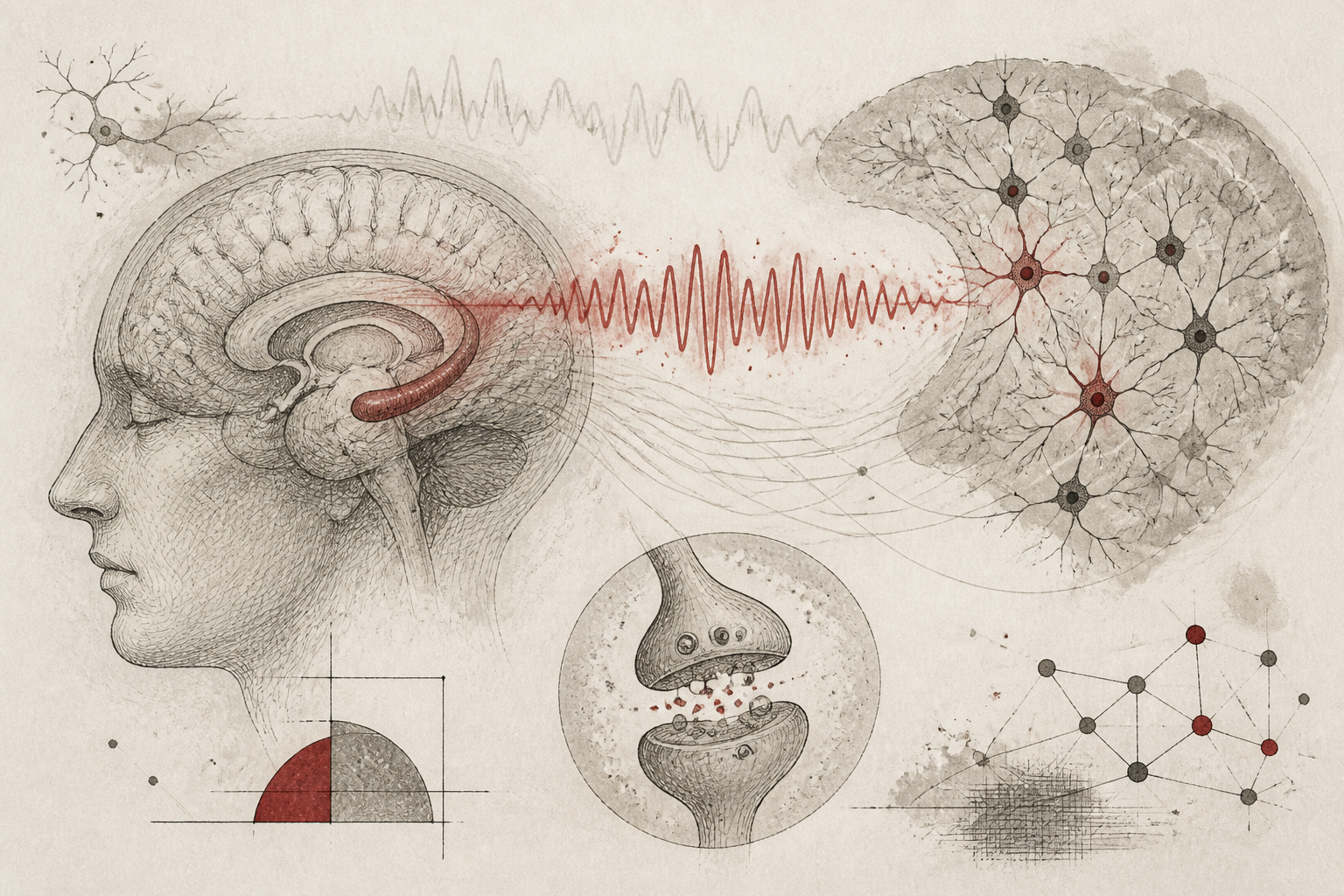
Recent research published in Nature Neuroscience has unveiled a sophisticated neural mechanism that explains how the human brain maintains information over short durations, a process known as working memory. For decades, neuroscientists have debated how disparate regions of the brain, specifically the hippocampus and the prefrontal cortex, communicate to keep a memory trace active when the original stimulus is no longer present. The new study, titled 'Cross-region neuron co-firing mediated by ripple oscillations supports distributed working memory representations,' demonstrates that high-frequency bursts of electrical activity, termed ripple oscillations, serve as the primary bridge for this inter-regional coordination. By facilitating the synchronized firing of individual neurons across these distant areas, these ripples ensure that complex information is not just stored, but actively sustained in a distributed network.
Working memory is a fundamental cognitive function, serving as the 'mental workspace' that allows individuals to hold and manipulate information for tasks ranging from solving a math problem to following a conversation. While it has long been understood that the hippocampus is critical for long-term memory formation and the cortex is essential for executive control, the specific physiological events that allow these two systems to exchange information in real-time have remained elusive. The findings presented in this study suggest that the brain does not rely on a single localized 'storage bin' for working memory. Instead, it utilizes a dynamic, multi-region system where information is kept alive through the precise timing of neuronal discharges across the cerebral landscape.
The Role of Sharp-Wave Ripples in Cognitive Synchronization
The central finding of the research involves a specific type of neural activity known as ripple oscillations. These are brief, high-frequency patterns of electrical activity typically observed in the hippocampus. Historically, ripples were primarily associated with memory consolidation—the process by which short-term experiences are converted into long-term storage, often occurring during sleep or quiet wakefulness. However, the study published in Nature Neuroscience indicates that these ripples also play a crucial role during active working memory tasks. The researchers observed that these oscillations do not remain confined to the hippocampus; rather, they appear to synchronize with activity in the prefrontal cortex, creating a functional link between the two regions.
This synchronization is achieved through 'co-firing,' a phenomenon where specific sets of neurons in the hippocampus and the cortex fire in near-simultaneous patterns. The ripple oscillations act as a timing signal, or a metronome, ensuring that the neurons in different parts of the brain are 'tuned' to one another. When a ripple occurs, it creates a window of opportunity for these distant cells to communicate with high precision. This coordinated firing allows the brain to represent a single piece of information—such as a visual image or a location—across multiple nodes, making the memory trace more robust and less susceptible to interference or decay.
Experimental Observations of Distributed Representations
To map this complex interaction, the research team utilized advanced recording techniques to monitor the activity of hundreds of individual neurons simultaneously. By analyzing the timing of these discharges relative to the occurrence of ripple oscillations, the study was able to track how information flows between the hippocampus and the cortex. The data revealed that during the 'delay period' of a working memory task—the crucial seconds when a subject must hold information in mind without seeing it—the frequency of ripple-mediated co-firing increased significantly.
What makes this discovery particularly compelling is the 'distributed' nature of the representations. The study found that the specific content of the memory was encoded not by the activity of a single neuron, but by the joint patterns of many neurons across the two regions. For example, when a subject was asked to remember a specific spatial location, a unique assembly of hippocampal and cortical neurons would co-fire in synchronization with a ripple. If the ripple activity was absent or weak, the co-firing pattern degraded, and the subject was more likely to forget the information. This suggests that ripples are not merely a byproduct of neural activity but are the essential mechanism that maintains the integrity of the memory representation.
Implications for Neuroplasticity and Cognitive Disorders
Understanding the mechanism of ripple-mediated communication has profound implications for the field of neuropsychology and the treatment of cognitive impairments. If working memory depends on the successful synchronization of distant brain regions via ripples, then disruptions to these oscillations could explain the cognitive deficits seen in various neurological conditions. For instance, in disorders such as Alzheimer’s disease or schizophrenia, patients often struggle with working memory tasks. The findings in Nature Neuroscience suggest that these struggles might stem from a 'disconnect' in the ripple-mediated network, where the hippocampus and cortex can no longer synchronize their activity effectively.
Furthermore, this research opens new avenues for exploring how the brain optimizes itself for learning. The ability of the brain to coordinate co-firing across regions is a hallmark of neural efficiency. By studying how these ripples are generated and how they successfully recruit cortical neurons, scientists may be able to develop interventions—such as targeted neurostimulation—that enhance the strength of these oscillations. Such breakthroughs could potentially help restore working memory function in aging populations or in individuals recovering from traumatic brain injuries where the communication pathways between the hippocampus and cortex have been compromised.
Challenges and Future Directions in Ripple Research
Despite the significance of these findings, the study acknowledges several limitations that warrant further investigation. One primary question is the directionality of the communication. While the current research highlights the importance of hippocampal ripples in influencing cortical activity, it remains unclear how much the cortex 'talks back' during these events. It is possible that the prefrontal cortex sends signals to the hippocampus to initiate these ripples, suggesting a top-down control mechanism that was not fully explored in this specific paper. Additionally, the study focused on specific types of working memory tasks; whether these same mechanisms apply to more complex, multi-modal memories involving language or emotion remains to be seen.
Another open question involves the metabolic cost of these high-frequency oscillations. Maintaining rapid, synchronized firing across the brain requires significant energy. Future research will need to examine how the brain balances the need for high-fidelity memory maintenance with its limited energetic resources. Understanding the molecular triggers that allow a neuron to participate in a ripple-mediated assembly will also be a critical next step. As the field moves forward, the integration of these physiological findings with computational models of the brain will be necessary to fully grasp how a simple ripple can sustain the vast complexity of human thought.
In conclusion, the research published in Nature Neuroscience provides a vital piece of the puzzle in understanding how we think and remember. By identifying ripple oscillations as the mediator of cross-regional neuron co-firing, the study shifts our perspective from a localized view of the brain to a more holistic, networked understanding. Working memory is not a static state located in one region, but a dynamic, shimmering resonance between the hippocampus and the cortex, held together by the rhythmic pulse of neural ripples. This discovery not only enhances our fundamental knowledge of neuroscience but also sets the stage for future innovations in cognitive health and neuro-rehabilitation.
Quick answers
- What are ripple oscillations in the brain?
- Ripple oscillations are high-frequency bursts of electrical activity in the hippocampus that synchronize neuron firing across different brain regions to support memory.
- How does the brain maintain working memory according to recent research?
- The brain maintains working memory through 'co-firing,' where neurons in the hippocampus and prefrontal cortex fire together, facilitated by ripples that act as a timing signal.
- Why is the Nature Neuroscience study on ripples important?
- It identifies the specific mechanism that allows distant brain regions to communicate in real-time to hold information, which could lead to treatments for memory disorders.
Rewritten by Zeit editorial AI. Based on original reporting at Nature Neuroscience.