Novel Receptor Inhibition Offers Potential Breakthrough for Neuroinflammatory Conditions
Recent research indicates that targeting the P2X7 receptor could mitigate chronic brain inflammation associated with Alzheimer’s, Parkinson’s, and major psychiatric disorders.
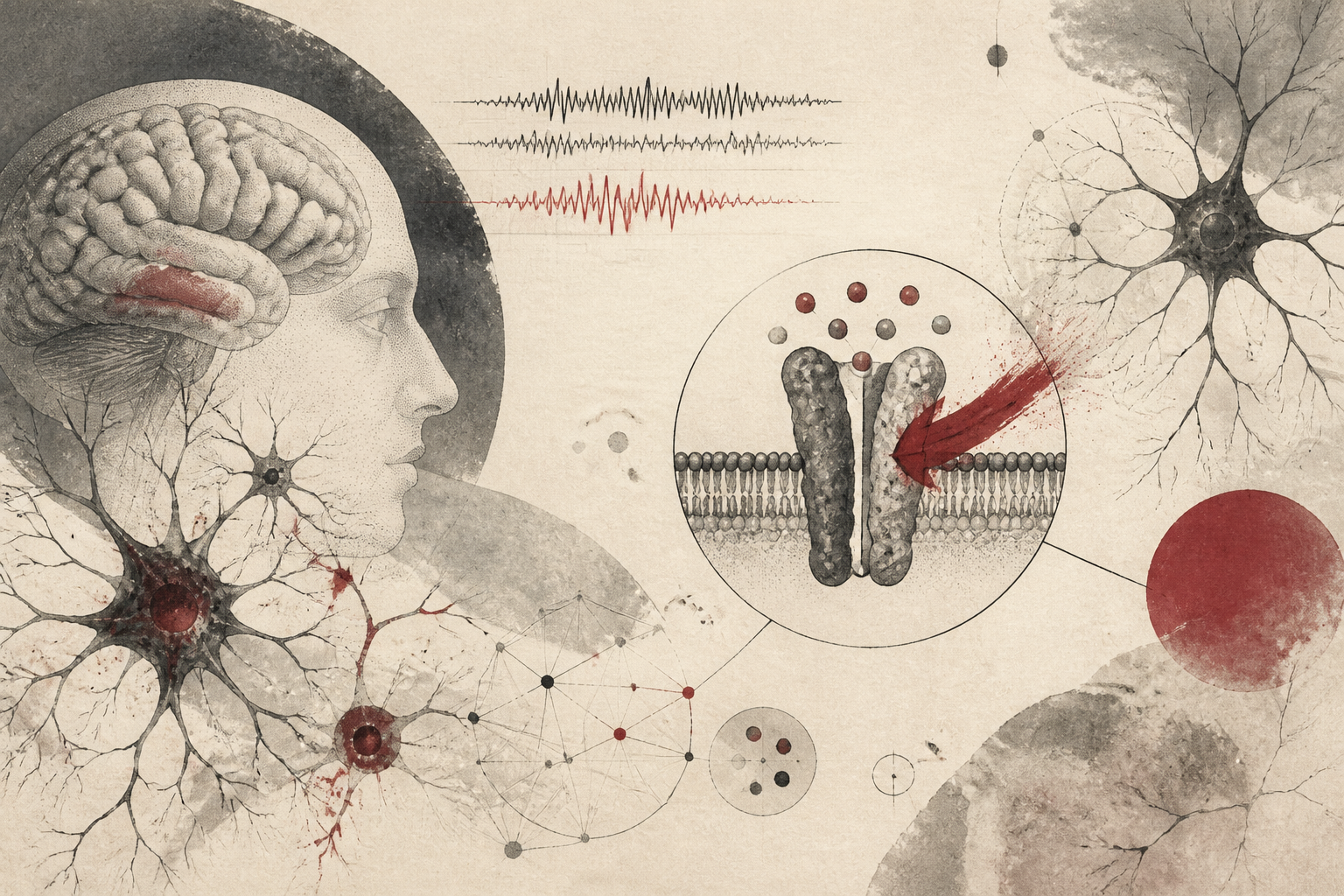
In the landscape of modern neuroscience, the quest to treat neurodegenerative and psychiatric disorders has increasingly focused on the immune responses of the brain itself. A recent study published in ScienceDaily highlights a significant advancement in this field, identifying the P2X7 receptor as a critical drug target that may alleviate the harmful inflammation underlying some of the most pervasive neurological conditions. By effectively blocking this specific receptor in human brain tissue, researchers have demonstrated a reduction in the inflammatory cascades that contribute to the progression of diseases such as Alzheimer’s, Parkinson’s, and various mood disorders. This discovery suggests a shift in therapeutic strategy, moving away from purely symptomatic management toward the regulation of the brain’s internal environment.
The Role of Neuroinflammation in Chronic Disease
For decades, medical science categorized neurological diseases like Alzheimer’s and psychiatric conditions like schizophrenia as distinct entities with little biological overlap. However, contemporary research increasingly points toward a common denominator: chronic neuroinflammation. While acute inflammation is a protective response to injury or infection, chronic activation of the brain’s immune cells—primarily microglia—can lead to a self-perpetuating cycle of tissue damage and cognitive decline. In conditions like Parkinson's disease, this persistent inflammatory state is thought to accelerate the death of dopaminergic neurons, while in psychiatric contexts like clinical depression, it may disrupt neuroplasticity and neurotransmitter balance.
The discovery surrounding the P2X7 receptor, as reported by ScienceDaily, provides a tangible mechanism for intervening in this process. This receptor belongs to a family of proteins that respond to extracellular adenosine triphosphate (ATP), a molecule that typically serves as an energy source within cells but acts as a 'danger signal' when found outside of them. When brain tissue is stressed or damaged, ATP levels rise, triggering the P2X7 receptor and initiating a massive release of pro-inflammatory cytokines. By identifying this specific pathway in human brain tissue, the research team has localized a gatekeeper that, if controlled, could halt the transition from health to chronic inflammation.
Experimental Mechanisms and Tissue Findings
The methodology behind this discovery is particularly noteworthy for its use of human brain tissue, which offers a more direct insight into clinical applications than traditional animal models alone. By utilizing advanced neuroimaging and laboratory techniques to observe the behavior of P2X7 in real-time, the researchers were able to quantify the reduction in inflammatory markers following the application of P2X7 inhibitors. The findings indicated that when this receptor was blocked, the production of Interleukin-1 beta—a primary driver of the inflammatory response—was significantly curtailed. This suggests that the P2X7 receptor is not merely a bystander in the disease process but is an active driver of the neuroinflammatory environment.
Furthermore, the research explores the potential for drug repurposing. Because several P2X7 inhibitors have already been developed for other inflammatory conditions, such as rheumatoid arthritis, the path toward clinical trials for brain-related disorders may be shorter than that for entirely new chemical entities. This potential for repurposing existing pharmacological tools offers a beacon of hope for patients with traumatic brain injury or rapidly progressing dementia, where the time-sensitive nature of treatment is paramount. The study’s findings provide a biochemical rationale for testing these existing molecules in the context of the central nervous system, ensuring that the therapeutic focus remains on stabilizing the delicate balance of the brain’s immune system.
Clinical Interpretation and the Path to Treatment
Translating these laboratory findings into clinical practice requires a nuanced understanding of how P2X7 inhibition might affect different pathologies. In the case of Alzheimer’s and Parkinson’s, the primary goal of blocking P2X7 would be to slow down the rate of neuronal loss by calming the microglial response. In psychiatric disorders like schizophrenia and major depressive disorder, the mechanism may be slightly different, potentially focusing on the restoration of blood-brain barrier integrity or the normalization of synaptic pruning. The versatility of this drug target is perhaps its most promising feature, as it suggests a unified biological approach to conditions that have historically been treated with vastly different classes of medications.
However, it is vital to approach these findings with academic caution. While the reduction of inflammation in human brain tissue is a significant milestone, the brain is a highly complex organ where some level of immune activity is necessary for maintenance and repair. The challenge for future clinicians will be to determine the optimal level of P2X7 inhibition—effectively turning down the 'volume' of inflammation without silencing the brain’s defensive mechanisms entirely. This balance is critical to ensuring that treatment does not inadvertently leave the brain vulnerable to other types of injury or infection.
Limitations and Open Questions in Neurobiology
Despite the enthusiasm surrounding the P2X7 receptor, several limitations must be addressed by subsequent research. The current study focuses on the immediate inflammatory response in human tissue samples, which does not necessarily account for the long-term systemic effects of P2X7 blockade in a living patient. The blood-brain barrier remains a significant hurdle; for a P2X7 inhibitor to be effective in a clinical setting, it must be able to penetrate this barrier in therapeutic concentrations without causing adverse effects in other parts of the body where P2X7 receptors are also present. Additionally, the heterogeneity of diseases like Alzheimer's means that not all patients may exhibit the same degree of P2X7-mediated inflammation, necessitating a personalized approach to these emerging therapies.
Open questions also remain regarding the timing of intervention. Is blocking P2X7 more effective in the early, prodromal stages of Parkinson’s, or can it provide benefit even after significant neurodegeneration has occurred? Furthermore, the interaction between P2X7 and other inflammatory pathways remains to be fully mapped. As science progresses, it will be necessary to determine if P2X7 inhibition should be a standalone therapy or if it should be integrated into a multi-drug regimen that targets protein misfolding and other pathological features of these diseases.
The Broader Impact on Global Mental Health
The implications of this study, as originally reported by ScienceDaily, extend far beyond the laboratory. If P2X7 inhibitors prove successful in human trials, they could revolutionize the way we manage traumatic brain injury and chronic neurodegenerative states. By providing a common target for both neurological and psychiatric conditions, this research helps to bridge the gap between neurology and psychiatry, fostering a more holistic understanding of brain health. For the millions of individuals living with Alzheimer’s or depression, the identification of a specific, druggable receptor offers the prospect of treatments that do more than mask symptoms—they aim to protect the very foundation of the mind.
In conclusion, the identification of the P2X7 receptor as a key mediator of brain inflammation represents a major step forward in neuropharmacology. While rigorous clinical testing is still required, the ability to significantly reduce inflammation in human brain tissue provides a strong evidence base for future investigation. As we move closer to understanding the immune-mediated underpinnings of brain disease, the P2X7 receptor stands out as a promising gateway to new, more effective interventions.
Quick answers
- What is the P2X7 receptor's role in the brain?
- The P2X7 receptor acts as a sensor for extracellular ATP, functioning as a 'danger signal' that triggers inflammatory responses in the brain's immune cells.
- Can existing drugs be used to treat brain inflammation via P2X7?
- Yes, because P2X7 inhibitors have been developed for other conditions like arthritis, researchers are looking to repurpose these existing drugs for neurological use.
- Which diseases could potentially be treated by targeting P2X7?
- Research suggests potential applications for Alzheimer’s, Parkinson’s, traumatic brain injury, depression, and schizophrenia.
Rewritten by Zeit editorial AI. Based on original reporting at ScienceDaily — Mind & Brain.