Nonordinary Experiences Linked to Sustained Personal Growth
Recent research reveals that subjective appraisal of nonordinary experiences determines their potential for long-term psychological development.
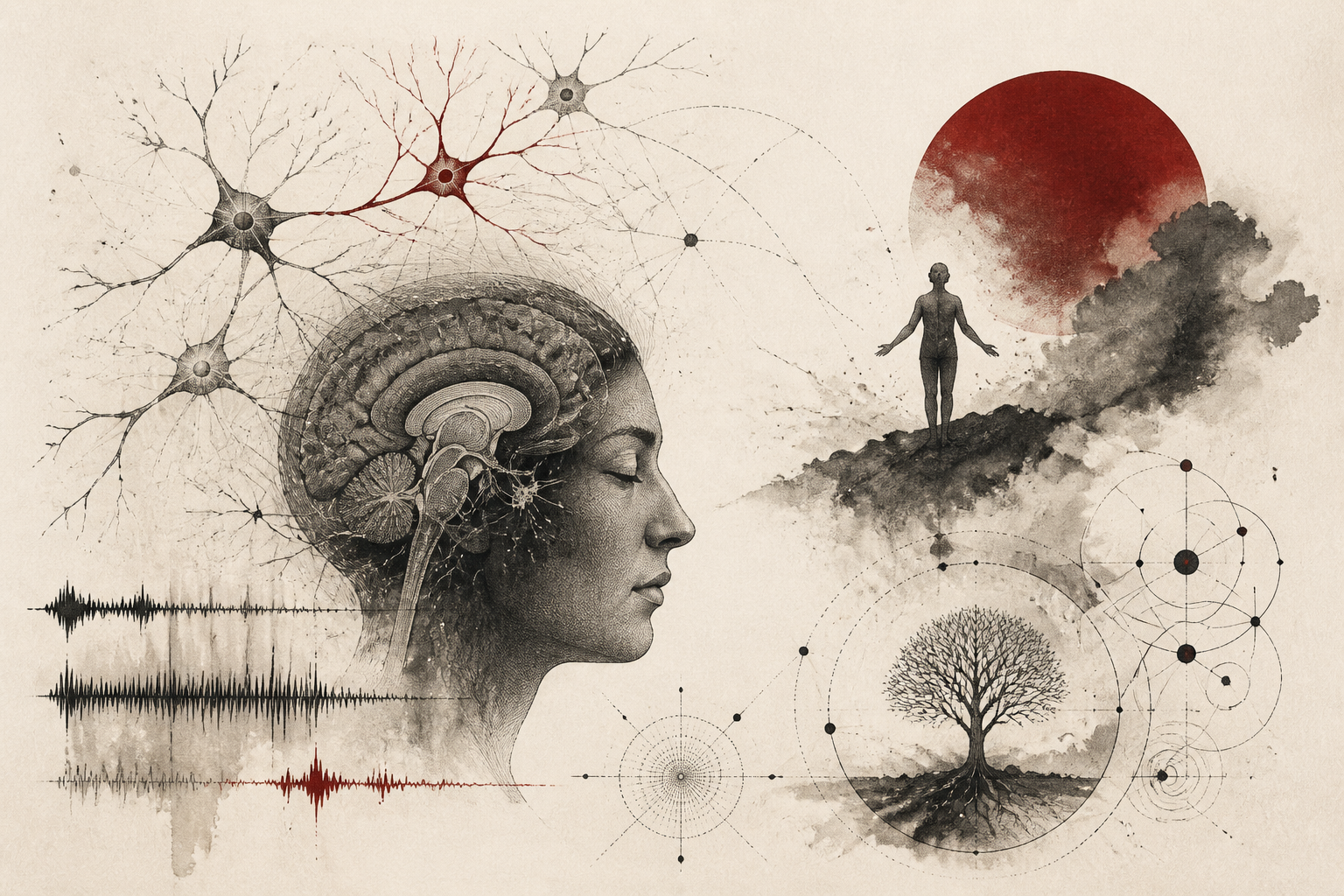
The human mind often ventures beyond conventional perception, into states described as nonordinary experiences—moments characterized by altered consciousness, profound shifts in perception, or even mystical encounters. Far from being mere transient anomalies, these phenomena are increasingly recognized for their potential to instigate deep and lasting psychological development. Recent research, highlighted by NeuroscienceNews.com, sheds light on the mechanisms through which these sometimes-enigmatic events can transform individuals, revealing that the subjective appraisal of such experiences is a primary determinant of their long-term impact on personal growth. This understanding challenges traditional perspectives that might pathologize such states, instead positioning them as critical junctures for profound self-development.
The Transformative Power of Nonordinary Experiences
For decades, psychological science has largely focused on deviations from normative states of consciousness, often within a framework of disorder or aberration. However, a growing body of work, particularly within transpersonal psychology, has begun to explore the constructive potential of altered states. The new research underscores this shift, indicating that over half of individuals who undergo nonordinary experiences report significant positive long-term effects. These effects are not fleeting; they manifest as sustained improvements in well-being, life satisfaction, and a broader sense of purpose, suggesting that such episodes can indeed act as potent catalysts for personal growth. The study thus lends empirical weight to the idea that the psyche possesses an intrinsic capacity for transformation through encounters that transcend everyday reality.
This transformative potential hinges critically on how an individual interprets and integrates the experience into their pre-existing worldview. The data reveal a clear correlation: individuals who approached their nonordinary experiences with an open mind, curiosity, or a framework of spiritual exploration were significantly more likely to report sustained positive changes. Conversely, experiences met with fear, confusion, or a lack of supportive interpretive structures often yielded less pronounced positive outcomes, if any. This finding emphasizes that the raw experience itself is not sufficient for growth; rather, the cognitive and emotional processing that follows plays a pivotal role in shaping the ultimate psychological trajectory. It suggests that individuals are not passive recipients of these experiences but active agents in determining their psychological legacy.
The Mechanism of Appraisal and Integration
The research highlights a critical intersection between an objective description of an event and its subjective interpretation. Nonordinary experiences, by their very nature, can disrupt established cognitive schemas, presenting information or perceptions that do not readily fit into an individual's usual understanding of reality. It is at this juncture that appraisal becomes paramount. When an individual frames these disruptions as opportunities for learning, spiritual insight, or personal expansion, they engage in a process of integration that reconstructs their worldview to accommodate the new information. This process can lead to cognitive flexibility, an enhanced sense of meaning, and often, a deeper connection to self and others. Such positive appraisal might involve actively seeking meaning, engaging in reflection, or discussing the experience within a supportive community.
Conversely, a negative appraisal, characterized by fear, denial, or a struggle to rationalize the experience, can impede integration. Without a framework to make sense of what occurred, individuals might suppress the experience, dismiss it as pathology, or become overwhelmed by its intensity. This lack of integration can prevent the positive psychological restructuring that underpins personal growth. The study implicitly points to the importance of narrative construction—how individuals weave these extraordinary events into their life stories. A coherent and meaningful narrative, developed through positive appraisal, appears to be a cornerstone for long-term psychological development.
Clinical Implications and Transpersonal Perspectives
From a clinical standpoint, these findings carry significant implications for therapeutic practice. Historically, psychology has often approached altered states or profound perceptual shifts with a diagnostic lens, potentially labeling them as symptoms of underlying mental health conditions. While acknowledging the importance of differentiating pathological states, this research advocates for a more nuanced approach. It suggests that clinicians should consider the potential for transformation inherent in nonordinary experiences, rather than viewing them solely through a pathological framework. Providing cognitive frameworks and supportive environments that allow individuals to process and integrate unusual psychological events could significantly enhance therapeutic outcomes.
This perspective aligns strongly with the tenets of transpersonal psychology, a field dedicated to the study of humanity's highest potential and states of consciousness that extend beyond the individual ego. By shifting the focus from pathology to potential, and from the event itself to the individual's appraisal process, the research offers a more comprehensive understanding of how the human psyche navigates the boundaries of conventional reality. It reinforces the idea that psychological well-being is not merely the absence of distress but the presence of meaning, growth, and integration, even from experiences that initially seem unsettling or inexplicable.
Limitations and Future Directions
While providing compelling insights, the research, like all scientific endeavors, operates within certain limitations. The reliance on subjective reports for assessing long-term effects, while crucial for understanding lived experience, inherently introduces challenges related to recall bias and individual interpretation. The specific nature of the nonordinary experiences—whether mystical, psychedelic-induced, or spontaneously occurring—could also modulate the appraisal process and subsequent outcomes, a distinction that future research might further delineate. Moreover, the mechanisms underlying the sustained positive changes, beyond mere self-report, warrant deeper neuroscientific and psychological investigation to elucidate the specific neural correlates and cognitive processes involved in beneficial integration.
Open questions remain regarding the precise characteristics of a "supportive framework" and how it might be optimally provided in clinical or social settings. How do cultural contexts influence the appraisal of nonordinary experiences? What specific therapeutic interventions are most effective in facilitating positive integration? Investigating these areas could lead to more targeted and effective approaches for individuals encountering these profound states.
Significance for Psychology and Neuroscience
For students and clinicians in psychology and neuroscience, this research offers a vital expansion of perspective. It underscores the complexity of human consciousness and the rich, often unacknowledged, resources within the human psyche for self-healing and growth. It encourages a departure from purely reductionist or pathologizing models, advocating for an integrative approach that respects the subjective reality of individuals. Understanding the role of appraisal in transforming potentially disorienting experiences into sources of growth is crucial for developing compassionate and effective interventions. It highlights the importance of psychological flexibility and the cultivation of meaning-making capacities as fundamental aspects of mental health.
Looking forward, this line of inquiry invites a deeper exploration into the interface between brain, mind, and spirit. As neuroscientific tools become more sophisticated, they may eventually illuminate the neural underpinnings of appraisal and integration processes during and after nonordinary experiences. This would bridge the gap between subjective phenomenology and objective biological mechanisms. Ultimately, this research heralds a future where psychology fully embraces the spectrum of human experience, including its most extraordinary manifestations, as avenues for understanding flourishing and lifelong development.
Quick answers
- What determines if a nonordinary experience is beneficial?
- The individual's personal appraisal and interpretation of the event are the primary factors in determining positive long-term growth.
- What percentage of people report positive effects from these experiences?
- According to the study reported by Neuroscience News, over 50% of participants reported positive long-term outcomes.
- How should psychologists approach nonordinary experiences?
- The research suggests a move toward integrative frameworks that recognize the potential for personal development rather than viewing them only as pathological.
Rewritten by Zeit editorial AI. Based on original reporting at NeuroscienceNews.com.