New Research Identifies Non-Hippocampal Mechanisms in Motor Memory Replay
A Nature Neuroscience study reveals that procedural memory consolidation occurs independently of the hippocampal structures traditionally associated with cognitive mapping.
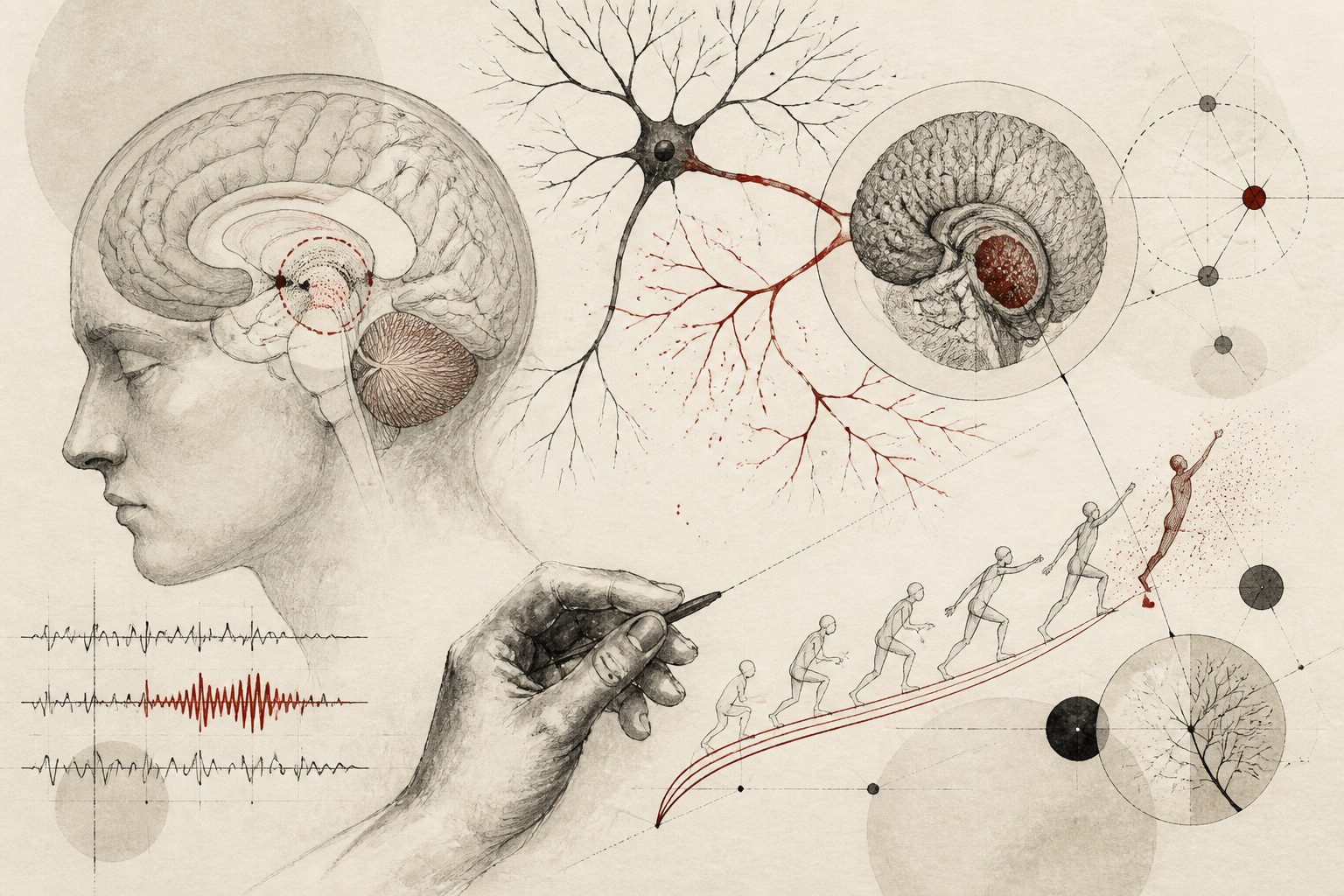
Recent research published in *Nature Neuroscience* has challenged long-standing assumptions regarding the neural architecture of memory consolidation. For decades, the hippocampus has been identified as the primary locus for the 'replay' of neural activity—a process where the brain internally reinforces new information during periods of rest. However, a new study demonstrates that procedural memory, specifically the learning of motor sequences and physical skills, utilizes distinct pathways that function independently of the hippocampal system.
The research indicates that while episodic memories (such as events or facts) rely heavily on the hippocampus for stabilization, procedural memories are managed through alternative neural circuits. By monitoring neural signatures during rest periods following a motor-skill task, investigators observed robust replay patterns in cortical and subcortical regions. Notably, these patterns persisted even when hippocampal activity was inhibited or bypassed, suggesting a decentralized model of memory maintenance.
This distinction is significant for the field of neuropsychology, as it suggests that the brain possesses parallel systems for different classes of information. The findings reconcile previous observations where patients with extensive hippocampal damage—such as the famous case of patient H.M.—remained capable of mastering new physical tasks despite an inability to form new conscious memories of having practiced them.
Ultimately, the study clarifies that the 'offline' replay necessary for skill mastery is an intrinsic property of the motor system itself. These insights may have future implications for rehabilitation strategies following brain injuries, indicating that therapeutic interventions for motor skills could remain effective even in cases of severe cognitive or hippocampal impairment. According to the report in *Nature Neuroscience*, these findings provide a clearer map of how the human brain prioritizes and preserves diverse forms of expertise.
Source: *Nature Neuroscience* (2025). "Replay of procedural memory is independent of the hippocampus."
Quick answers
- What is the main finding regarding motor memory in this study?
- The study found that the brain reinforces motor skills during rest via neural replay that does not require the hippocampus.
- How does this change our understanding of the hippocampus?
- It confirms that the hippocampus is not a universal hub for all memory types, but is specialized for episodic rather than procedural tasks.
- What are the clinical implications of this research?
- It suggests that patients with hippocampal damage can still learn and retain physical skills, supporting specialized motor-centric rehabilitation.
Rewritten by Zeit editorial AI. Based on original reporting at Nature Neuroscience.