Neuronal Information Formatting Predicts Behavioral Contributions in Neural Circuits
Researchers at the University of California reveal how the geometric organization of neural signals determines their specific impact on motor control and cognitive behavior.
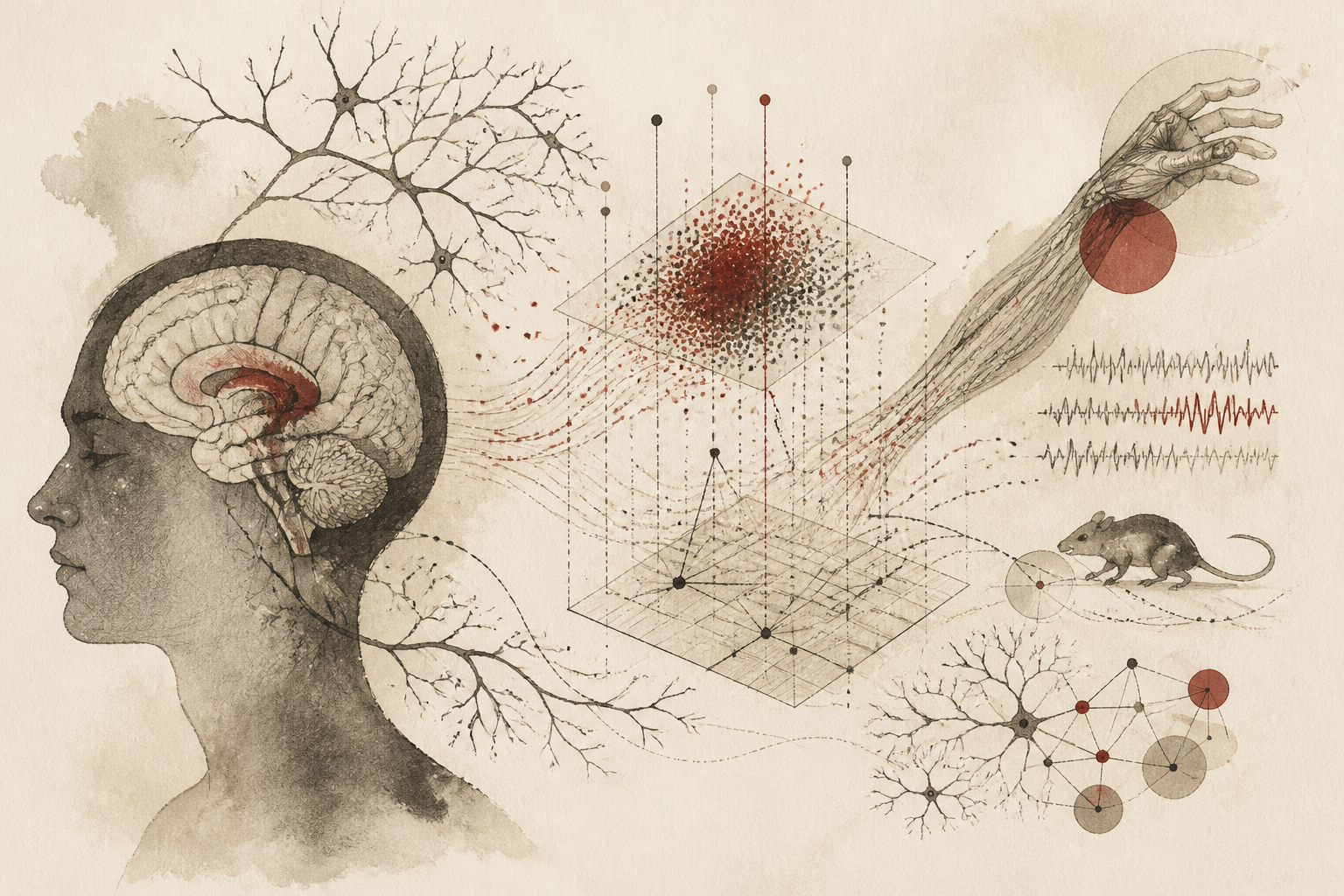
The relationship between cellular activity and complex behavior has long been the central inquiry of modern neuroscience. While researchers have historically focused on the firing rates of individual neurons as the primary currency of the brain, contemporary theories suggest that the collective organization of these signals—referred to as information formatting—is the more critical determinant of biological output. According to a recent study published in Nature Neuroscience by a team at the University of California, the specific geometric arrangement of information within neuronal populations serves as a reliable predictor for how those neurons contribute to different functional aspects of behavior. This discovery challenges the reductionist view of neural processing and provides a sophisticated framework for understanding the functional architecture of the mammalian brain.
The Evolution of Population Dynamics and Neural Geometry
To understand the significance of this research, one must first consider the transition from single-unit neurophysiology to population-level dynamics. Traditionally, neuroscientists attempted to map specific behaviors to individual neurons, assuming each cell acted as a discrete representative of a sensory or motor variable. However, the advent of large-scale recording technologies has revealed that information is distributed across thousands of neurons simultaneously. Within these high-dimensional spaces, the brain represents information along specific axes or manifolds. The University of California researchers, led by the study’s principal investigators, sought to determine whether the way these representations are 'formatted'—that is, how they are structured geometrically relative to one another in the neural state space—dictates their specific contribution to physical actions versus cognitive planning.
Previous work in the field had established that neural populations often reside in a low-dimensional subspace, but it remained unclear if certain formats were inherently better suited for driving behavior than others. By leveraging advanced computational models and high-density electrode recordings, the team explored the hypothesis that the efficiency of behavioral execution depends not just on the presence of a signal, but on its alignment with the motor output pathways. This shift in perspective moves the focus from the quantity of neural activity to the topological quality of that activity, offering a more nuanced explanation for how the brain maintains precision in complex environments.
Quantitative Findings in Motor and Cognitive Subspaces
The study utilized a multi-modal approach, recording activity from the motor cortex and associated regions while subjects performed various behavioral tasks. The researchers identified that neural information is formatted differently depending on whether it is intended for a 'read-out' by the muscular system or for internal cognitive processing. Specifically, they found that information formatted in a 'behaviorally relevant' subspace was a significantly stronger predictor of physical reaction times and accuracy than information contained in other regions of the neural state space. By analyzing the variance of neural firing patterns, the team demonstrated that the brain appears to selectively amplify specific geometric formats when a task demands immediate physical intervention.
One of the most striking findings was the emergence of what the researchers term 'orthogonal formatting.' This refers to a mechanism where the brain organizes information intended for different purposes—such as planning an action versus executing it—into non-overlapping geometric spaces. This prevents cognitive internal ruminations from accidentally triggering motor movements. The data indicated that the degree of this separation, or the 'formatting index,' could predict the likelihood of behavioral errors. When the formatting became disorganized or when information bled across these boundaries, the subjects were more likely to exhibit performance deficits. This correlation suggests that information formatting is not a byproduct of neural activity, but a fundamental principle of operational efficiency.
Mechanisms of Dimensionality and Signal Selection
At the heart of the researchers' methodology was a sophisticated application of dimensionality reduction techniques, such as Principal Component Analysis (PCA) and Targeted Dimensionality Reduction. These tools allowed the team to isolate the specific 'axis' of information within a population of neurons. They observed that the brain employs a selective filtering mechanism that favors certain formats for downstream communication. For instance, in the motor cortex, the neurons that drive motion communicate through a 'low-frequency' format that is highly stable, whereas neurons involved in sensory monitoring utilize a 'high-frequency' and more volatile format.
The authors propose that the biological mechanism behind this formatting involves the specific synaptic connectivity patterns between the cortex and the spinal cord. Because the spinal cord can only interpret certain types of neural input, the cortex must format its outputs to 'match' the receiving system’s requirements. This is analogous to a digital signal being formatted as a specific file type before it can be opened by a software program. If the neural signal is formatted as a 'planning' file, the motor system ignores it; if it is formatted as an 'execution' file, the action is initiated. The study provides robust evidence that these formats are dynamically adjusted in real-time as the requirements of a task shift, demonstrating a high degree of plasticity in the geometric representation of data.
Interpretation, Limitations, and Future Directives
The interpretation of these results suggests that the primary role of the cortex may be the active 'formatting' of information rather than the generation of the information itself. If the brain is viewed as a series of interconnected communicators, the ability to package data correctly becomes the most vital function for survival. However, the researchers are careful to note the limitations of the current study. The recordings were primarily focused on cortical regions, and it remains unknown how these formatting principles apply to subcortical structures like the basal ganglia or the cerebellum. Furthermore, while the study establishes a strong predictive relationship between formatting and behavior, the causal link—whether changing the format directly changes the behavior—requires further investigation using optogenetic tools.
Open questions also remain regarding the metabolic cost of information formatting. Is more energy required to maintain these geometric structures, and does neural fatigue manifest as a failure to maintain proper formatting? Future research will need to address how these dynamics evolve over the course of learning, as subjects transition from naive performance to expertise. It is hypothesized that as a task becomes well-learned, the brain automates the formatting process, leading to the highly optimized and 'shove-ready' neural states seen in professional athletes and musicians.
The Broader Impact on Neurobiology and Engineering
Why does this matter for the broader academic community and society at large? Firstly, these insights have profound implications for the development of Brain-Computer Interfaces (BCIs). Currently, BCIs struggle with signal noise and decodability. If engineers can design algorithms that specifically look for the 'behavioral format' discovered by the University of California team, the precision of neural prosthetics could be dramatically improved. Instead of trying to interpret every neural spike, a BCI could focus exclusively on the specific geometric subspace that predicts movement, ignoring the 'noise' of internal cognitive planning.
Secondly, this research provides a new lens through which to view neurological and psychiatric disorders. Conditions such as Parkinson’s disease or schizophrenia may involve failures in information formatting rather than simple deficits in neurochemistry. If the brain cannot properly segregate motor commands from cognitive thoughts, the resulting symptoms may be the logical outcome of 'format crosstalk.' In conclusion, the work published in Nature Neuroscience marks a significant milestone in our understanding of the neural code. It moves the conversation beyond the 'where' and 'how much' of brain activity to the far more critical question of 'how' information is structured to drive the complex machinery of human behavior.
Quick answers
- What is information formatting in the brain?
- Information formatting refers to the geometric organization and structure of collective activity within a population of neurons, rather than just the firing of individual cells.
- How does neural formatting affect behavior?
- The study found that neural signals must be formatted into specific 'subspaces' to trigger motor actions; if the information is formatted incorrectly, it remains a cognitive thought and does not result in movement.
- What are the practical applications of this research?
- The findings could improve Brain-Computer Interfaces (BCIs) by helping engineers filter for relevant motor signals and could offer new insights into treating neurological disorders where signal formatting is disrupted.
Editorial Team