Neuroligin-3 and CSPG4 Interaction Regulates Oligodendrocyte Precursor Cell Development
Researchers identify a critical biochemical signaling pathway that maintains brain progenitor states and inadvertently fuels the growth of high-grade gliomas through mechanotransduction.
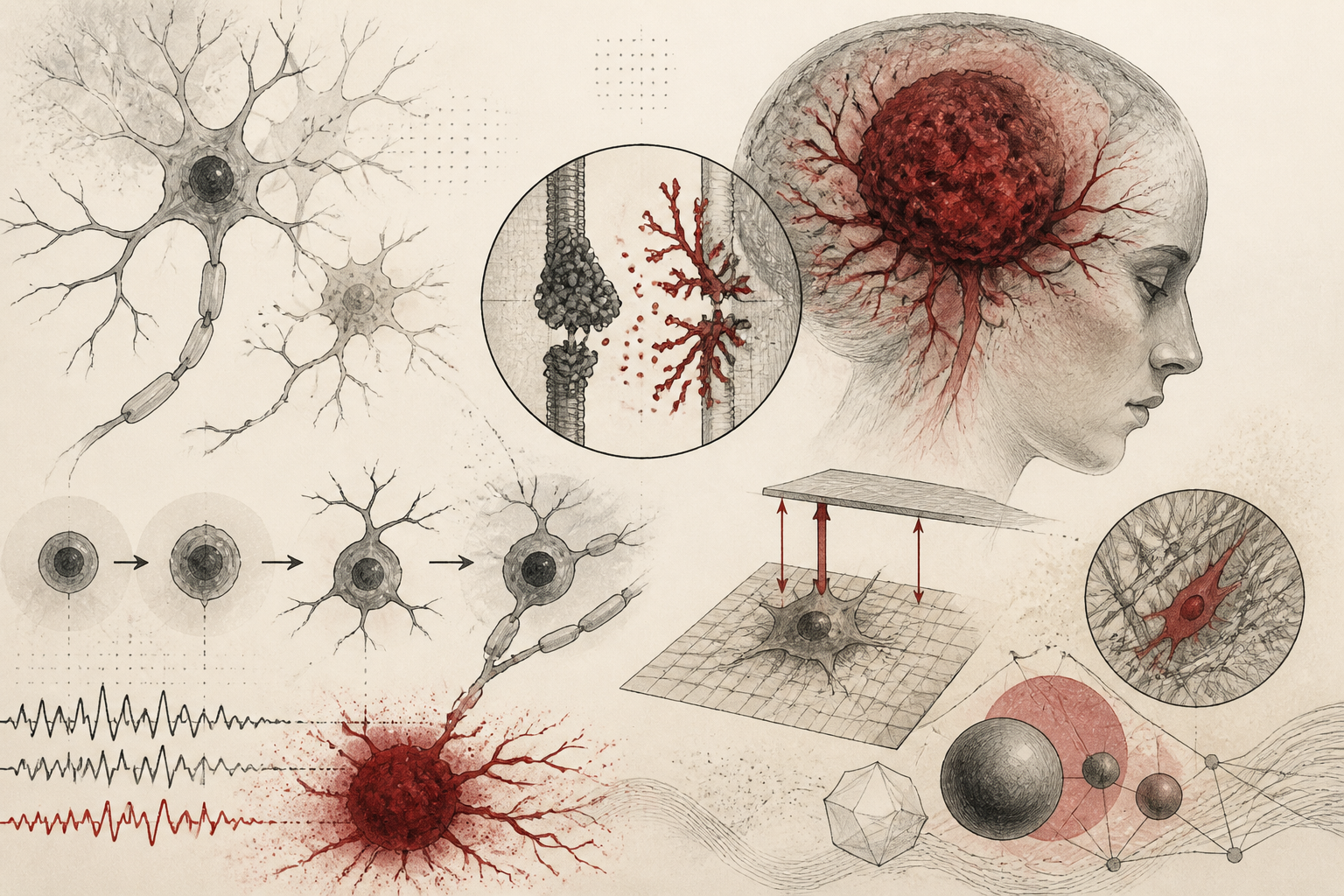
The delicate balance between cellular proliferation and differentiation defines the functional landscape of the mammalian brain. Central to this process are oligodendrocyte precursor cells (OPCs), a widely distributed population of glial progenitors that maintain the capacity to divide throughout adulthood or differentiate into myelinating oligodendroglia. However, this inherent plasticity represents a double-edged sword. When the regulatory mechanisms governing OPC behavior are co-opted, they can become the foundation for aggressive brain tumors. A landmark study published in Nature Neuroscience, titled "Neuroligin-3–CSPG4 interaction maintains oligodendrocyte precursor cell progenitor state and promotes glioma proliferation through mechanotransduction," has elucidated a novel molecular bridge that dictates these cellular fates. By examining the interaction between the synaptic protein Neuroligin-3 (NLGN3) and the chondroitin sulfate proteoglycan 4 (CSPG4), researchers have uncovered a pathway that not only maintains the progenitor state of OPCs but also accelerates the progression of high-grade gliomas.
The Molecular Architecture of the Glial Environment
To understand the significance of the NLGN3-CSPG4 axis, one must first consider the microenvironment of the central nervous system. NLGN3 is traditionally recognized as a cell-adhesion molecule located at the postsynaptic membrane, where it facilitates the maturation and function of synapses. Previous research has established that NLGN3 can be proteolytically cleaved and released into the extracellular space in response to neuronal activity. Once liberated, this secreted form of NLGN3 acts as a powerful mitogen, stimulating the growth of both healthy glial cells and malignant glioma cells. CSPG4, conversely, is a transmembrane protein frequently expressed on the surface of OPCs and various cancer cells, known for its role in cell migration and survival.
The study conducted by the research team marks the first time these two distinct molecules have been shown to form a functional complex. Through a series of sophisticated biochemical assays, the investigators demonstrated that the extracellular domain of NLGN3 binds directly to CSPG4. This binding event does not merely facilitate physical proximity; it initiates a cascade of intracellular signals that prevent OPCs from maturing into oligodendrocytes. By remaining in a progenitor state, these cells continue to divide, effectively expanding the pool of glial precursors. In the context of neurodevelopment and repair, this mechanism ensures a steady supply of cells ready to respond to injury. In the context of oncology, however, this same interaction provides a proliferative advantage to glioma cells, which often mimic the molecular profile of OPCs.
Mechanotransduction and the Proliferative Signal
One of the most compelling findings of the research is the identification of mechanotransduction as the primary driver of this cellular behavior. Mechanotransduction is the process by which cells convert mechanical stimuli—such as pressure, tension, or stiffness—into chemical signals. The interaction between NLGN3 and CSPG4 appears to modulate the physical tension of the cell membrane and its attachment to the extracellular matrix. The study details how the NLGN3-CSPG4 complex activates the Rho-associated protein kinase (ROCK) pathway, a well-known regulator of the cytoskeleton.
Activation of the ROCK pathway leads to increased cellular stiffness and alters the way the cell perceives its physical surroundings. This mechanical feedback loop signals the cell to remain in a proliferative, undifferentiated state. The researchers utilized advanced imaging and atomic force microscopy to confirm that cells engaged in the NLGN3-CSPG4 interaction exhibited higher levels of cortical tension compared to those where the interaction was inhibited. In glioma models, this increased tension was directly correlated with a more aggressive tumor phenotype. The ability of a biochemical signal to manifest as a mechanical change highlights the complexity of the brain's regulatory networks, where the boundaries between chemical signaling and structural integrity are frequently blurred.
Implications for Glioma Progression and Therapy
The bridge between healthy neurobiology and pathology is most evident in the study's findings regarding high-grade gliomas. Gliomas are notorious for their ability to integrate into the functional circuitry of the brain, hijacking normal signaling pathways to fuel their own expansion. The research team found that glioma cells expressing high levels of CSPG4 were particularly sensitive to the presence of NLGN3. When NLGN3 was present, these tumor cells exhibited rapid division and enhanced motility. Conversely, when the interaction was disrupted—either by knocking down CSPG4 expression or by using pharmacological inhibitors of the downstream mechanical pathways—the proliferative drive of the tumor was significantly attenuated.
This discovery offers a potential new avenue for therapeutic intervention. Current treatments for glioma often focus on broad-spectrum chemotherapy or radiation, which can have devastating effects on healthy brain tissue. By targeting the specific interaction between NLGN3 and CSPG4, or by modulating the mechanotransduction pathways they activate, it may be possible to slow tumor growth without disrupting the broader neural environment. The study suggests that the "OPC-like" state of glioma cells is not merely a descriptive characteristic but a functional requirement for malignancy that can be targeted at the molecular level.
Limitations and Future Directions in Neuro-Oncology
While the study provides a robust framework for understanding the NLGN3-CSPG4 axis, several questions remain for future exploration. First, the researchers acknowledge that the brain is a highly heterogeneous environment. While the interaction was clearly observed in OPCs and certain glioma subtypes, it is unclear how other glial populations, such as astrocytes or microglia, might influence or be influenced by this pathway. Furthermore, the study primarily utilized mouse models and cell culture systems. While these are essential for mechanistic work, the translation of these findings to human patients requires careful validation, as the density of CSPG4 and the cleavage rates of NLGN3 may vary significantly in the human brain.
Another area of uncertainty lies in the long-term effects of disrupting this pathway. Because the NLGN3-CSPG4 interaction is involved in maintaining the healthy progenitor pool of OPCs, there is a risk that therapeutic inhibition could impair the brain's natural ability to repair myelin. Future studies will need to determine if there is a "therapeutic window" where tumor growth can be suppressed without compromising the regenerative capacity of the central nervous system. Additionally, the role of neuronal activity remains a critical variable, as the release of NLGN3 is activity-dependent, suggesting that a patient's cognitive and sensory experiences could potentially impact the efficacy of treatments targeting this pathway.
A New Paradigm for Glial Biology
The significance of this research extends beyond the immediate concerns of oncology. It reinforces a growing paradigm in neuroscience that views glial cells not as passive support structures, but as active participants in the brain's signaling landscape. The discovery that a synaptic protein like NLGN3 can influence the mechanical state of a progenitor cell through CSPG4 underscores the interconnectedness of different neural components. It suggests that the health of the brain depends on a precise dialogue between neurons and glia, mediated by both chemical and physical forces. As the field of neuro-oncology continues to evolve, the insights provided by this study will likely serve as a cornerstone for developing more precise, mechanistically driven therapies that respect the complex biology of the human brain.
Quick answers
- What is the primary function of the NLGN3-CSPG4 interaction identified in the study?
- The interaction maintains oligodendrocyte precursor cells (OPCs) in a progenitor state and promotes the proliferation of glioma cells by activating mechanotransduction pathways.
- How does mechanotransduction affect brain tumor growth according to this research?
- The binding of NLGN3 to CSPG4 triggers the ROCK pathway, increasing cellular stiffness and mechanical tension, which signals the cell to continue dividing rather than differentiating.
- What are the potential therapeutic implications of the Nature Neuroscience study?
- Disrupting the NLGN3-CSPG4 bond or its downstream mechanical signals could offer a way to slow glioma progression by forcing tumor cells out of their proliferative 'progenitor-like' state.
Rewritten by Zeit editorial AI. Based on original reporting at Nature Neuroscience.