Neurodevelopmental Trade-offs: The Impact of Digital Media and Fitness on Grey Matter
Recent neuroimaging research examines how sedentary digital habits and physical activity levels influence the volumetric maturation of cortical and subcortical structures in adolescents.
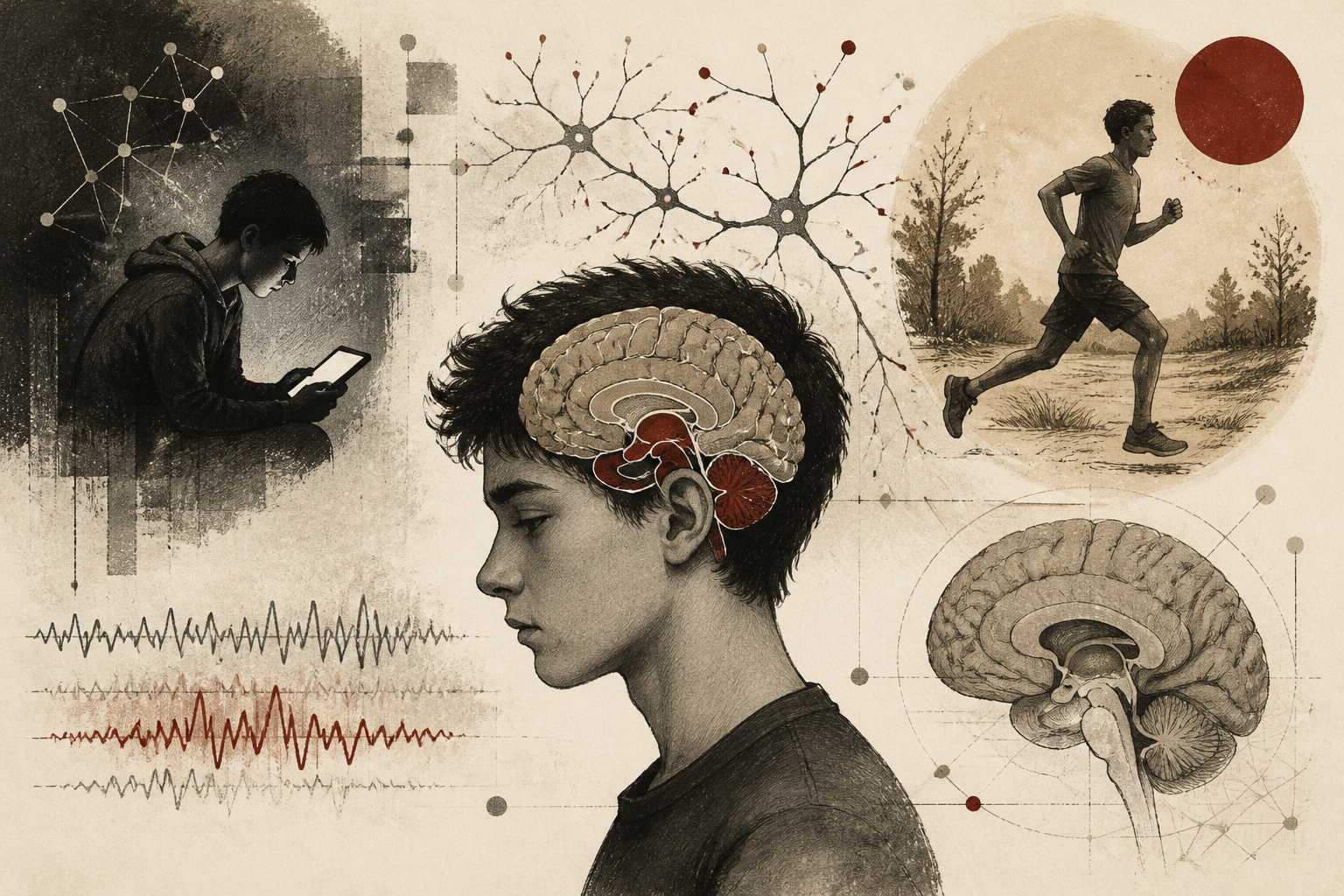
The transition from childhood to adulthood involves a complex orchestration of biological processes that refine the brain's architecture. During these formative years, the human brain undergoes significant structural reorganization, primarily characterized by the thinning of the cortex and the pruning of redundant synaptic connections to enhance neural efficiency. However, modern environmental factors—specifically the rise of pervasive digital screen engagement and the decline in physical activity—are introducing new variables into this developmental equation. A recent study highlighted by NeuroscienceNews investigates how these lifestyle factors correlate with grey matter volume in the adolescent brain, suggesting that the choices made during leisure time may have measurable anatomical consequences.
Adolescence represents a critical window of neuroplasticity, where the brain is particularly sensitive to external stimuli. While the genetic blueprint provides the foundation for development, experience-dependent plasticity determines which neural pathways are strengthened and which are phased out. The current research landscape is increasingly focused on how the digital revolution, which occupies a significant portion of a teenager's waking hours, interacts with these biological milestones. By utilizing Magnetic Resonance Imaging (MRI) technology, researchers are now able to see beyond behavioral observations to the underlying structural variations that define the modern teenage experience.
Quantifying Volumetric Shifts in the Developing Brain
The core findings of the study reveal a distinct dichotomy between the neural signatures of high-screen-time individuals and those with higher physical fitness levels. According to the data reported by NeuroscienceNews, adolescents who engage in excessive leisure screen time exhibit reduced grey matter volume in regions traditionally associated with memory and emotional processing, such as the hippocampus and related subcortical structures. This reduction is not merely a sign of accelerated aging but suggests a potential disruption in the typical accumulation of neural tissue during this phase of growth. The inverse relationship between digital consumption and grey matter density raises concerns about the long-term cognitive reserves of a generation raised on high-frequency visual stimulation.
Furthermore, the study indicates that heavy screen use is associated with a specific developmental phenomenon in the frontal regions of the brain. In a typical adolescent, the frontal cortex undergoes a process known as synaptic pruning, where the brain eliminates underused connections to streamline decision-making and executive function. However, the MRI scans suggested that high leisure screen time might actually delay this essential pruning process. This delay implies that the frontal lobe may remain in a more immature state for longer, potentially impacting the development of self-regulation, impulse control, and complex problem-solving skills. The presence of excess, unrefined grey matter in these areas is not an indicator of increased intelligence but rather a sign of developmental stagnation.
The Protective Role of Physical Fitness
In contrast to the negative correlations found with screen time, physical fitness appears to serve as a neuroprotective counter-weight. The research identifies a positive association between cardiorespiratory fitness and grey matter volume in areas critical for cognitive control and motor coordination. Unlike the sedentary nature of digital engagement, physical activity stimulates the release of various growth factors, such as brain-derived neurotrophic factor (BDNF), which supports the health and survival of existing neurons while promoting the growth of new ones. The findings suggest that fitness may help maintain the integrity of the brain’s structural hubs, ensuring that the volume of the grey matter remains optimal for the demands of adolescent learning.
This structural benefit of exercise extends to the very regions that screen time appears to compromise. While digital habits were linked to smaller volumes in memory centers, higher fitness levels were correlated with more robust tissue density in these same areas. This suggests a push-pull dynamic where lifestyle choices may either facilitate or hinder the brain’s ability to reach its full developmental potential. The dual impact of these factors highlights the importance of a balanced lifestyle, where physical exertion serves as a necessary biological offset to the cognitive load imposed by digital environments.
Mechanisms of Neuroplasticity and Maturation
The methodology employed in this research relies on high-resolution MRI to measure the thickness and volume of the cerebral cortex and subcortical nuclei. By correlating these measurements with self-reported screen time and standardized fitness assessments, researchers can map out the structural landscape of the adolescent brain. The interpretation of these findings hinges on the understanding of the "use it or lose it" principle of neuroplasticity. When teenagers spend hours in passive or repetitive digital consumption, the neural circuits dedicated to deep concentration and physical navigation may be under-stimulated, leading to the observed reductions in volume.
The delay in synaptic pruning in the frontal cortex is particularly noteworthy from a developmental psychology perspective. If the brain fails to prune effectively during the late teens, the transition to adult levels of executive function may be hampered. Pruning is the mechanism by which the brain becomes specialized; without it, the neural network remains noisy and inefficient. The study suggests that the constant, fragmented attention required by social media and short-form video content may prevent the brain from identifying which pathways are truly essential, thus stalling the maturation of the prefrontal cortex.
Limitations and Future Directions
While the findings published by NeuroscienceNews provide a compelling look at brain structure, several limitations must be considered. The cross-sectional nature of much of this research means that while correlations are evident, definitive causation is harder to establish. It is possible, for instance, that individuals with certain brain structures are naturally more inclined toward sedentary screen use or less interested in physical activity. Furthermore, the broad category of "screen time" often fails to distinguish between different types of digital engagement. Passive consumption, such as watching videos, may have a different neurological impact than active engagement, such as coding, digital art, or strategic gaming.
Open questions remain regarding the long-term reversibility of these structural changes. If a teenager reduces their screen time and increases their physical activity, can the brain "catch up" on its pruning and volumetric growth? Longitudinal studies that track the same individuals over several years will be crucial in determining whether these anatomical differences persist into adulthood or if the brain’s inherent plasticity allows for significant recovery. Additionally, research is needed to explore how socioeconomic factors and environmental stressors might interact with screen time and fitness to further shape the developing brain.
The Educational and Clinical Imperative
Understanding the relationship between lifestyle and brain structure is of paramount importance for educators, parents, and healthcare providers. As digital devices become increasingly integrated into the educational curriculum, it is essential to consider the physiological limits of the developing brain. The evidence suggests that a sedentary, screen-heavy adolescence may result in a brain that is anatomically different from those of previous generations—potentially characterized by smaller memory centers and less efficient decision-making circuits.
Ultimately, this research serves as a call for a more holistic approach to adolescent health. Promoting physical fitness is not just a matter of metabolic health; it is a fundamental requirement for optimal brain development. By balancing digital engagement with physical movement, it may be possible to safeguard the structural integrity of the adolescent brain, ensuring that the next generation possesses the cognitive and emotional tools necessary to navigate an increasingly complex world. The findings reinforce the idea that the brain is not a static organ but a dynamic one, constantly being reshaped by the daily habits and physical realities of the individual.
Quick answers
- How does excessive screen time affect the adolescent brain's grey matter?
- High leisure screen time is associated with smaller grey matter volume in memory-related regions and may delay the essential synaptic pruning process in the frontal cortex, potentially slowing down executive function development.
- What role does physical fitness play in brain structure?
- Cardiorespiratory fitness is positively linked to larger grey matter volume in areas responsible for cognitive control and motor coordination, acting as a neuroprotective factor against the effects of sedentary behavior.
- What is synaptic pruning and why is it important for teenagers?
- Synaptic pruning is the natural process where the brain eliminates redundant neural connections to increase efficiency. In teenagers, this primarily occurs in the frontal lobes to refine decision-making and self-regulation.
Editorial Team