Neurobiological Mechanisms of One-Shot Learning Identified in Striatal Endocannabinoids
New research published in Nature Neuroscience clarifies how the striatum uses endocannabinoid signaling to facilitate rapid, single-exposure learning and memory formation.
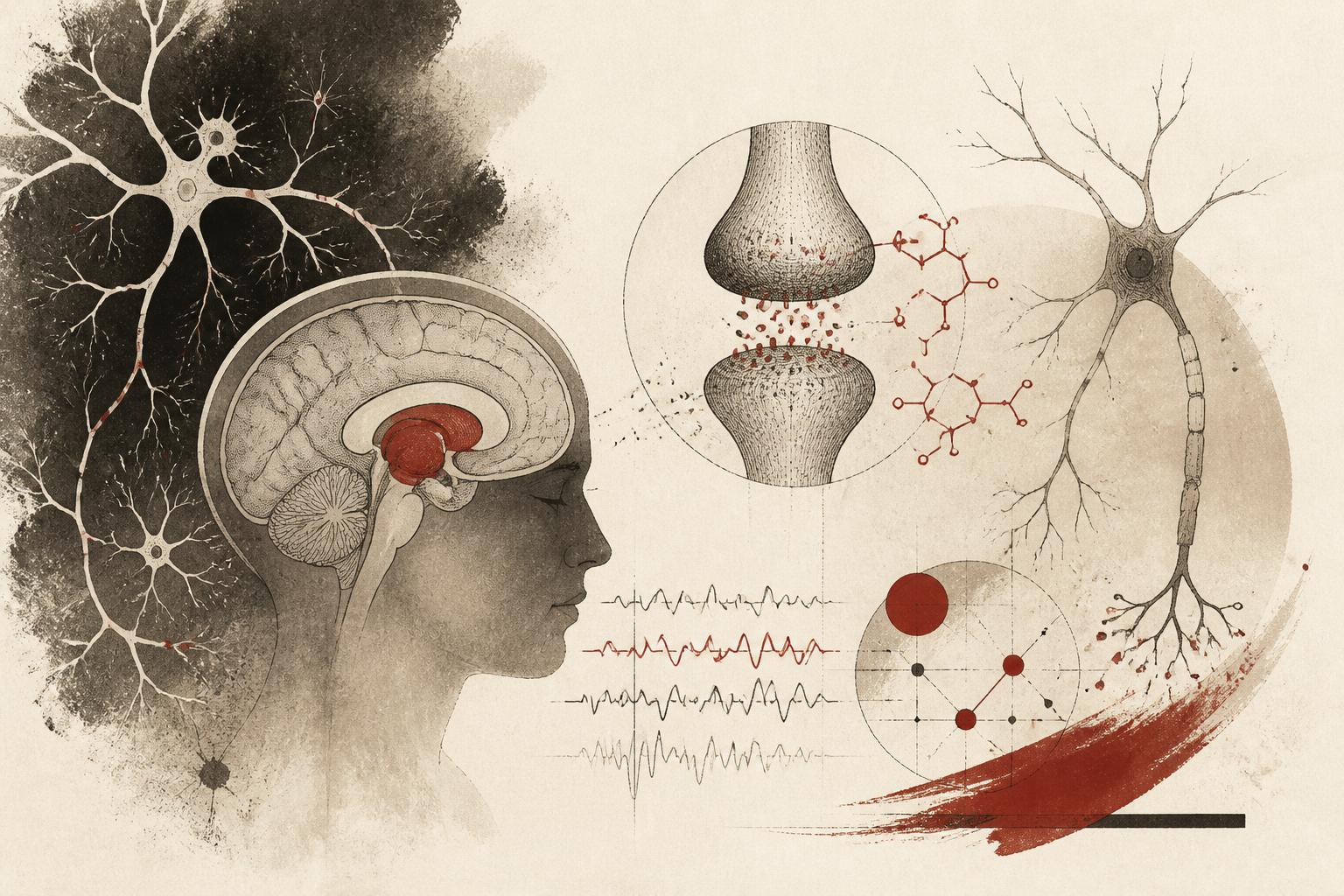
Traditional neuroscientific models of learning often emphasize the necessity of repetition and reinforcement to solidify neural pathways. However, biological organisms frequently demonstrate the capacity for one-shot learning—the ability to internalize a complex association or spatial rule after a single exposure. This rapid cognitive adaptation is essential for survival in volatile environments but has long remained a mechanistic mystery within the field of behavioral neuroscience. A recent study published in Nature Neuroscience titled "Striatal endocannabinoids drive one-shot learning" provides a critical breakthrough, identifying a specific chemical signaling pathway within the brain’s striatum that serves as the catalyst for this immediate acquisition of knowledge.
The research, conducted through rigorous experimental protocols and documented in Nature Neuroscience, shifts the focus from the hippocampus—traditionally viewed as the primary seat of spatial and episodic memory—to the striatum. The striatum is a major component of the basal ganglia, widely known for its role in motor control, habit formation, and reward processing. By investigating the molecular underpinnings of how the striatum responds to novel environmental cues, the researchers have uncovered a pivotal role for the endocannabinoid system, specifically through the action of signaling molecules that modulate synaptic strength in real-time. This discovery suggests that the brain possesses a dedicated "fast-track" for learning that bypasses the slower, iterative processes typically associated with procedural memory.
The Role of Endocannabinoids in Neural Plasticity
To understand the significance of these findings, one must first consider the function of the endocannabinoid system within the mammalian brain. Endocannabinoids are lipid-based retrograde neurotransmitters that bind to cannabinoid receptors. Unlike classical neurotransmitters that flow from a presynaptic neuron to a postsynaptic one, endocannabinoids are often synthesized on-demand by the postsynaptic neuron and travel backward across the synapse to inhibit further neurotransmitter release. This mechanism, known as retrograde signaling, acts as a sophisticated feedback loop that fine-tunes synaptic efficacy. In the context of the Nature Neuroscience study, this system appears to be the primary engine driving the rapid synaptic changes required for one-shot learning.
The researchers observed that when an organism encounters a significant new stimulus or environmental configuration for the first time, there is a localized surge in endocannabinoid activity within the striatum. This surge triggers a form of long-term depression (LTD) or potentiation depending on the specific circuit involved, effectively "locking in" the neural representation of the event. This molecular signature allows the striatum to distinguish between routine, repetitive actions and novel, high-stakes information that requires immediate retention. Without this endocannabinoid intervention, the brain would likely treat the new information as noise, requiring multiple exposures before the signal is deemed important enough to store in long-term memory.
Experimental Findings and Methodological Rigor
The methodology employed in the study involved a combination of sophisticated optogenetics, pharmacological interventions, and behavioral assays designed to isolate the effects of endocannabinoid signaling. By using mice as a model organism, the researchers were able to monitor real-time neural activity during tasks that required the animals to learn a location or a sequence after only one trial. In control groups, the animals successfully navigated the new challenges after a single exposure, demonstrating classic one-shot learning behavior. However, when the researchers chemically or genetically blocked the endocannabinoid receptors in the striatum, this ability was significantly impaired. The mice could still learn the tasks over time through repetition, but the specific capacity for immediate, single-trial acquisition vanished.
Further analysis revealed that the endocannabinoid signaling was particularly active in the dorsolateral and ventral regions of the striatum. These areas are integrated into circuits that process sensory-motor information and reward-related cues. The study utilized advanced imaging techniques to visualize the release of endocannabinoids, confirming that the timing of the release coincided exactly with the moment of discovery during the learning task. This temporal precision underscores the fact that one-shot learning is not a generalized state of high plasticity, but rather a targeted event-driven response to specific environmental feedback. The researchers demonstrated that by artificially stimulating these receptors, they could potentially enhance the speed of acquisition, further proving the causal link between the chemical signal and the cognitive outcome.
Limitations and Future Directions in Cognitive Neuroscience
While the findings published in Nature Neuroscience represent a major leap forward, they also highlight several open questions regarding the architecture of human memory. The primary limitation of the current study lies in its focus on the striatum in isolation. While the striatum is clearly a driver of one-shot learning for certain tasks, it does not act alone. The brain is a highly networked organ, and it is likely that the striatum communicates with the prefrontal cortex and the hippocampus to integrate these rapid memories into a broader cognitive framework. Future research will need to map these inter-regional dialogues to understand how a "one-shot" motor or spatial memory in the striatum becomes an episodic memory that can be consciously recalled.
Furthermore, the study raises questions about the variability of one-shot learning across individuals. In humans, the efficacy of the endocannabinoid system can be influenced by genetic factors, age, and even external substances. If the striatal endocannabinoid pathway is the primary gatekeeper for rapid learning, it stands to reason that fluctuations in this system could explain why some individuals are "faster learners" than others in specific contexts. The academic community must now explore whether these mechanisms are equally applicable to abstract conceptual learning as they are to the spatial and motor tasks observed in the laboratory setting.
Implications for Educational and Clinical Psychology
The identification of a specific molecular driver for rapid learning has profound implications for both pedagogical theory and clinical practice. In educational psychology, the concept of the "teachable moment"—a brief window where a student is uniquely receptive to new information—may have a literal neurobiological basis in striatal endocannabinoid release. Understanding the conditions that trigger this surge could help educators design curricula that maximize the likelihood of one-shot learning, potentially reducing the need for the rote memorization that characterizes much of modern schooling.
From a clinical perspective, these findings offer a new lens through which to view neurodevelopmental and neurodegenerative disorders. Conditions such as Parkinson’s disease or Huntington’s disease, which primarily affect the striatum, are often accompanied by cognitive deficits in learning and flexibility. If the endocannabinoid pathway is compromised in these patients, it may explain their difficulty in adapting to new environments or routines. Moreover, this research provides a potential target for pharmacological interventions aimed at treating memory impairments. By modulating the endocannabinoid system, it may eventually be possible to restore or enhance the brain's ability to form immediate associations, offering hope for those suffering from cognitive decline. As Zeit Psychology Online University continues to monitor these developments, it is clear that the intersection of molecular biology and behavioral psychology is entering a new era of precision, where the act of learning is no longer viewed as a mystery, but as a manageable biological process.
Quick answers
- What is one-shot learning in neuroscience?
- One-shot learning is the ability of an organism to acquire and retain new information or associations after only a single exposure, rather than through repeated practice.
- How do endocannabinoids affect the striatum during learning?
- In the striatum, endocannabinoids act as retrograde signals that adjust synaptic strength, allowing the brain to rapidly encode novel environmental information into long-term memory.
- What happened when researchers blocked endocannabinoid receptors?
- According to the study in Nature Neuroscience, blocking these receptors eliminated the ability for one-shot learning, although subjects could still learn via repetitive reinforcement.
Rewritten by Zeit editorial AI. Based on original reporting at Nature Neuroscience.