Neurobiological Basis of Mathematical Learning Challenges Identified in Stanford Study
Stanford researchers reveal that persistent math difficulties in children stem from neural differences in strategy adaptation and cognitive flexibility rather than simple rote memorization.
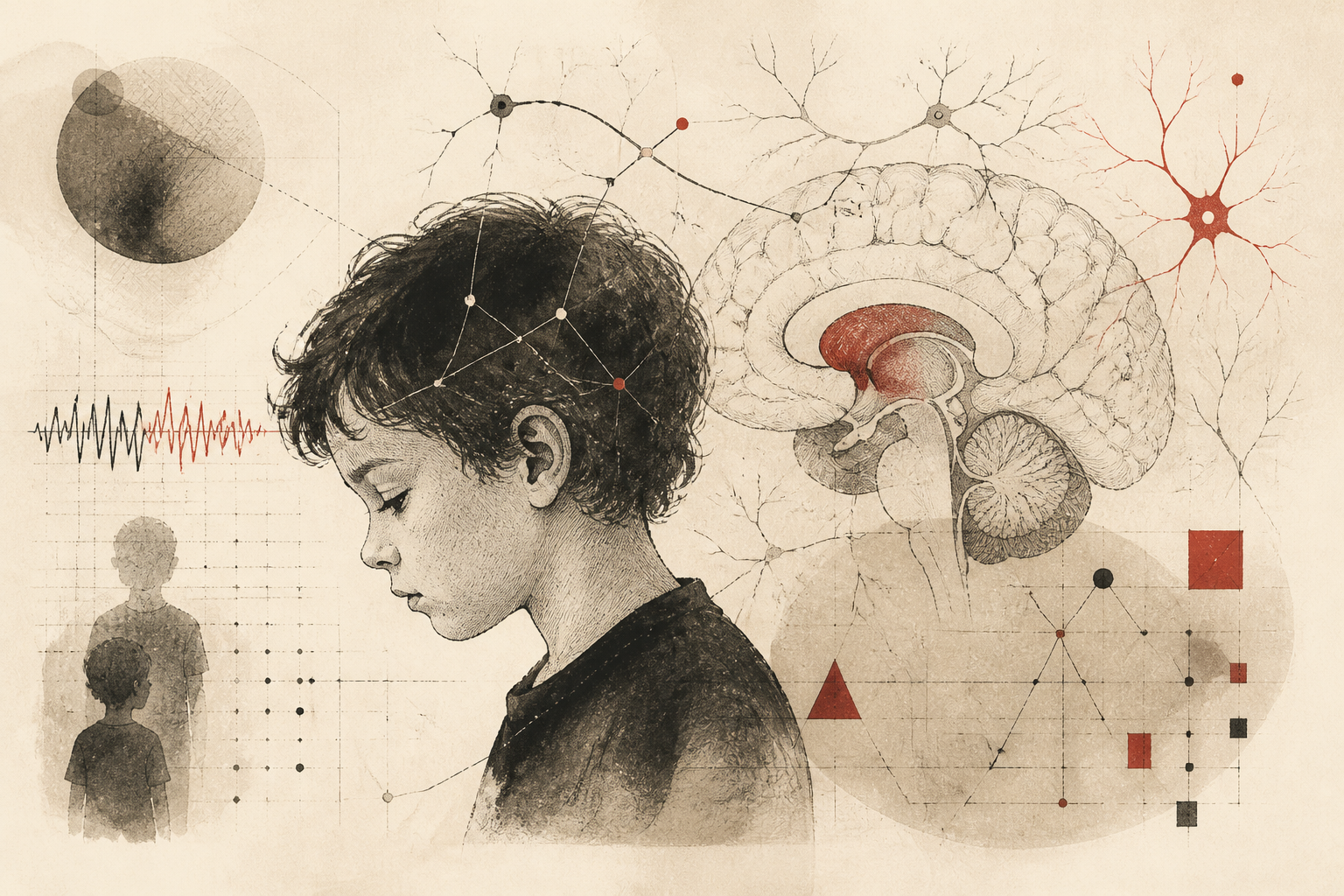
The acquisition of mathematical proficiency is a cornerstone of early childhood development, serving as a critical predictor for long-term academic and professional success. However, for a significant percentage of the population, mastering numerical concepts remains an elusive challenge. According to a recent investigation conducted by researchers at Stanford University and reported by ScienceDaily, the underlying cause for these persistent struggles may be rooted in specific neurobiological differences. The study indicates that children with developmental dyscalculia—a learning disorder that affects a person's ability to understand, learn, and perform math and number-based operations—exhibit distinct patterns of brain activity that hinder their ability to adapt problem-solving strategies in real-time. This discovery shifts the academic focus from simple memorization deficits toward a more complex understanding of cognitive flexibility and neural management.
The Mechanisms of Cognitive Strategy Adaptation
Traditional educational perspectives often attribute mathematical failure to a lack of practice or poor memory. However, the Stanford research team suggests that the issue is significantly more nuanced, involving the brain's executive control over strategy selection. In the context of mathematics, strategy adaptation refers to the ability to transition from basic techniques, such as counting on fingers, to more advanced mental retrieval methods as problems become more complex. Most children naturally progress toward more efficient strategies as they gain experience. The study found that children with developmental dyscalculia do not follow this typical trajectory. Instead, they remain tethered to less efficient, rudimentary methods even when presented with problems that necessitate more sophisticated cognitive tools. This inability to switch strategies is not merely a matter of preference but appears to be a systemic failure in the brain's ability to evaluate the difficulty of a task and deploy the appropriate mental resources.
Through rigorous observation, the researchers noted that these children were significantly slower to transition between different types of mathematical operations. When the difficulty of a task increased, their response was not to intensify their cognitive efforts or shift their approach, but rather to persist with failing methods. This lack of responsiveness to changes in task difficulty suggests a fundamental breakdown in the feedback loop between problem perception and strategy execution. Over the course of the longitudinal observation, these children also showed a diminished capacity to improve their approach over time, indicating that the traditional 'practice makes perfect' adage may not apply in the same way to those with dyscalculia without targeted intervention.
Neural Predictors of Mathematical Ability
To understand the physiological underpinnings of these behavioral observations, the researchers utilized advanced neuroimaging techniques to monitor brain activity during problem-solving sessions. The data revealed that distinct patterns of activation within specific brain regions were consistently linked to the children's mathematical difficulties. Specifically, the study identified anomalies in the neural pathways responsible for managing executive functions and working memory. These patterns were so consistent that the researchers were able to use them to predict certain math-related abilities in the participants. This predictive capability marks a significant advancement in the field of educational neuroscience, as it suggests that mathematical aptitude is not just a result of environmental factors but is deeply intertwined with how the brain processes and organizes information.
Furthermore, the neuroimaging data highlighted a lack of synchronization between the regions of the brain that handle numerical symbols and those responsible for high-level decision-making. In neurotypical children, these regions work in concert to facilitate fluid problem-solving. In children with dyscalculia, however, the communication between these areas appeared fragmented. This fragmentation explains why a child might understand a mathematical concept in isolation but fail to apply it when the context changes or the difficulty increases. The study suggests that the brain's management system—the internal 'conductor' that directs focus and strategy—is functioning differently in these individuals, leading to a persistent struggle that defies traditional pedagogical approaches.
Limitations and Theoretical Implications
While the findings from Stanford provide a compelling look into the neurobiology of dyscalculia, the researchers emphasize that there are still many unanswered questions. One primary limitation is the degree to which these neural patterns are fixed versus malleable. It remains to be seen whether targeted cognitive training or specialized educational interventions can 'rewire' these pathways to improve strategy switching and mathematical performance. Additionally, the study focused on a specific age group, leaving open the question of how these brain differences evolve as a child enters adolescence and adulthood. Does the brain eventually compensate for these deficits through alternative pathways, or do the difficulties become more entrenched as mathematical concepts become more abstract?
Another area for future inquiry involves the intersection of dyscalculia with other learning disorders, such as dyslexia or ADHD. The researchers noted that the neural patterns identified in this study share some commonalities with other executive function disorders, suggesting that mathematical difficulty might be a specific manifestation of a broader cognitive flexibility issue. Determining the specificity of these brain patterns is crucial for developing diagnostic tools that can accurately distinguish between different types of learning challenges. The goal for future research will be to move from observation to intervention, using these neural insights to create personalized learning plans that cater to the specific cognitive architecture of the individual student.
Educational Significance and Future Directions
Understanding that math struggles are rooted in brain-based strategy management has profound implications for the classroom. For decades, students who struggled with math were often viewed through a lens of effort or basic intelligence. This study reframes dyscalculia as a specific neurobiological condition characterized by a lack of cognitive flexibility. By recognizing that these students are not simply 'slow learners' but are dealing with a brain that manages problem-solving differently, educators can move away from repetitive drills and toward strategies that emphasize cognitive switching and flexibility. This might include explicit instruction on when and how to change strategies, rather than just how to perform a single operation.
Ultimately, the Stanford study serves as a call to action for the integration of neuroscience and education. By identifying the neural signatures of mathematical struggle, the scientific community is providing a roadmap for more empathetic and effective teaching methods. As we continue to uncover the mysteries of the developing brain, the hope is that every child, regardless of their initial neural configuration, can be provided with the tools they need to navigate the world of numbers with confidence. The research underscores the fact that mathematical ability is not a singular trait but a complex interaction of various cognitive systems, and supporting those systems requires a deep understanding of the biological foundations of learning.
Quick answers
- What is developmental dyscalculia?
- It is a learning disorder that specifically impairs a child's ability to process numbers, learn math facts, and perform mathematical calculations effectively.
- How does the brain of a child with math difficulties differ from others?
- According to Stanford researchers, these children show differences in how their brains manage problem-solving strategies, exhibiting less flexibility and slower adaptation when tasks become difficult.
- Can brain activity predict math ability?
- Yes, the study found that distinct patterns of brain activity were linked to mathematical struggles and could be used to predict a child's performance in math-related tasks.
Editorial Team