Neural Substrates of Perceptual Plasticity: How Single Neurons Encode Rapid Visual Learning
A groundbreaking study published in Nature Neuroscience reveals how individual human neurons rapidly adjust their firing patterns to integrate new visual information into perception.
In the complex architecture of the human brain, the ability to rapidly adapt to new environmental information is not merely a convenience but a fundamental requirement for survival. While neuroscience has long understood that the brain is capable of neuroplasticity, the precise cellular mechanisms that allow an adult human to learn a new visual stimulus in seconds and subsequently alter their perception of the world have remained elusive. A significant new study published in the journal Nature Neuroscience, titled "Single-neuron encoding of rapidly learned visual information reshapes human perception," provides a rare and detailed look into this process. By recording the activity of individual neurons in the human brain, researchers have demonstrated that the transition from ignorance to recognition is marked by a profound and rapid reorganization of neural firing patterns, effectively bridging the gap between cellular activity and subjective experience.
The Architecture of Perceptual Adaptation
Traditional models of visual processing often depicted the brain as a relatively static hierarchy where sensory input was processed through fixed filters. However, modern cognitive science acknowledges that our perception is heavily influenced by prior knowledge and recent experience. The challenge for researchers has been to identify where and how this "prior knowledge" is encoded at the level of the individual cell. Most human brain research relies on non-invasive techniques like functional Magnetic Resonance Imaging (fMRI), which, while valuable, aggregates the activity of millions of neurons into a single pixel or voxel. To understand the granular mechanics of learning, one must observe the behavior of single neurons.
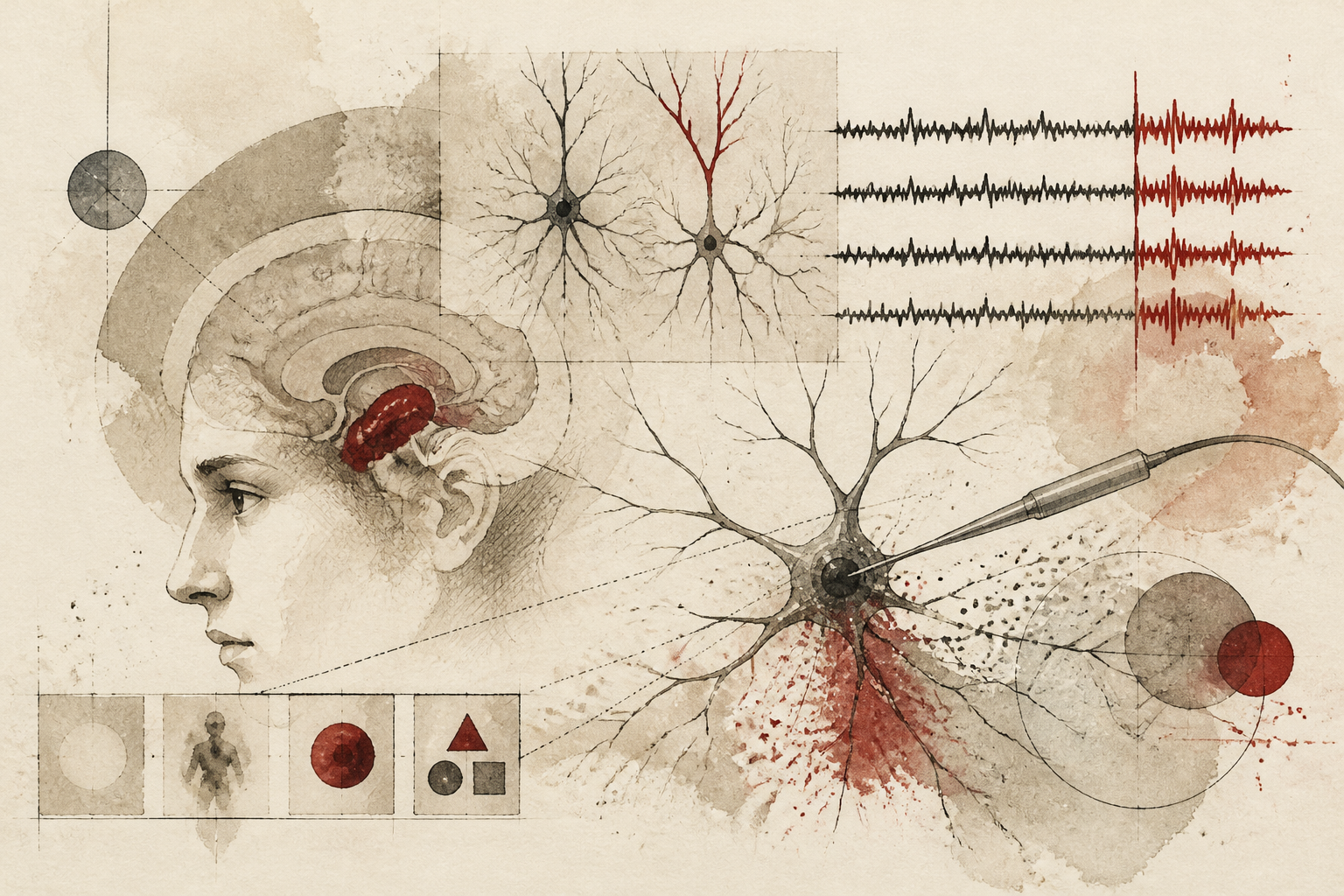
The Nature Neuroscience study utilized a unique clinical opportunity involving patients undergoing intracranial monitoring for epilepsy treatment. By placing microelectrodes in specific brain regions, including the medial temporal lobe—an area critical for memory and recognition—the researchers were able to eavesdrop on the electrical conversations of single cells as the participants engaged in visual learning tasks. This methodology allows for a level of temporal and spatial resolution that is otherwise impossible in human subjects, providing a direct link between the firing of a single neuron and the participant’s ability to identify a previously unfamiliar image.
Quantifying the Speed of Neural Reorganization
One of the most striking findings of the research is the sheer speed at which the human brain can rewire its representational logic. The study found that neurons did not require hundreds of repetitions to develop a preference for a new stimulus. Instead, the encoding occurred almost instantaneously. When participants were introduced to novel visual stimuli, certain neurons that were previously unresponsive began to fire vigorously in response to the new images. This suggests that the brain maintains a pool of "flexible" neurons or a highly plastic synaptic framework ready to be recruited for new information.
Furthermore, the researchers discovered that this neural activity was not just a passive record of the image but was directly correlated with the participants' perceptual accuracy. As the firing patterns became more distinct and stable, the participants' ability to correctly identify and categorize the images improved. This indicates that the reshaped neural activity is the functional driver of the change in perception. The study provides empirical evidence that the internal representation of a stimulus is not a static photograph but a dynamic construct that is updated in real-time as the brain integrates new data. This rapid encoding appears to be a hallmark of the human cognitive system, allowing for the nearly instantaneous recognition of faces, objects, and environments that we encounter for the first time.
Mechanisms of Cellular Encoding and Perception
To understand how these single neurons influence perception, the study employed sophisticated statistical models to decode the information contained within the spike trains of the recorded cells. The researchers found that the neural population shifted its "representational space" to accommodate new information. In simpler terms, the brain creates a unique neural signature for new visual data that is distinct from existing memories but integrated into the broader network. This process involves a balance between specificity—recognizing a unique image—and generalization—understanding how that image fits into known categories.
Specifically, the data showed that the neurons in the medial temporal lobe, particularly within the hippocampus and amygdala, played a pivotal role in this process. These areas are traditionally associated with memory formation and emotional processing, but the study highlights their essential function in visual perception. The research suggests that the feedback loop between the memory centers and the visual cortex is much tighter than previously thought. When we learn something new, the memory centers do not just store the information for later; they actively reshape the way the visual system processes incoming signals, effectively "tuning" our eyes to see the world through the lens of our most recent experiences.
Limitations and Future Directions in Neuroplasticity
While the findings represent a major leap forward, the researchers remain cautious about the generalizations that can be drawn from a specific patient population. Because the data was collected from individuals with epilepsy, there is a technical question of whether their neural plasticity operates identically to that of the general population, though the regions studied were often outside the primary seizure foci. Additionally, the study focused on rapid visual learning; it remains to be seen if other sensory modalities, such as audition or somatosensation, follow the exact same single-neuron encoding rules.
Another open question involves the long-term stability of these rapid neural changes. The study demonstrated that the brain can learn in seconds, but it did not track these specific neurons over weeks or months to see if the encoding remains stable or if the neurons are eventually recycled for new tasks. Understanding the "forgetting curve" at a cellular level is the natural next step for this line of inquiry. Furthermore, while the study identified *that* the neurons change, the exact biochemical processes—the specific neurotransmitters and synaptic changes—remain a subject for future molecular research.
The Broader Implications for Cognitive Science
The significance of this research extends beyond the confines of laboratory neurobiology. By proving that single-neuron activity is the bedrock of perceptual change, the study offers a new framework for understanding learning disorders and cognitive decline. If we can identify the specific patterns of neural firing that lead to successful learning, we may eventually develop targeted interventions—whether through neurostimulation or specialized behavioral therapies—to assist those who struggle with rapid information processing.
Moreover, this research challenges the philosophical distinction between "seeing" and "knowing." It suggests that our perception is never truly objective; instead, it is an ever-shifting mosaic informed by the rapid-fire adaptations of individual neurons. Every new piece of information we encounter literally changes the way our brain perceives the next moment. For the academic community at Zeit Psychology Online University, these findings reinforce the importance of an integrated approach to psychology and neuroscience, highlighting that the smallest units of the brain are responsible for the largest shifts in human consciousness and behavior. As we continue to map the human connectome, the role of the single neuron remains a vital frontier in our quest to understand the essence of the human mind.
Quick answers
- How does the brain learn new visual information so quickly?
- Individual neurons in the medial temporal lobe can rapidly adjust their firing patterns to create a unique neural signature for new stimuli, often after just one exposure.
- What is the significance of single-neuron recording in humans?
- It allows researchers to see the granular electrical activity of specific cells, providing higher resolution than fMRI and linking cellular behavior directly to subjective perception.
- Can learning a new image change how I see the world?
- Yes; the study indicates that once a neuron encodes new information, it reshapes the brain's representational space, altering how sensory input is interpreted.
Rewritten by Zeit editorial AI. Based on original reporting at Nature Neuroscience.