Neural Circuits and Sleep Homeostasis: The Role of the Half-Center Oscillator
Researchers have identified a specialized neural circuit in the brain that functions as a half-center oscillator to regulate the physiological buildup and release of sleep pressure.
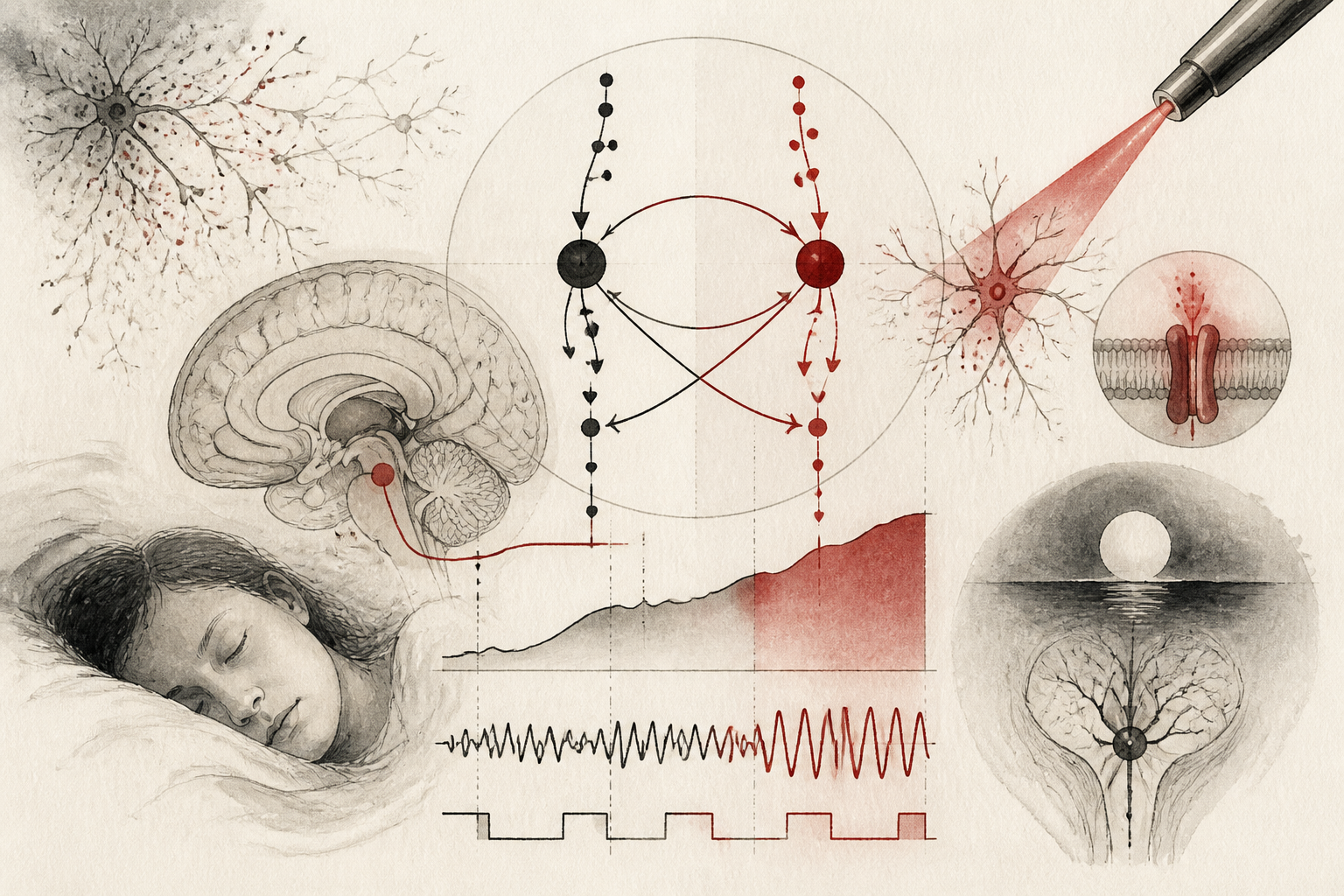
Understanding the biological mechanisms that govern the transition between wakefulness and sleep remains one of the most profound challenges in contemporary neuroscience. While it is well-established that the need for sleep accumulates during periods of wakefulness—a process known as sleep homeostasis or sleep pressure—the specific neural architecture responsible for tracking and discharging this pressure has long eluded precise definition. A recent study published in Nature Neuroscience, titled "A half-center oscillator regulates sleep pressure," provides a significant breakthrough in this field. The researchers have identified a specialized neural circuit that functions as a half-center oscillator, acting as a critical regulator of the homeostatic sleep drive. This finding not only clarifies how the brain monitors its own need for rest but also offers a template for understanding the rhythmic nature of fundamental biological states.
The Mechanisms of Sleep Homeostasis and Neural Oscillations
The concept of sleep pressure is central to our understanding of human and animal physiology. Unlike the circadian rhythm, which is an internal clock synchronized to light and dark cycles, sleep homeostasis is a compensatory mechanism. The longer an organism remains awake, the more the pressure to sleep builds, eventually reaching a threshold that triggers the onset of slumber. Once sleep occurs, this pressure is gradually discharged. Historically, researchers have sought the 'somnostat'—the biological equivalent of a thermostat—that senses this pressure. The Nature Neuroscience study moves the conversation forward by shifting focus toward the dynamics of specific neural populations. The researchers focused on a configuration known as a half-center oscillator, a circuit pattern where two sets of neurons inhibit each other to produce rhythmic, alternating activity. While commonly associated with motor functions like walking or breathing, this study demonstrates that such an architecture is also instrumental in the cognitive and physiological regulation of sleep states.
Identifying the Half-Center Oscillator in Sleep Regulation
To investigate these mechanisms, the research team utilized advanced neuroimaging and optogenetic techniques to map the activity of discrete neuronal clusters. They identified a specific subset of neurons that display a reciprocal inhibitory relationship, the hallmark of a half-center oscillator. By monitoring these cells across different states of arousal, the team observed a distinct pattern: one group of neurons remains active during wakefulness, effectively tracking the duration of the alert state, while the opposing group becomes dominant during sleep. The transition between these two states is not merely a passive shift but an active, regulated process driven by the rhythmic interplay of these neurons. The study demonstrates that as sleep pressure increases, the inhibitory balance within this oscillator shifts, eventually tipping the system toward sleep. This provides a clear structural explanation for how the brain 'counts' time spent awake and translates that information into a physiological command to rest.
Methodological Approaches and Neuronal Mapping
The methodology employed in the study involved a combination of high-resolution electrophysiology and behavioral monitoring. By recording the firing rates of neurons within the identified oscillator, the researchers were able to correlate specific neural spikes with the accumulation of sleep-inducing substances in the brain. The study utilized animal models to manipulate these circuits with high precision. Through optogenetic stimulation—using light to turn specific neurons on or off—the team could artificially induce sleep pressure or, conversely, suppress the need for sleep even after prolonged wakefulness. This level of control confirmed that the half-center oscillator is not merely a bystander in the sleep process but is the primary driver of the homeostatic response. The findings suggest that the oscillator functions by integrating various biochemical signals that accumulate during wakefulness, such as adenosine, and converting these chemical inputs into electrical rhythms that dictate the state of the brain.
Interpretation of Rhythmic Stability and Transition
The implications of a half-center oscillator in sleep regulation are profound for our understanding of neural stability. In a traditional excitatory system, there is a risk of runaway activity; however, the reciprocal inhibition found in a half-center oscillator provides a built-in feedback loop that ensures stability. The researchers argue that this architecture allows the brain to maintain a stable state of wakefulness until a specific threshold is met, at which point the system undergoes a rapid and decisive switch to sleep. This explains why sleep onset often feels like a distinct 'flip of a switch' rather than a slow, linear decline. The study suggests that the oscillator provides the necessary tension between two mutually exclusive states, ensuring that the brain does not attempt to be both awake and asleep simultaneously, which could lead to significant cognitive impairment or neurological dysfunction.
Limitations and Open Questions in Sleep Science
While the identification of this oscillator is a landmark achievement, the researchers acknowledge several limitations and areas for future inquiry. First, while the study establishes the circuit's role in regulating sleep pressure, the exact biochemical triggers that reset the oscillator during sleep are not yet fully understood. It remains unclear how different types of sleep, such as REM (Rapid Eye Movement) and non-REM sleep, interact with this specific circuit. Furthermore, the study primarily utilized animal models, and while the fundamental architecture of the mammalian brain is highly conserved, further research is required to confirm the presence and location of an identical half-center oscillator in humans. There is also the question of how external factors—such as chronic stress, caffeine consumption, or artificial light—interfere with the oscillator's natural rhythm. Understanding these interactions will be crucial for developing clinical interventions for sleep disorders.
Why the Somnostat Discovery Matters
The discovery of a half-center oscillator for sleep pressure has significant implications for both basic science and clinical medicine. From a theoretical perspective, it expands the known roles of rhythmic neural circuits beyond motor control and into the realm of state-dependent behavior and consciousness. Clinically, this research provides a new target for treating insomnia and other sleep-related pathologies. If the specific neurons within this oscillator can be targeted pharmacologically, it may be possible to develop more effective sleep aids that mimic the natural discharge of sleep pressure rather than simply sedating the patient. Furthermore, this research underscores the importance of sleep as a biologically mandated process, driven by sophisticated neural hardware. As Zeit Psychology Online University continues to explore the intersection of neurology and behavior, the identification of the brain's internal 'sleep regulator' stands as a testament to the intricate balance required to maintain cognitive health in an increasingly sleepless world.
Quick answers
- What is a half-center oscillator in the context of sleep?
- It is a neural circuit where two sets of neurons inhibit each other to create a rhythmic, alternating balance, now discovered to regulate the buildup of sleep pressure.
- How does the brain track the need for sleep?
- The brain uses a homeostatic mechanism that monitors the duration of wakefulness, and this study suggests a specific neural oscillator acts as the sensor and regulator for this pressure.
- What are the clinical implications of the Nature Neuroscience sleep study?
- Identifying this specific circuit allows for the potential development of targeted treatments for sleep disorders that work with the brain's natural regulatory rhythms.
Rewritten by Zeit editorial AI. Based on original reporting at Nature Neuroscience.