Neural 'Brake' Mechanism Identified as Potential Pathway for Chronic Pain Resolution
Researchers have identified a brain-based circuit that acts as a brake on chronic nerve pain, offering a non-opioid target for future therapeutic interventions.
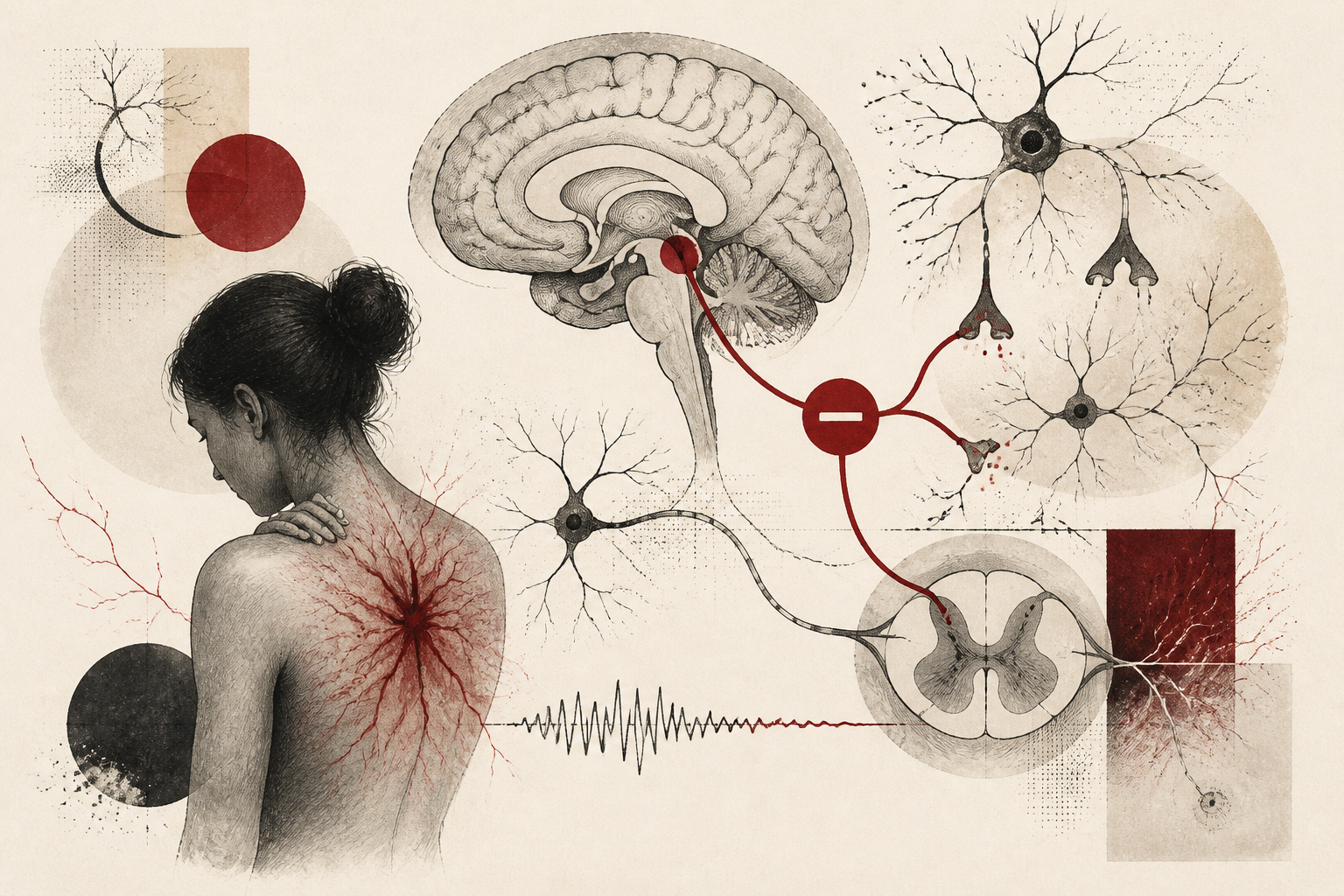
Current pharmacological interventions for chronic neuropathic pain often rely on systemic opioid treatments, which, while effective in the short term, carry significant risks of dependency and adverse side effects due to their broad impact on the central nervous system. A recent breakthrough reported by ScienceDaily highlights a fundamental shift in this paradigm. Researchers have identified a specific neural "brake" located within the brain that appears capable of silencing chronic pain circuits. This discovery, centered on the modulation of overactive neural pathways, suggests that the brain possesses internal regulatory mechanisms that can be harnessed to provide targeted relief without the systemic drawbacks of traditional analgesics.
Chronic pain is not merely a prolonged version of acute pain; it is a complex, maladaptive state where the nervous system remains in a state of high reactivity even after an initial injury has healed. In many patients, this manifests as neuropathic pain, characterized by hypersensitivity to touch and spontaneous sensations of discomfort. The recent study utilized murine models to map the specific circuitry responsible for this persistent state, discovering that by stimulating a particular subset of inhibitory neurons, the overactive signaling associated with chronic pain could be effectively suppressed. This finding represents a significant step forward in understanding the neurobiological underpinnings of pain persistence and resolution.
Neurocircuitry and the Mechanism of Pain Suppression
The fundamental mechanism identified by the research team involves a discrete cluster of neurons that function as an inhibitory gateway. In a healthy physiological state, these neurons regulate the flow of sensory information, ensuring that non-threatening stimuli are not interpreted as painful. However, in cases of chronic nerve injury, these regulatory circuits often fail or become dormant, leading to a state of neuronal hyper-excitability. The study demonstrated that by manually activating this "brake" through precise neuro-technological methods, the researchers could reset the pain threshold of the mice to near-normal levels.
Unlike traditional pain medications that act globally on opioid receptors throughout the body—including those responsible for respiratory function and reward systems—this newly discovered circuit appears to be highly specialized. By calming only the overactive circuits associated with the chronic pain state, the intervention avoided the sedation and motor impairments often seen with high-dose analgesics. The precision of this biological brake suggests that the brain has a built-in architecture for pain control that is distinct from the body’s general stress response. The researchers focused on how these neurons release specific neurotransmitters that quiet the "firing" of the pain-signaling cells, effectively providing a biological off-switch for sensations that have become pathological.
Methodological Approaches and Comparative Data
To reach these conclusions, the scientists employed a combination of advanced neuroimaging and optogenetics, a technique that uses light to control the activity of genetically modified neurons. By observing the real-time activity of the brain while the subjects were exposed to various sensory inputs, the team was able to isolate the exact moment when the pain circuit became hyperactive. Once the specific inhibitory neurons were identified, the researchers used light-based stimulation to activate them. The results were immediate: mice that previously showed signs of extreme discomfort in response to light touch suddenly exhibited behaviors typical of healthy, pain-free animals.
This methodology allowed the team to differentiate between the processing of acute pain—which serves a protective evolutionary purpose—and chronic pain, which is considered a dysfunction of the nervous system. The data indicated that activating the brake did not eliminate the animal's ability to feel necessary, protective pain, such as the reflex to pull away from a hot surface. Instead, the intervention specifically targeted the "echo" of pain that characterizes chronic conditions. This distinction is critical for clinical application, as a total loss of pain sensation would leave a patient vulnerable to injury, whereas the suppression of chronic, non-functional pain would significantly improve quality of life.
Limitations, Clinical Transitions, and Open Questions
While the findings in mice are robust, several significant hurdles remain before this discovery can be translated into human therapies. The architecture of the human brain is vastly more complex than that of a mouse, and the specific location of the analogous "brake" in humans must be verified through further clinical research. Furthermore, the use of optogenetics is currently restricted to laboratory settings, as it requires genetic modification and the surgical implantation of fiber optics. To apply these findings to human patients, researchers will need to develop non-invasive methods, such as targeted drug delivery or deep brain stimulation, that can achieve the same level of circuit-specific activation.
There are also open questions regarding the long-term efficacy of activating this neural brake. It is currently unknown whether the brain might eventually build a tolerance to this type of stimulation, or if the suppression of chronic pain could have unintended effects on other sensory or emotional processes. Since pain is deeply intertwined with the brain's emotional centers, any intervention that modulates pain circuitry must be carefully screened for impacts on mood, motivation, and cognitive function. The researchers emphasize that while the discovery of the brake is a milestone, the path to a standardized medical treatment will require years of longitudinal studies and human trials to ensure safety and durability.
The Broader Impact on Pain Management and Public Health
The significance of this research lies in its potential to address the global crisis of chronic pain management. For decades, the medical community has struggled to balance the need for effective pain relief with the risks of the opioid epidemic. If a brain-based brake can be activated through precise pharmacological or technological means, it could provide a powerful alternative for millions of people suffering from nerve damage, fibromyalgia, and other persistent pain syndromes. This approach aligns with the growing field of precision medicine, which seeks to treat the underlying biological cause of a symptom rather than simply masking it.
Beyond the clinical implications, this study contributes to a shift in how we perceive chronic pain—not as a psychological symptom, but as a treatable neurological condition. By identifying a physical mechanism for shutting down pain, the research provides hope for patients who have found little relief in current therapeutic options. As science continues to map the intricacies of the human connectome, the discovery of such regulatory circuits offers a roadmap for a future where chronic pain is no longer a lifelong sentence, but a manageable condition resolved through the brain’s own internal architecture. The team's findings, as documented by ScienceDaily, serve as a foundational piece of evidence in the ongoing effort to decouple effective analgesia from the systemic risks of traditional pharmacology.
Quick answers
- What is the recently discovered brain 'brake' for chronic pain?
- It is a specific circuit of inhibitory neurons in the brain that, when activated, can suppress the overactive neural pathways responsible for chronic neuropathic pain.
- How does the brain's pain brake differ from opioid medications?
- Unlike opioids that affect receptors throughout the entire body, this neural brake specifically targets pain-processing circuits in the brain, potentially avoiding side effects like addiction or respiratory depression.
- Can this pain-relief method be used on humans immediately?
- No. The research was conducted on mice using optogenetics. Further studies are needed to locate the human equivalent and develop safe, non-invasive ways to activate it.
Rewritten by Zeit editorial AI. Based on original reporting at ScienceDaily — Mind & Brain.