Multimodal Interventions Surpass General Health Advice in Enhancing Cognitive Resilience
Recent findings demonstrate that structured lifestyle coaching leads to a 55 percent greater improvement in cognitive function for at-risk seniors compared to standard health guidance.
As the global population continues to age, the imperative to identify effective non-pharmacological interventions for cognitive decline has reached a critical threshold. A recent study, reported via ScienceDaily, highlights a significant breakthrough in geriatric psychology and neurology, suggesting that the architecture of lifestyle interventions plays a decisive role in their efficacy. The research indicates that older adults who are predisposed to dementia benefit substantially more from structured, multifaceted lifestyle programs than from the receipt of passive health information. This discovery challenges the conventional reliance on simple public health messaging and suggests that a paradigm shift toward intensive, guided behavioral change may be necessary to preserve brain health in aging populations.
The Limitations of Passive Information Delivery
For decades, the standard approach to preventive geriatric care has centered on the dissemination of general health advice. Clinicians frequently advise at-risk patients to maintain a balanced diet, engage in physical activity, and remain socially active. However, the efficacy of this "advice-only" model has long been questioned by researchers who note the significant gap between knowledge and implementation. The current study addresses this gap by comparing a basic advisory approach with a comprehensive, structured intervention program. While both groups in the study were exposed to the same fundamental health principles, the outcomes were markedly different, suggesting that information alone is an insufficient catalyst for the neurological changes required to mitigate cognitive decline. The researchers sought to determine if the specific delivery mechanism—regular coaching and social scaffolding—could translate lifestyle changes into measurable cognitive gains.
Quantifying the Impact of Structured Support
The findings of the study are particularly striking when viewed through a comparative lens. Participants who engaged in a lifestyle program that integrated exercise, nutrition, cognitive training, and social interaction showed cognitive improvements that were 55 percent greater than those who were merely provided with standard health literature. This disparity underscores a vital principle in cognitive science: the synergy of lifestyle factors is optimized only when supported by a rigorous framework. The data suggest that the intervention group not only adhered more closely to the recommended behaviors but also experienced a compounding effect where each lifestyle pillar—such as diet or exercise—reinforced the others. The 55 percent margin of improvement represents a statistically significant advantage that could mean the difference between maintaining independence and requiring long-term care for individuals at the threshold of cognitive impairment.
The Architecture of Multimodal Interventions
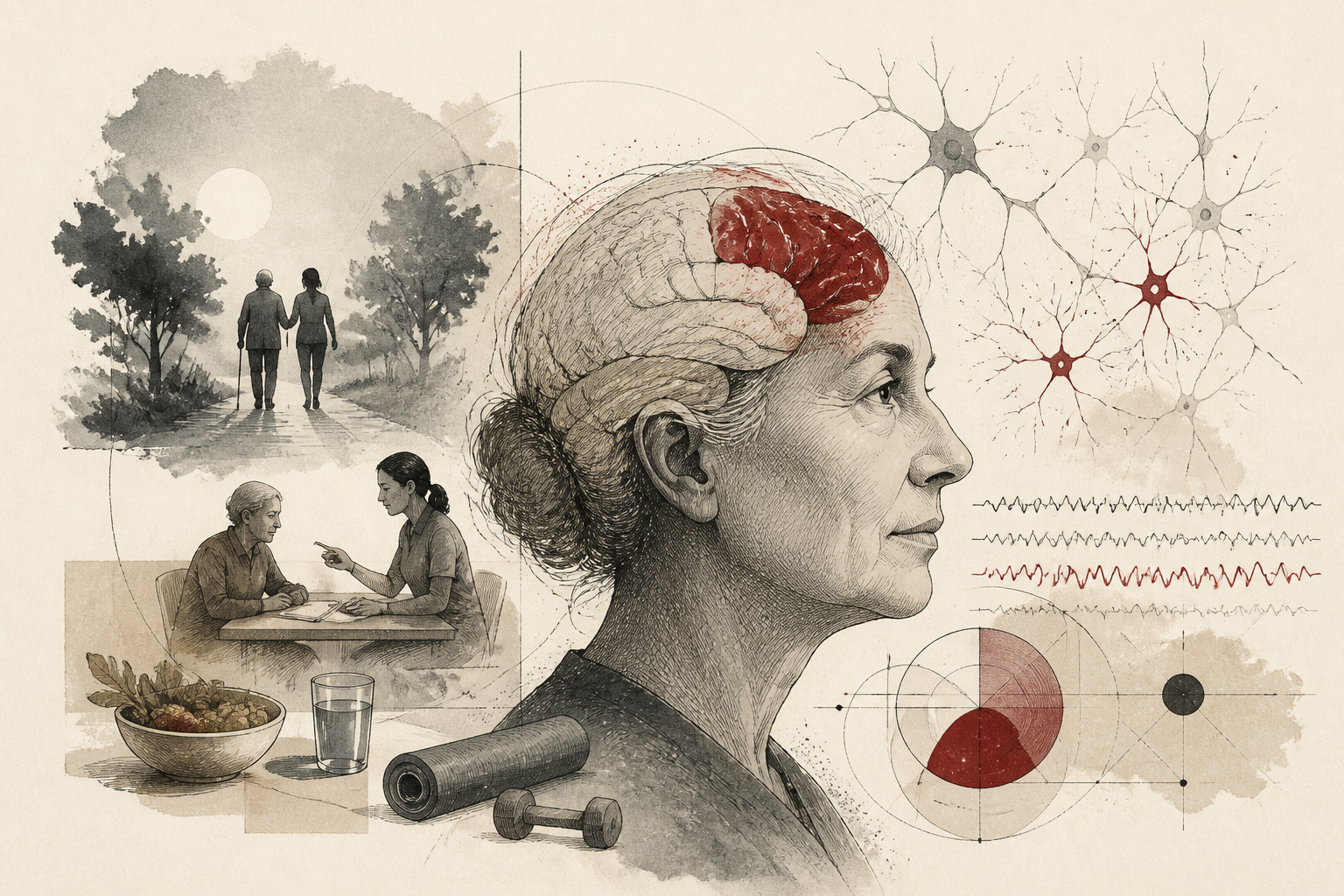
To understand why the structured program was so much more effective, it is necessary to examine the specific mechanisms employed during the study. Unlike the control group, which functioned autonomously, the intervention group participated in a multimodal regimen characterized by four distinct but interconnected pillars. The first, physical exercise, has been shown in previous literature to stimulate neurogenesis and improve vascular health in the brain. The second, nutritional modification, provides the biochemical building blocks necessary for neuroprotection. The third, cognitive training, involves targeted mental exercises designed to enhance neuroplasticity. Finally, social engagement acts as a buffer against the neurodegenerative effects of isolation. The critical differentiator in this study was the role of regular coaching. By providing structured support, the researchers ensured that these activities were not performed in isolation but were part of a cohesive daily routine. This level of oversight appears to facilitate a more profound physiological and psychological adaptation than is possible through self-directed efforts.
Cognitive Plasticity and Behavioral Scaffolding
The interpretation of these results points toward the importance of "behavioral scaffolding" in geriatric interventions. In psychology, scaffolding refers to the support structures provided to help an individual achieve a level of performance that they could not reach independently. By providing coaches and scheduled social sessions, the program reduced the cognitive load required for participants to manage their own health. This is particularly relevant for individuals at risk of dementia, who may already be experiencing subtle deficits in executive function and planning. When the environment is structured to support healthy choices, the brain is freed to benefit from the physiological improvements induced by the lifestyle changes themselves. The study suggests that the 55 percent improvement rate is not merely a result of doing the activities, but of doing them within a sustained, supportive social ecosystem that promotes adherence and reduces the stress of self-management.
Considerations for Implementation and Future Research
While the results are highly encouraging, they also present specific challenges regarding scalability and equity in public health. A significant limitation of structured coaching programs is their cost and the human resources required to implement them on a societal scale. While general health advice is inexpensive to distribute, it is clearly less effective. Therefore, the open question for policymakers and health systems is how to translate these findings into affordable, accessible community programs. Furthermore, the study focused on individuals already identified as being at risk for dementia. Future research is needed to determine if these multimodal interventions provide the same magnitude of benefit for individuals who are currently asymptomatic or those in the later stages of cognitive decline. There is also a need to investigate the long-term durability of these cognitive gains once the intensive coaching period has concluded.
The Strategic Importance of Holistic Brain Health
The implications of this research are profound for the field of geriatric psychology. It reinforces the idea that the aging brain remains remarkably plastic and responsive to environmental stimuli, provided those stimuli are delivered in a coherent and supported manner. As we move away from a model of care that prioritizes medication over lifestyle, this study provides a robust evidentiary basis for investing in comprehensive wellness programs. By demonstrating that structured support can more than double the cognitive benefits of healthy habits, the study provides a roadmap for future interventions. For university researchers and clinicians, the message is clear: to protect the mind, we must do more than inform; we must actively engage, coach, and support the individual within a community-based framework of care. This holistic approach represents the most promising path forward in our collective effort to reduce the global burden of neurodegenerative disease.
Quick answers
- How much better is lifestyle coaching than basic health advice for memory?
- According to the study, structured lifestyle coaching resulted in a 55% greater improvement in cognitive function compared to receiving basic health advice alone.
- What are the four pillars of the successful brain health program?
- The program combined regular physical exercise, healthy nutritional habits, targeted cognitive training, and consistent social engagement.
- Why is coaching more effective than just giving health tips to seniors?
- Coaching provides behavioral scaffolding and structured support, which helps overcome the gap between knowing health facts and implementing them, especially for those with executive function challenges.
Rewritten by Zeit editorial AI. Based on original reporting at ScienceDaily — Mind & Brain.