Microglial Phagocytosis and the Mechanisms of Motor Memory Decay
Researchers identify microglia-mediated myelin pruning as a central biological mechanism driving the forgetting of learned motor skills.
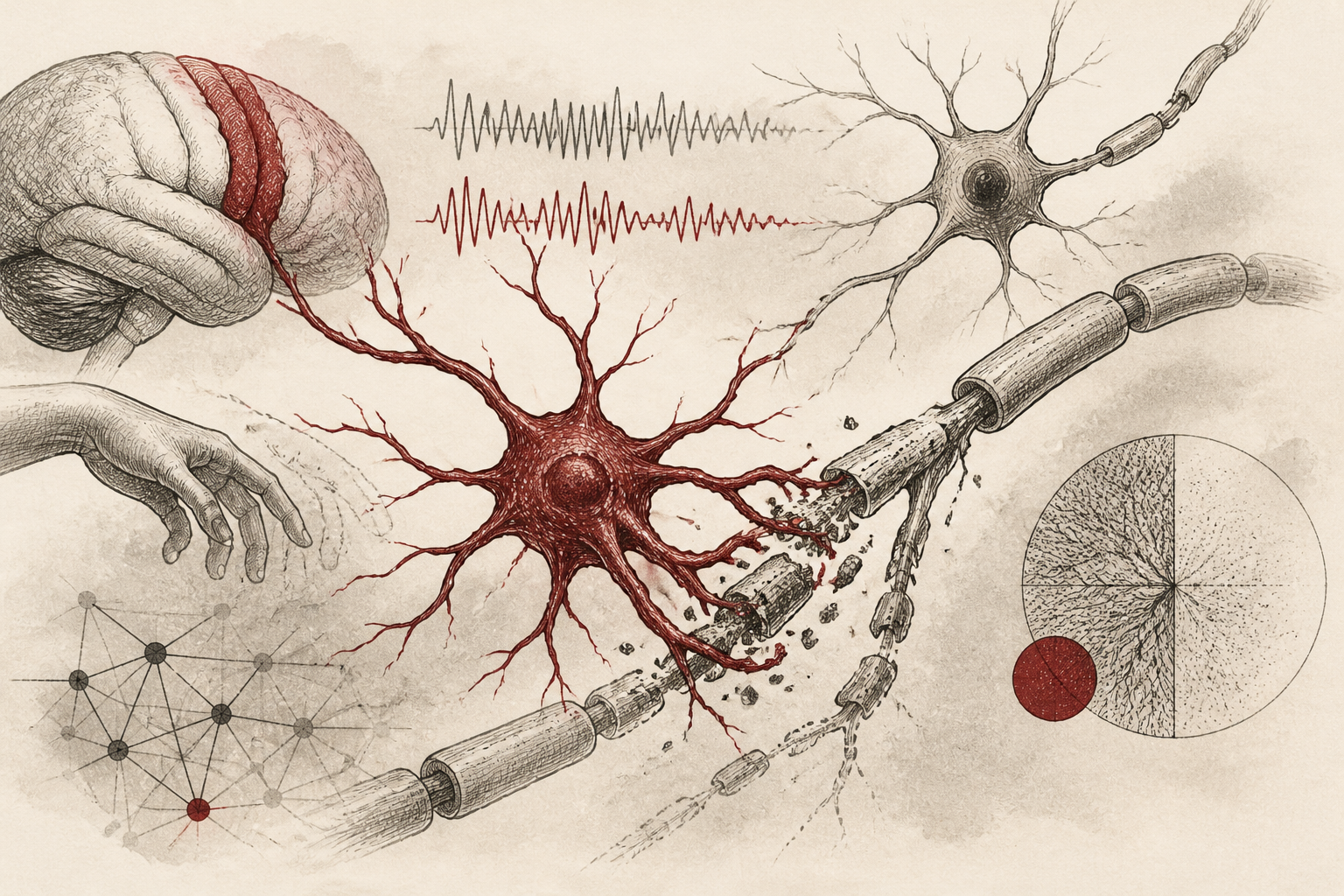
The biological architecture of memory has historically focused on the formation and preservation of neural traces. However, the process of forgetting is increasingly recognized not as a passive failure of storage, but as an active, regulated physiological necessity. Recent findings published in Nature Neuroscience provide a detailed look at how the brain manages the decay of motor memories. Investigators have identified that microglia, the primary immune cells of the central nervous system, play a decisive role in the loss of motor skills by actively consuming myelin sheaths in a process triggered by neural activity. This discovery shifts the focus of memory research from synaptic plasticity alone to the dynamic remodeling of white matter and the critical role of non-neuronal cells in cognitive maintenance.
Motor learning, which includes tasks ranging from basic locomotion to complex manual dexterity, relies on the optimization of neural circuits. For decades, the consolidation of these skills was thought to be primarily stored in the strength of synaptic connections. Yet, the physical substrate of a memory—the engram—is also dependent on the speed and timing of electrical signals. Myelin, the fatty insulation surrounding axons, is essential for this timing. While previous research has established that the formation of new myelin is necessary for learning new skills, the mechanisms governing how these skills fade remained largely theoretical until this latest investigation into the interaction between microglia and myelinated fibers.
The Role of Microglia in Myelin Remodeling
The research team utilized advanced neuroimaging and molecular labeling techniques to observe the behavior of microglia during periods following the acquisition of a new motor skill. In a series of controlled experiments, the study found that after a peak in learning, the brain begins a process of refinement where certain myelin sheaths are removed. This removal is not random; it is specifically executed by microglia. The cells engage in phagocytosis, literally engulfing and digesting portions of the myelin sheath that surround the axons of neurons involved in the recently learned task. This activity-dependent pruning appears to be the biological driver behind the gradual decline in performance accuracy and speed that characterizes memory decay.
By tracking fluorescently labeled myelin, the researchers were able to quantify the rate of sheath loss. They observed that in the weeks following a training period, the density of myelin in specific regions of the motor cortex decreased in tandem with the subjects' declining proficiency in the learned task. When microglial activity was pharmacologically or genetically inhibited, the researchers noted a significant preservation of both the myelin structures and the motor skills themselves. This suggests that microglia are not merely responding to damaged tissue but are actively mediating the strength of the neural circuit by altering its insulation. This finding places microglia at the center of a regulatory system that balances the need to retain useful information with the biological requirement to prune unnecessary or redundant neural traces.
Mechanisms of Activity-Dependent Phagocytosis
A critical component of the study involved identifying how microglia select which myelin sheaths to remove. The researchers discovered that the process is activity-dependent, meaning the level of electrical signaling within a specific axon influences the likelihood of its myelin being targeted. Paradoxically, the study suggests that the very pathways used to execute a memory may signal for their own eventual pruning during periods of disuse or shifting behavioral priorities. The molecular signaling pathway involves specific immune receptors on the microglial surface that recognize markers on the myelin sheath. When these markers are exposed or modified by the metabolic demands of neural activity, the microglia initiate the engulfment process.
This mechanism highlights a sophisticated feedback loop. During the learning phase, oligodendrocyte precursor cells are stimulated to create new myelin, enhancing the efficiency of the circuit. Once the learning phase concludes, the homeostatic role of the microglia takes over. The researchers propose that this pruning is necessary to prevent the brain from becoming overcrowded with obsolete or inefficient neural pathways. By removing the myelin from less optimal circuits, the brain may be freeing up metabolic resources and physical space for future learning. This suggests that forgetting, mediated by microglial phagocytosis, is an essential prerequisite for cognitive flexibility and the acquisition of subsequent skills.
Interpretations and Cognitive Implications
The implications of these findings for the field of psychology and neuroscience are profound. Traditionally, forgetting was viewed as a decay of synaptic weights or a failure to retrieve stored data. This study introduces a structural dimension to the concept of forgetting, where the physical hardware of the brain—the insulation of its wiring—is physically dismantled. This structural change provides a more permanent explanation for why certain skills, if not practiced, eventually require significant retraining to recover. The myelin loss effectively 'de-tunes' the circuit, slowing the transmission of impulses and disrupting the precise timing required for complex motor coordination.
Furthermore, this research challenges the neuron-centric view of memory. By demonstrating that immune cells are active participants in the lifespan of a memory, the study opens new avenues for therapeutic intervention. If memory decay is a result of active cellular processes, then it may be possible to modulate these processes to treat conditions where forgetting is accelerated, such as in various forms of dementia or age-related cognitive decline. Conversely, in conditions like Post-Traumatic Stress Disorder (PTSD), where the inability to forget a memory is the primary pathology, enhancing microglial pruning could potentially offer a biological method to dampen the intensity of persistent, maladaptive neural traces.
Limitations and Future Directions
While the study provides a robust framework for understanding motor memory decay, several open questions remain. The researchers primarily focused on the motor cortex, leaving it unclear whether similar microglial mechanisms are at play in the hippocampus or the prefrontal cortex, which handle declarative and emotional memories respectively. The signaling molecules that specifically 'tag' myelin for removal have been partially identified, but the full cascade of events that triggers a microglial cell to switch from a surveillance state to a phagocytic state requires further elucidation. Additionally, the study was conducted in controlled laboratory models; translating these findings to the complex, multi-modal learning environments of humans will be a significant challenge for future research.
There is also the question of individual variability. Why do some individuals retain motor skills for decades with little practice, while others experience rapid decay? It is possible that the baseline level of microglial activity or the efficiency of the myelin tagging system varies between individuals, influenced by genetics, diet, or sleep. The researchers note that sleep, in particular, is a period of high microglial activity and may be the window during which much of this myelin pruning occurs. Investigating the intersection of sleep hygiene and memory retention through the lens of microglial phagocytosis represents a promising frontier for the Zeit Psychology Online University community.
Why This Research Matters
Understanding the biological basis of forgetting is as important as understanding the basis of learning. For students and practitioners of psychology, this research provides a tangible biological explanation for the 'use it or lose it' principle of skill retention. It underscores the fact that the brain is a dynamic, living organ that is constantly being reshaped by its immune system. By framing forgetting as an active process of myelin remodeling, the study shifts our perspective from seeing memory loss as a defect to seeing it as a vital regulatory function. This work from Nature Neuroscience ensures that future discussions on neuroplasticity will no longer be limited to the synapse, but will include the essential, protective, and sometimes destructive work of the brain’s microglial guardians.
Quick answers
- What is the role of microglia in memory?
- Microglia act as the brain's immune cells and are responsible for actively pruning myelin sheaths, which causes the decay of motor memories over time.
- How does the brain forget motor skills according to recent research?
- Forgetting occurs through an activity-dependent process where microglia engulf and digest the myelin insulation of neural circuits, slowing down signal transmission.
- Can preventing microglial activity stop forgetting?
- In laboratory studies, inhibiting microglial phagocytosis has been shown to preserve myelin structures and maintain motor skill proficiency for longer periods.
Editorial Team