Microglia Identified as Key Regulators of Cortical Vascular Pruning via PD-1 Signaling
Researchers have discovered that microglia utilize PD-1 signaling to refine the developing brain's vascular network by pruning unnecessary blood vessels.
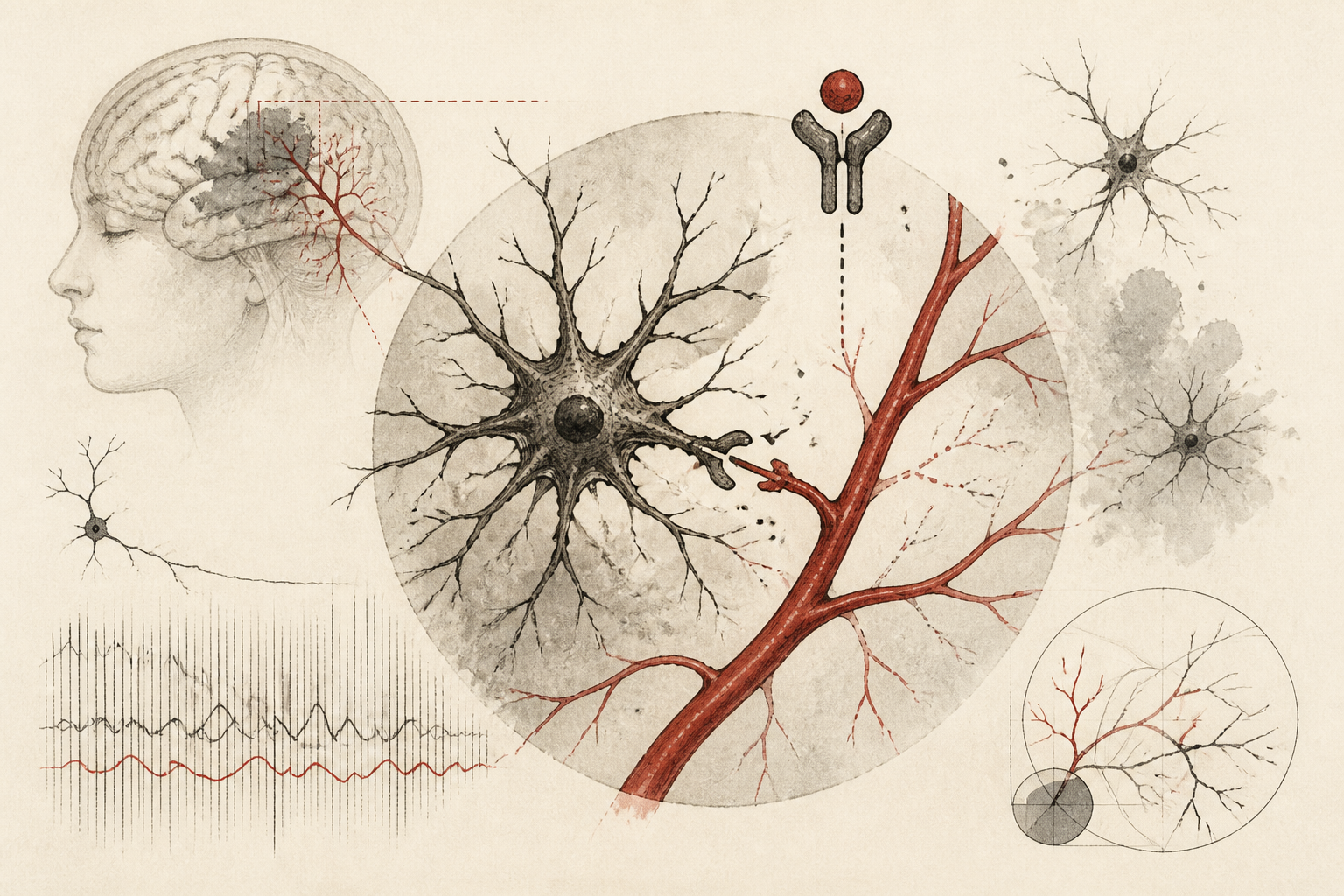
In a study recently published in *Nature Neuroscience*, researchers have identified a specialized mechanism by which microglia, the primary immune cells of the central nervous system, regulate the structural development of the brain's vascular system. The research clarifies the role of programmed cell death protein 1 (PD-1) signaling in the pruning of developing cortical blood vessels, a process essential for establishing an efficient circulatory network within the cortex.
While the role of microglia in synaptic pruning—the removal of excess neuronal connections—is well-documented, their specific contribution to vascular refinement has remained less understood. The study demonstrates that during early brain development, microglia actively interact with the expanding network of blood vessels. Rather than simply supporting growth, these cells facilitate the elimination of redundant vascular segments to optimize blood flow and nutrient delivery.
Central to this process is the PD-1 signaling pathway. Although most commonly associated with immune checkpoint regulation in oncology, this study highlights a non-canonical function for PD-1 in the brain. The data suggest that PD-1 expression on microglia is necessary for the identification and engulfment of specific vessel segments. When this signaling pathway is disrupted, the cortical vasculature remains overly dense and disorganized, potentially impacting overall brain homeostasis and metabolic efficiency.
The findings offer significant insights into neurovascular development and suggest that microglia act as multifunctional architects, sculpting both the neural and vascular landscapes. This research provides a new framework for investigating how neurovascular crosstalk contributes to developmental disorders. Future studies may explore whether abnormalities in this pruning process are linked to pathological conditions involving vascular malformations or cognitive impairments.
*Source: Nature Neuroscience (2024). https://www.nature.com/articles/s41593-026-02378-x*
Quick answers
- What is the primary role of PD-1 in the developing brain according to this study?
- PD-1 signaling enables microglia to prune redundant cortical blood vessels, ensuring a refined and efficient vascular network.
- How does microglia's interaction with blood vessels differ from its role in neurons?
- While microglia prune synapses to refine neural circuits, this study shows they also prune vascular segments to sculpt the brain's circulatory system.
- What happens to the brain's blood vessels if PD-1 signaling is absent?
- Without PD-1 signaling, the cortical vascular network becomes overly dense and fails to undergo the necessary refinement and pruning.
Rewritten by Zeit editorial AI. Based on original reporting at Nature Neuroscience.