Maternal Immune Activation and the Epigenetic Landscapes of Fetal Neurodevelopment
Research from the Salk Institute reveals how maternal inflammatory responses during pregnancy recalibrate fetal brain development through specific epigenetic modifications.
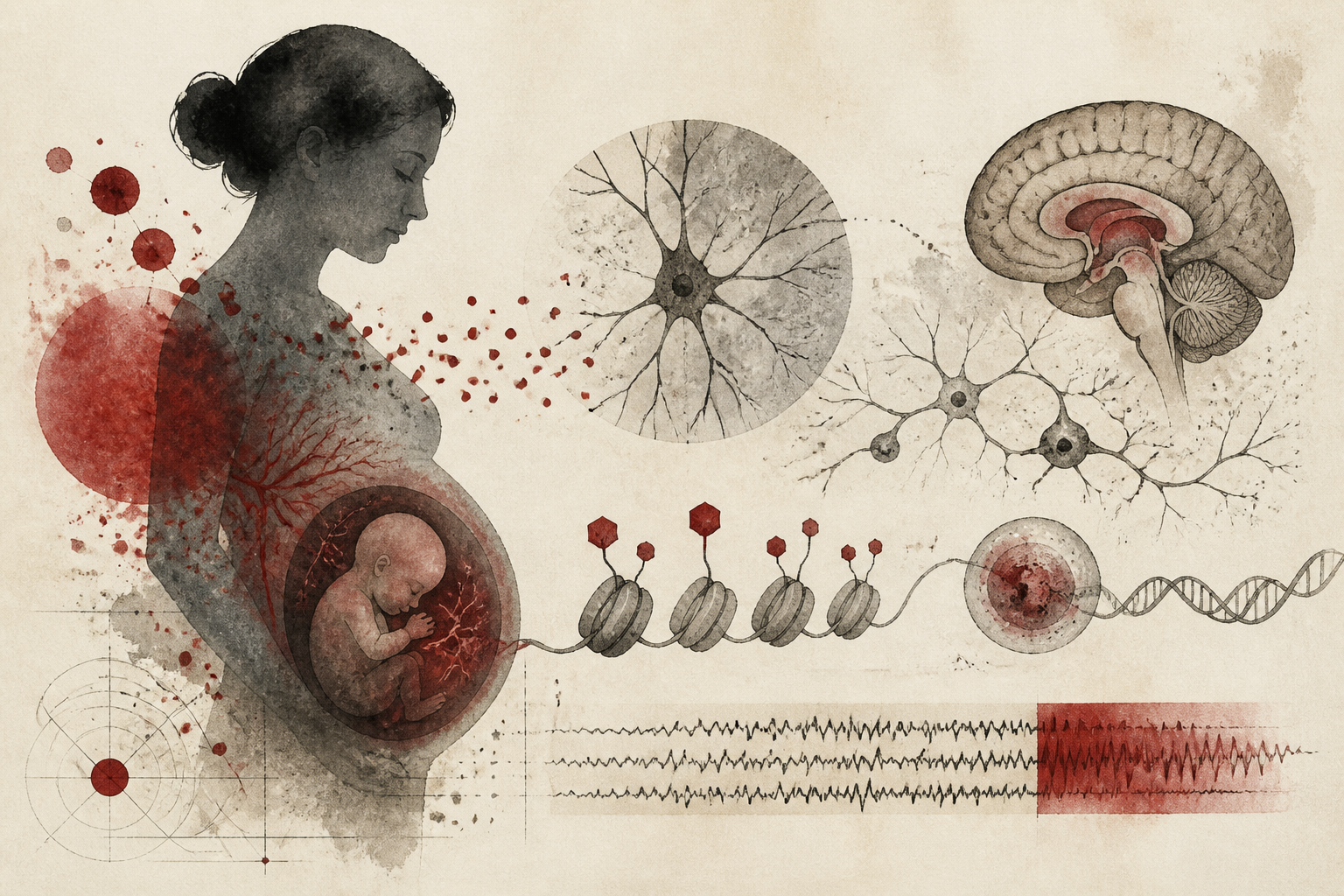
The delicate period of gestation serves as the biological foundation for lifelong neurological health, a process governed by a highly synchronized sequence of gene expression and cellular differentiation. However, recent findings published by researchers at the Salk Institute, and originally reported via NeuroscienceNews, have illuminated how severe physiological disruptions in the mother can fundamentally alter this developmental trajectory. By examining the impact of severe illness during pregnancy, scientists have identified a mechanistically specific pathway through which maternal immune activation reshapes the fetal epigenome. This research provides a crucial framework for understanding why prenatal exposure to high levels of inflammation is statistically associated with an increased risk for neurodevelopmental conditions, including autism spectrum disorder and various cognitive impairments.
The Biological Bridge Between Inflammation and Development
For decades, epidemiological data have suggested a correlation between maternal infections—such as severe influenza or bacterial sepsis—and the subsequent diagnosis of neurodevelopmental disorders in offspring. While the statistical link was evident, the precise biological bridge connecting a mother’s immune response to the structural assembly of a fetus’s brain remained partially obscured. The Salk Institute’s recent study shifts the focus from the infection itself to the systemic inflammatory response, often referred to as maternal immune activation. When the maternal immune system is pushed to an extreme state of alert, it produces a cascade of signaling molecules, such as cytokines, which do not merely defend the mother but also interact with the placental barrier and the developing fetal environment. This interaction appears to function as an environmental signal that the fetal brain interprets, leading to lasting changes in how genetic instructions are executed.
Epigenetic Remodeling and Fetal Brain Architecture
The core of this discovery lies in the field of epigenetics—the study of changes in organisms caused by modification of gene expression rather than alteration of the genetic code itself. The researchers found that severe illness triggers a widespread remodeling of the fetal epigenome, particularly in the way DNA is packaged and accessed within developing neurons. Unlike a permanent mutation in the DNA sequence, these epigenetic changes act like a series of molecular switches, turning certain genes on or off prematurely or preventing others from activating at the necessary developmental stage. Specifically, the study identified alterations in DNA methylation patterns and chromatin accessibility within the fetal cortex. These changes were not random; they were concentrated in regions of the genome responsible for synapse formation, neuronal migration, and the overall structural integration of the brain. When these epigenetic markers are misplaced due to maternal inflammation, the resulting neural architecture may develop with subtle but significant differences in connectivity.
Mechanisms of Cellular Adaptation to Stress
To uncover these mechanisms, the research team utilized sophisticated animal models that simulate the inflammatory environment of a severe human infection. By tracking the molecular signatures of the offspring from the embryonic stage through early development, they were able to map the chronological progression of these epigenetic shifts. The findings suggest that the fetal brain possesses a degree of plasticity that allows it to react to external stressors; however, in the case of severe maternal illness, this adaptation may be maladaptive. The study highlights that the inflammatory signals from the mother essentially "program" the fetal microglia—the brain's resident immune cells—into a pre-activated state. Once these cells are primed by prenatal inflammation, they may respond disproportionately to later environmental stressors after birth, further complicating the trajectory of brain maturation. This double-hit hypothesis suggests that the initial epigenetic priming during pregnancy sets the stage for heightened vulnerability later in life.
Interpretation of the Inflammatory Signature
The implications of these findings are profound for the field of preventive medicine and neonatology. By identifying a specific epigenetic signature associated with maternal immune activation, the Salk Institute researchers have provided a potential biomarker for neurodevelopmental risk. The study suggests that the fetal brain’s response to inflammation is a systemic recalibration rather than a localized defect. This means that the increased risk for autism or other neurodevelopmental disorders is not necessarily the result of the virus or bacteria attacking the fetus directly, but rather the fetus’s own developmental program reacting to the mother’s heightened immune state. This distinction is critical because it shifts the therapeutic focus toward managing the maternal inflammatory response and understanding the specific windows of vulnerability during the first, second, and third trimesters.
Limitations and Open Scientific Inquiries
While this research offers a significant leap in our understanding of neurobiology, several limitations remain that necessitate further exploration. One primary consideration is the threshold of illness required to trigger these epigenetic changes. The Salk study focused on "severe" illness, leaving open the question of whether mild or moderate infections produce similar, albeit less pronounced, effects on the fetal epigenome. Furthermore, while the animal models used in the study provide a controlled environment to study molecular changes, the complexity of human gestation—influenced by genetics, nutrition, and diverse environmental factors—means that these findings must be validated through long-term human longitudinal studies. Another open question involves the potential for reversibility. If the fetal brain is epigenetically reprogrammed during pregnancy, can targeted interventions in early childhood mitigate or even reverse these modifications? The current data provide the map of the changes, but the methods for "re-editing" these epigenetic markers are still in their infancy.
Clinical Significance and Future Directions
Understanding the molecular underpinnings of how maternal health influences fetal brain development is essential for improving public health outcomes. This research underscores the importance of prenatal care and the timely management of infections in pregnant individuals. By recognizing that severe inflammation can leave a lasting molecular imprint on the next generation, healthcare providers can better prioritize maternal wellness as a direct component of pediatric brain health. As we move forward, the goal will be to identify specific interventions—perhaps anti-inflammatory treatments or nutritional supports—that can shield the fetal epigenome from the disruptive effects of maternal immune activation. This study from the Salk Institute, as detailed by NeuroscienceNews, represents a foundational step in ensuring that the biological blueprints for the next generation remain protected from the volatile disruptions of systemic disease.
Quick answers
- How does a mother's illness affect a baby's brain development?
- Severe illness triggers maternal immune activation, which sends inflammatory signals that change the 'epigenetic switches' in the fetal brain, potentially altering how neurons connect.
- What is the role of epigenetics in autism risk during pregnancy?
- Epigenetic modifications change how genes are expressed without altering the DNA code; maternal inflammation can misdirect these markers, increasing the statistical risk for neurodevelopmental disorders like autism.
- Can the fetal brain recover from maternal immune activation?
- Current research shows these epigenetic changes can be lasting, but scientists are investigating whether early childhood interventions can mitigate the effects of prenatal inflammatory exposure.
Rewritten by Zeit editorial AI. Based on original reporting at NeuroscienceNews.com.